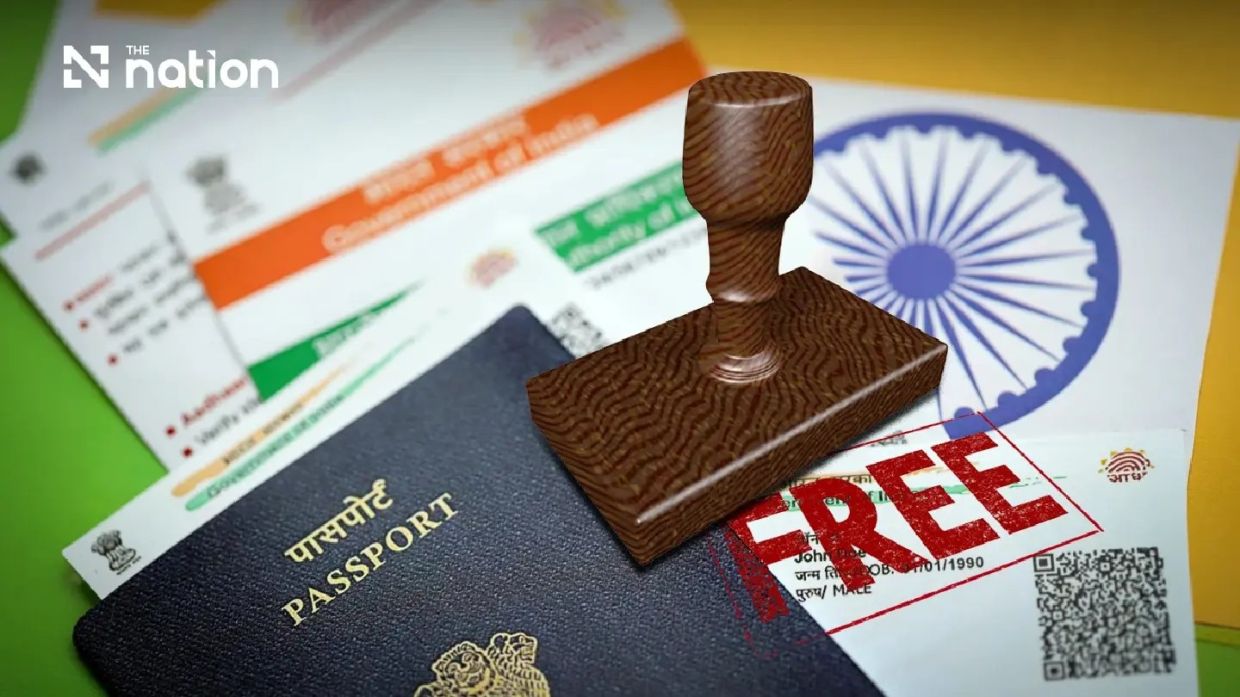
Thailand's decision to grant Indian visitors 30-day visa-free access marks a strategic pivot in Southeast Asian tourism competition, with Bangkok banking on the appeal to wealthy destination-wedding travellers and extended-stay groups to drive visitor numbers to 2.7 million by 2027. Tourism and Sports Minister Surasak Phancharoenworakul championed the extended exemption after initially pushing back against proposals to limit stays to just 15 days, recognising that the major Indian celebration market—which orchestrates multi-week wedding ceremonies and related festivities—requires genuine duration flexibility to make Thailand a viable choice.
The rationale behind the extended window extends beyond wedding logistics. By aligning India with the standard 30-day visa-exemption category shared by 59 other countries and territories, Thailand sends a signal of equal treatment and confidence-building to one of Asia's largest source markets. This parity matters psychologically to high-net-worth Indians accustomed to premium positioning globally. The decision also reflects Bangkok's economic calculation: Indian visitors currently spend approximately 6,203 baht daily—totalling around 36,000 baht per journey—making them particularly attractive as Thailand recalibrates its tourism model away from volume-dependent mass tourism toward higher-margin, experience-focused travellers.
India's emergence as Thailand's third-largest source market represents a dramatic climb. The country generated 2.48 million arrivals in 2025, representing a 16.82 percent year-on-year surge, and pumped 90.425 billion baht into Thailand's economy through tourism spending. By mid-2026, Indian arrivals had already reached 1.3 million, tracking toward the Tourism Authority of Thailand's projection of 2.55 million for the full year, before accelerating to 2.7 million in 2027 at a 5.8 percent growth rate. These figures underscore how India has become not merely a secondary market but a pillar of Thailand's post-pandemic tourism recovery and expansion strategy.
The policy shift also addresses competitive anxieties within Thailand's tourism sector. Initially, operators feared that India's exclusion from the temporary 60-day visa-exemption programme—which covered 93 countries before the Cabinet's July 14 restructuring—would force Indian nationals back toward the Visa on Arrival category, a bureaucratic step that would disadvantage Thailand against regional competitors. Vietnam's aggressive pricing, Malaysia's active promotion of visa-free access, and Singapore's cultivation of the family travel segment all posed real threats to Thailand's historically dominant position. The 30-day assignment thus represents damage control alongside market development, signalling that Thailand remains serious about accessibility for this crucial demographic.
The logistics of the revised framework reveal how closely the government has studied Indian travel behaviour. Officials noted that Indian visitors average 7.17 days per trip currently, yet concluded that a 30-day entitlement would accommodate both normal patterns and the extended itineraries now emerging among younger, affluent Indians seeking deeper immersion in local food, culture, and wellness experiences rather than conventional sightseeing loops. Simultaneously, the framework maintains immigration integrity through mandatory Thailand Digital Arrival Cards—submittable within three days of travel—balancing openness with screening rigour. This represents a nuanced policy calibration, not merely blanket liberalisation.
Air connectivity anchors the entire strategy's feasibility. The TAT's New Delhi office oversees nine direct routes linking Indian cities to Bangkok, Krabi, and Phuket, offering 144 weekly flights and 32,000 seats. The Mumbai office coordinates approximately 160 weekly flights providing 33,000 seats, bringing total India-Thailand weekly capacity to roughly 66,000 seats. While temporary suspensions occurred due to Middle East tensions and fuel volatility, airlines are preparing to restore capacity during high seasons. This infrastructure matters because unlike Southeast Asian neighbours with similar visa policies, Thailand's direct connectivity from India's major metros—New Delhi, Mumbai, Kolkata—remains a competitive moat worth protecting.
Geographic expansion beyond tier-one Indian metros reflects sophisticated demographic targeting. While the TAT will continue priority campaigns in New Delhi, Kolkata, and Mumbai, campaigns now penetrate tier-two and tier-three cities including Lucknow, Chandigarh, Guwahati, Ahmedabad, Surat, and Pune. Surat's diamond industry provides an affluent customer base relatively untapped by traditional tourism promotion, while Pune's automotive and manufacturing sectors access upper-middle-income professionals increasingly capable of affording extended Thailand journeys. This granular segmentation moves beyond India-as-monolith thinking toward recognition that tourism demand patterns vary significantly across India's economically heterogeneous regions.
The Indian visitor profile itself justifies the premium positioning. Nearly 59.68 percent are first-time visitors, suggesting substantial unexploited repeat-visit potential if experiences satisfy expectations. Approximately 68.63 percent travel independently rather than in organised groups, indicating higher-value individual spending patterns and reduced wholesale tour-operator margins. The largest attraction cluster—Thai cuisine, beaches, and spa-wellness—aligns precisely with experiential travel trends among younger Indians moving beyond photograph-hunting toward cultural and lifestyle engagement. This generational shift fundamentally shapes tourism competitiveness: countries offering authentic community interaction, local food scenes, and wellness credentials capture demand; those relying on established monument circuits face commodification and price competition.
Regional competitive dynamics will intensify significantly. Vietnam's price advantage and expanding direct connectivity, Malaysia's aggressive visa-free positioning targeting similar Indian demographics, and Singapore's family-market stratagem create a crowded Southeast Asian marketplace for Indian tourism spend. Thailand's 30-day visa advantage addresses accessibility, yet cannot substitute for sustained investment in infrastructure, service quality, and experience curation in secondary destinations beyond Bangkok-Phuket-Krabi corridors. The strategy explicitly encompasses neighbouring Bhutan, Nepal, and Bangladesh—recognising that regional tourism clusters can drive cross-border traffic. Thailand's promotion of food, culture, local lifestyles, wellness, and community tourism reflects this ecosystem thinking.
The numbers validate India's strategic importance to Thailand's tourism future. At 2.7 million projected arrivals by 2027, India would represent meaningful volume expansion and notably higher per-capita spending than Thailand's traditional volume markets. The 30-day visa exemption removes a friction point that might otherwise drive marginal cases toward Vietnam or Malaysia. Yet policy alone cannot sustain growth; investment in capacity—particularly in secondary cities like Chiang Mai, Udon Thani, and Phuket's hinterland—must follow. Thailand's tourism recovery increasingly hinges on whether it can translate policy accessibility into compelling, distinctive experiences that justify Indian travellers' choice of Thailand over alternatives, and whether those experiences genuinely reflect the younger generation's demand for depth over superficial consumption.
Looking forward, the 30-day framework positions Thailand as India-friendly but simultaneously raises expectations. Delivering against the 2.7 million target requires not just visa ease but flight-frequency consistency, trained English-speaking service personnel, curated cultural experiences, and demonstrated safety and reliability. Regional cooperation with Malaysia and Vietnam on competitive parity in visa access will likely intensify, potentially forcing Thailand into further liberalisation. The Indian market represents both Thailand's tourism opportunity and an emerging arena of regional strategic competition—one where policy alone determines nothing, but where policy failure guarantees disadvantage.

