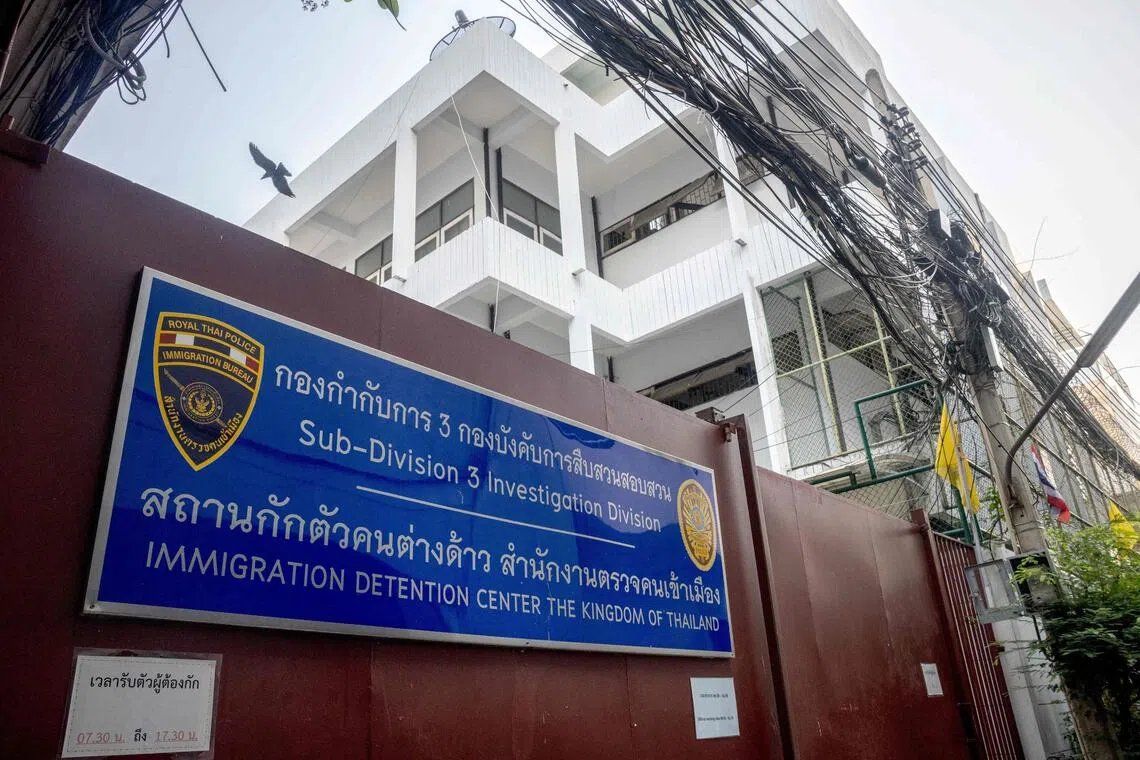
Thailand has introduced a comprehensive legal framework governing the deportation of foreign nationals found to have breached Thai law or undermined public order, marking a significant tightening of immigration enforcement procedures. Prime Minister Anutin Charnvirakul signed the Prime Minister's Office Regulation on Deportation B.E. 2569 on August 26, with the measure taking effect on August 28 following its publication in the Royal Gazette two days earlier. The regulation addresses longstanding concerns about foreign offenders operating within Thai jurisdiction by establishing clearer, faster inter-agency processes and more defined grounds for removal.
The framework reflects Thailand's stated position that while the kingdom welcomes legitimate foreign visitors, residents, workers and investors, certain individuals exploit the country's openness to engage in illegal activities or circumvent established rules. The regulation acknowledges that some foreigners enter unlawfully for personal gain, while others violate Thai laws after arrival, creating friction with local communities and authorities. By codifying deportation procedures rather than relying on ad-hoc administrative decisions, Bangkok aims to demonstrate consistency in enforcement and reduce processing delays that have historically allowed offenders to remain within the country despite convictions.
The regulation identifies six specific categories of criminal conduct that trigger consideration for deportation orders. These encompass unlawful entry or overstaying under immigration statutes; unauthorised employment in violation of foreign worker regulations; illicit business operations contrary to the Foreign Business Act; forgery or use of forged official documents; and commissions of offences carrying prison sentences of five years or longer. Notably, the framework also covers individuals who acted as principals, instigators or supporters in these categories, potentially sweeping up accomplices and organisers alongside direct perpetrators. This expansive language reflects Thailand's concern about transnational criminal networks that often rely on locally-recruited or foreign co-conspirators.
The Interior Minister holds primary authority over deportation orders issued under the regulation. Implementation begins with notification from the Department of Corrections, which must provide the permanent secretary of the Interior Ministry with detailed information on foreign prisoners at least fifteen days before release. This advance-warning system aims to prevent offenders from disappearing into Thai society upon discharge. When courts suspend sentences or impose fines rather than custodial terms, the Office of the Judiciary must immediately alert the Interior Ministry permanent secretary, ensuring comprehensive coverage across different sentencing outcomes. This multi-agency coordination represents an attempt to close gaps that previously allowed convicted foreigners to evade removal through bureaucratic fragmentation.
Deportation orders may include re-entry bans lasting specified periods, effectively preventing repeat offenders from obtaining new visas or establishing residence permits. The regulation requires officials to consider applicable laws, existing Cabinet resolutions and Thailand's international treaty obligations when reaching deportation decisions, creating a framework that theoretically balances enforcement with due process. Deportees are ordinarily returned to their country of nationality, though if national origin cannot be established, authorities may send individuals to where they reportedly resided immediately before entering Thailand. This provision addresses the practical complexity of dealing with stateless persons or those carrying fraudulent documentation.
The regulation incorporates humanitarian safeguards designed to address concerns raised by international human rights organisations monitoring Thai immigration practices. Alternative countries or international organisations may request through diplomatic channels that a deportee be transferred to their jurisdiction within seven days of the deportation order. Such requests can be based on safety concerns, including risks of torture, cruel or inhumane treatment, violations of human dignity, or enforced disappearance. This mechanism acknowledges that certain foreign nationals facing deportation may genuinely fear persecution in their home countries, particularly political activists, religious minorities, or refugees fleeing conflict zones. The requesting entity must cover all transfer costs and obtain written consent from the deportee, ensuring financial feasibility and voluntary participation.
Transfers to alternative countries or international organisations must be completed within thirty days, with the Interior Minister authorised to grant no more than two thirty-day extensions. If transfers cannot be finalised within the permitted timeframe, standard repatriation procedures apply, ensuring that the process does not become indefinitely prolonged. This temporal constraint prevents the regulation from creating a de facto indefinite detention system while safeguarding international relationships and humanitarian commitments. The Interior Ministry will establish specific rules governing deportation expenses, subject to Finance Ministry approval, clarifying the financial mechanisms underlying the enforcement apparatus.
For Malaysian and broader Southeast Asian stakeholders, this regulation carries several implications. First, it signals Thailand's determination to address security and public order concerns through migration enforcement, potentially raising standards across the region for dealing with foreign offenders. Second, the framework may influence how other ASEAN nations structure their own deportation procedures, particularly regarding inter-agency coordination and international safeguards. Third, the emphasis on offences involving unlawful employment and business operations reflects regional concerns about labour trafficking, illegal industrial operations, and transnational commercial crime. For Malaysian businesses operating in Thailand and Thai nationals working in Malaysia, the regulation underscores the importance of compliance with employment and business registration requirements.
The regulation also raises questions about implementation consistency and potential for discretionary abuse. While the framework nominally incorporates international human rights protections, enforcement quality depends heavily on Interior Ministry officials' adherence to legal standards and sensitivity to vulnerable deportees. Thailand's human rights record has attracted criticism from international observers, particularly regarding detention conditions and due process in immigration matters. The extent to which frontline officials embrace the humanitarian provisions will ultimately determine whether the regulation functions as advertised or becomes another enforcement tool used selectively against disfavoured groups.
From a broader policy perspective, the regulation reflects Thailand's effort to modernise administrative systems governing a critical governance function. By establishing written rules rather than relying on ministerial discretion, the framework theoretically enhances predictability and reduces arbitrary decision-making. However, the Interior Minister retains broad authority to issue deportation orders, and disputes arising from implementation go ultimately to the minister for final determination, limiting independent review. The regulation demonstrates how democracies and hybrid regimes alike grapple with balancing immigration control, public security, humanitarian obligations, and rule of law—tensions particularly acute in Thailand given its position as a regional employment destination and transit hub for vulnerable populations.
Longer term, the regulation's success will be measured by its impact on foreign criminal activity, public confidence in immigration enforcement, and Thailand's reputation for managing migration in accordance with international standards. The framework's incorporation of human rights protections, while potentially constraining enforcement, positions Thailand as a country committed to both security and dignity. As Southeast Asia experiences rising transnational crime and irregular migration, Thailand's formal approach may offer a model for regional peers, assuming implementation meets stated principles.

