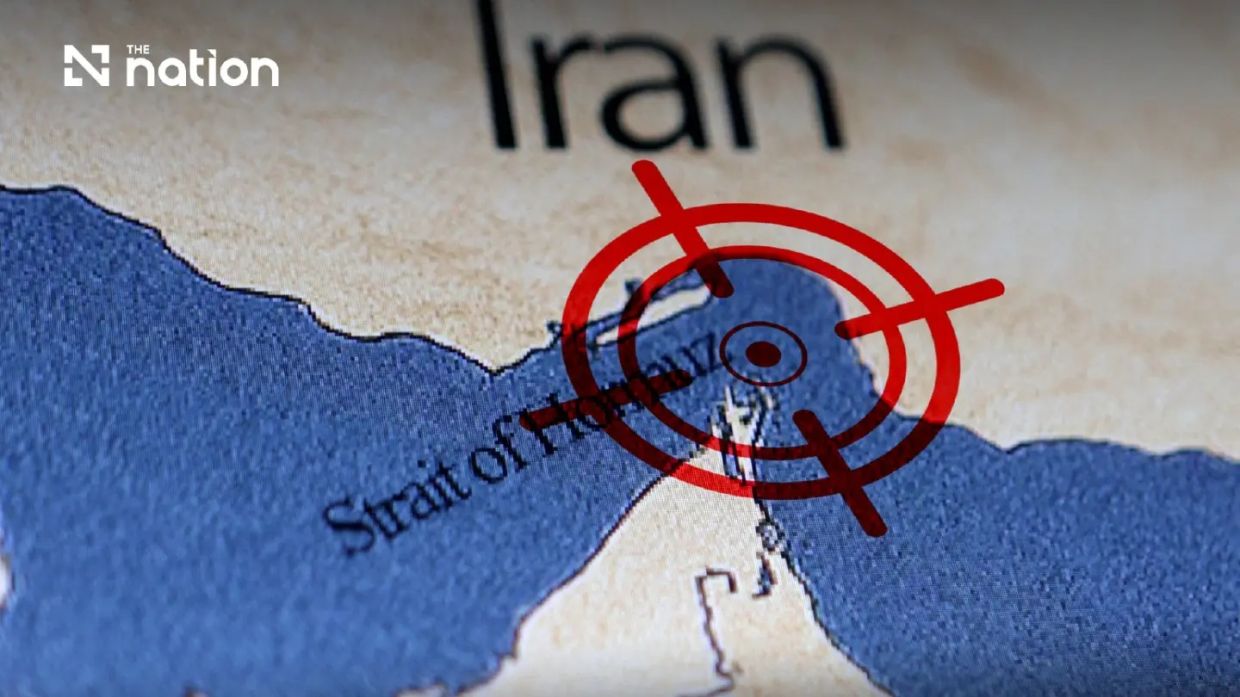
A merchant vessel sailing under Thai colours has reportedly come under attack from Iranian military forces while navigating through the Strait of Hormuz, the latest incident to underscore how the deteriorating confrontation between Washington and Tehran is placing civilian shipping at unprecedented risk in one of the globe's most strategically vital waterways. The semi-official Iranian Tasnim news agency initially reported the assault but declined to name the vessel, reveal its operators, describe what cargo it carried, or identify the crew's nationalities—details that would normally accompany such a serious maritime incident. As of now, neither Thai maritime authorities, independent shipping organisations, nor the vessel's operators have publicly confirmed the attack, and it remains unknown whether the ship sustained damage or if any crew members suffered injuries.
The reported targeting of the Thai vessel represents just one episode in an alarming pattern of military activity coursing through the Strait of Hormuz, where roughly one-third of the world's traded oil passes through annually. Iranian officials have repeatedly issued formal warnings to international shipping companies, insisting they comply with orders issued by its armed forces rather than rely on security assurances from American naval presence. Beyond the individual vessel attack, Tasnim reported that two separate oil tankers ignited and exploded while attempting to transit waters that Iranian state media characterised as a designated minefield in the southern portion of the strait—a characterisation that intensifies alarm among shipping operators already operating with heightened caution in these waters.
According to statements attributed to Iran's Islamic Revolutionary Guard Corps Navy, the strategic waterway has descended into a state of extreme peril and is now completely inaccessible due to what officials described as American military aggression in the region. In a separate declaration, the IRGC claimed it had successfully intercepted four commercial oil tankers that were allegedly attempting passage through the strait with direct US military support and coordination. The Iranian military body stated that these four vessels were ordered to cease movement pending what it described as a coordinated joint operation involving both ballistic missiles and armed drones. Officials made a pointed warning to international shipowners, urging them to heed Iranian military instructions rather than depend on protective measures offered by United States forces operating in the vicinity.
The absence of identifying information for the four intercepted tankers—including their flags of registry, operational locations, and current condition—creates additional uncertainty in an already volatile maritime environment. These cascading reports of attacks, explosions, and forced detentions have crystallised international anxiety regarding the vulnerability of commercial traffic relying on the Strait of Hormuz, a passage whose strategic importance cannot be overstated for global energy security. Extended interference with shipping movements through this corridor would inevitably cascade into widespread economic consequences, including elevated freight rates, increased marine insurance premiums, potential shortages in energy supplies reaching dependent nations, and upward pressure on international commodity prices that affect economies from Southeast Asia to Europe.
The maritime incidents have unfolded simultaneously with an intensification of direct military operations, as the United States military conducted a seventh consecutive night of aerial bombardment targeting Iranian positions. According to announcements through its X social media platform, US Central Command launched this latest wave of strikes at 1900 GMT on Friday, corresponding to 1500 hours on the American East Coast. The Pentagon characterised the renewed air campaign as designed to systematically degrade and diminish Iran's overall military capabilities and infrastructure. However, CENTCOM refrained from releasing a comprehensive breakdown of targeted facilities or providing detailed assessments of the destruction achieved during these operations.
Iranian officials and state-aligned news outlets have contended that preceding rounds of American strikes have inflicted substantial harm to civilian infrastructure across Iran's southern regions, including vital bridges, airport facilities, electrical generation and distribution systems, and railway networks. Foreign Minister Abbas Araghchi specifically identified three individuals killed during an airstrike on a bridge in Bandar Khamir as part of a broader death toll of eight fatalities resulting from overnight American military operations. Tasnim similarly reported claims from a provincial administrator in Bushehr province that the United States had deliberately targeted an Iranian crude oil tanker positioned at the Kharg Island facility. It is important to note that these casualty figures and damage assessments originate exclusively from Iranian governmental sources and state-controlled media outlets and have not undergone independent international verification through neutral observers or international humanitarian organisations.
In response to the American strikes, Iran's military establishment announced that it had launched retaliatory attacks against American military assets and installations distributed across multiple Gulf states, including Bahrain, Jordan, Kuwait, and Qatar. Qatari defence forces stated they had successfully intercepted an incoming Iranian military attack, though the interception event resulted in collateral injury when falling debris struck a child. Iran subsequently claimed responsibility for additional strikes targeting other US-affiliated military facilities throughout the broader Gulf region, though confirmation of actual damage remains murky and contested. The scope and geographic spread of these claimed retaliatory operations have intensified regional apprehension that the underlying conflict could metastasise beyond current flashpoints and engulf the wider Gulf ecosystem, where numerous American military personnel maintain forward positions and operate from established bases.
Adding another layer to these military claims and counter-claims, the IRGC Navy asserted that its forces successfully destroyed an American MQ-9 Reaper unmanned aerial vehicle that was operating over Bushehr, Iran's principal port city. The Iranian military attributed the successful interception to a newly developed air-defence apparatus that functions as part of Iran's broader integrated air-defence network architecture. The United States military has not yet publicly acknowledged the loss of an MQ-9 drone in the vicinity of Bushehr, maintaining characteristic operational silence regarding specific asset losses while it conducts independent assessments of Iranian claims.
The convergence of these incidents—the reported assault on the Thai-flagged merchant vessel, the explosions affecting oil tankers, the claimed interception of additional shipping, and the competing declarations regarding military strikes and drone downings—collectively reveals the profound jeopardy now confronting both commercial and civilian shipping enterprises operating throughout the region. For Malaysia and Southeast Asian nations that depend significantly on energy imports passing through the Strait of Hormuz and maintain substantial shipping interests throughout the Persian Gulf, these escalations carry direct economic implications. Any prolonged disruption or further militarisation of this critical sea lane would inevitably increase energy costs, disrupt supply chains, and potentially necessitate rerouting of shipping traffic through alternative passages that add substantial time and expense. The trajectory of events suggests that absent immediate de-escalation efforts, the risks to regional stability and international commerce will continue intensifying.

