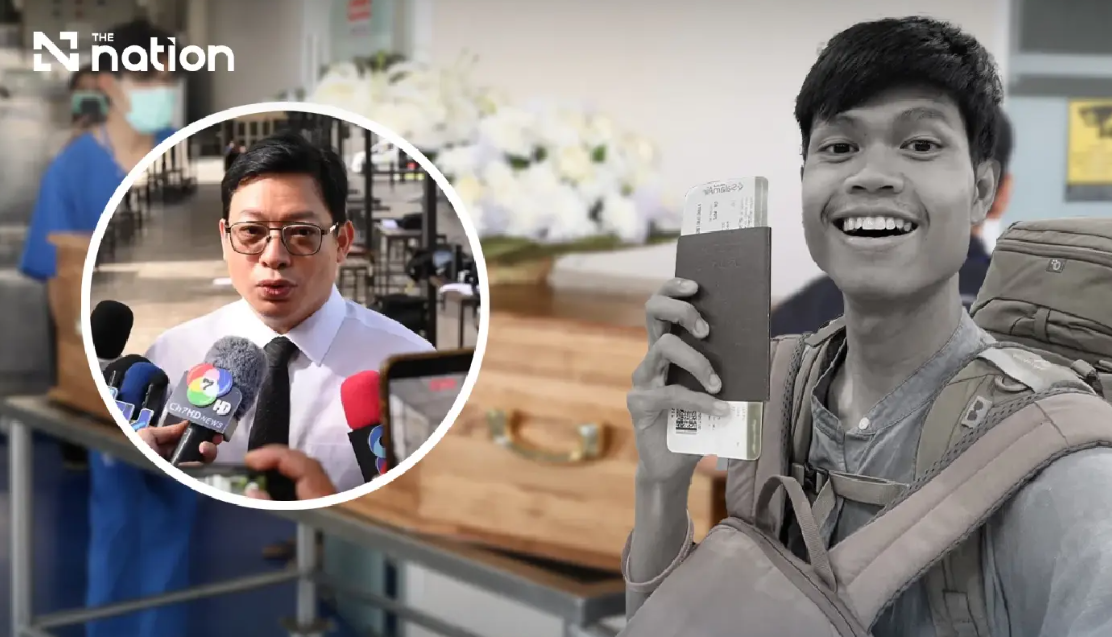
Preliminary autopsy findings for prominent Thai travel content creator Bawornthat "Hlun Solo" Pengsuk suggest he died from cardiac and circulatory failure, though forensic investigators have deliberately avoided drawing final conclusions until comprehensive toxicology and genetic testing is completed. The Thai authorities announced the initial results Thursday at the Central Institute of Forensic Science, following the return of Hlun's remains from Georgia, where he died under circumstances that have prompted his family to seek deeper investigation into potential involvement of toxic substances.
Associate Professor Dr Worawee Waiyawut, serving as deputy director at the institute under Thailand's Ministry of Justice, stressed the provisional nature of the cardiac findings during the announcement. He emphasised that the absence of toxins in preliminary screening does not exclude their eventual involvement, signalling that the investigation remains open and that further chemical analysis could substantially alter the understanding of what caused the 26-year-old creator's death. The examination revealed no external trauma, fractures, or signs of physical violence—findings that initially point toward natural causes but leave several investigative avenues unexplored.
The medical team identified no structural abnormalities affecting organs beyond the heart itself, according to Worawee's statement. Georgian physicians had apparently conducted thorough initial examinations before the body's repatriation, providing Thai forensic specialists with detailed foundational work. However, this preliminary Georgian investigation did not specify a definitive cause of death on the official certificate, creating ambiguity that prompted the family to request an independent Thai examination and seek clarification on what testing Georgia actually performed.
Somsak "Mos" Butsri, Hlun's elder brother and family spokesperson, articulated the family's frustration with the opacity surrounding the Georgian investigation. He stated that Georgian authorities provided minimal information beyond the death certificate itself, declining to share details about the examinations they conducted or explaining why organ samples and DNA were retained without clarity on what analyses would follow. This lack of transparency from authorities in the country where Hlun died has intensified the family's determination to obtain definitive answers through the Thai forensic process.
The family specifically requested that Thai pathologists conduct detailed cardiac tissue analysis, investigate potential genetic predispositions to sudden cardiac events, and comprehensively screen for toxic substances—concerns that suggest they harbour suspicions beyond simple natural causes. Somsak indicated the family plans to compare Thai results with Georgian findings once both are available, particularly focusing on any chemical or toxic agent detection. This comparative analysis reflects legitimate concerns about whether critical information might be overlooked or interpreted differently across jurisdictions.
Somsak explicitly rejected preliminary reports characterising Hlun's death as sudden unexplained nocturnal death syndrome, clarifying that no official test results support such conclusions. He acknowledged uncertainty about whether Hlun harboured undisclosed underlying health conditions, as the content creator apparently did not routinely discuss his medical status with family members. This information gap highlights a common challenge faced by families investigating unexpected deaths of young adults who may not maintain transparent health communication with relatives.
The absence of personal belongings returned with the body—except for his passport—has compounded the family's concerns and raised questions about what happened during his final hours in Georgia. This detail, though seemingly minor, contributes to the broader narrative of incomplete information and unanswered questions that has motivated the family to pursue multiple investigative channels simultaneously. The withholding or loss of personal effects can sometimes provide crucial context about circumstances surrounding a death.
Thailand's travel vlogging community represents a significant and growing segment of content creators who document their journeys across Asia and beyond, building substantial audiences through platforms including YouTube and social media. Hlun Solo had cultivated a considerable following by documenting his travels in accessible, relatable ways that resonated with viewers throughout Southeast Asia and beyond. His unexpected death has raised awareness about potential vulnerabilities faced by solo travellers, particularly young people living far from home and family support networks, operating in unfamiliar environments with limited local connections or immediate assistance resources.
The forensic examination process in Thailand is expected to conclude by Friday, after which the family intends to transport Hlun's remains to his home province of Kalasin for traditional funeral observances according to Buddhist customs. Somsak indicated that his elderly grandmother, who raised expectations of seeing her grandson return home, will participate in these rites, though uncertainty remains about her emotional response when confronting the reality of his death. The family plans to determine cremation arrangements at a subsequent stage following initial mourning periods.
The Ministry of Justice will coordinate with Georgian authorities to obtain comprehensive documentation, including complete post-mortem examination records and results of any chemical testing conducted abroad. Thai officials acknowledged this coordination process will require considerable time, reflecting the complexities inherent in international death investigations and inter-governmental information sharing. Such delays are not uncommon when deaths occur outside Thailand involving Thai nationals, though they frequently frustrate grieving families seeking closure and definitive answers.
This case underscores broader questions about the adequacy of death investigation protocols in destinations popular with Thai travellers, particularly regarding the consistency and transparency of post-mortem examination procedures across different countries. As Thailand's tourism and digital content creation sectors continue expanding, ensuring comprehensive and transparent investigation of unexpected deaths involving Thai nationals abroad has become increasingly important for both family advocacy and public health understanding. The ongoing investigation represents an opportunity for Thai and Georgian authorities to establish clearer protocols for future international cases.

