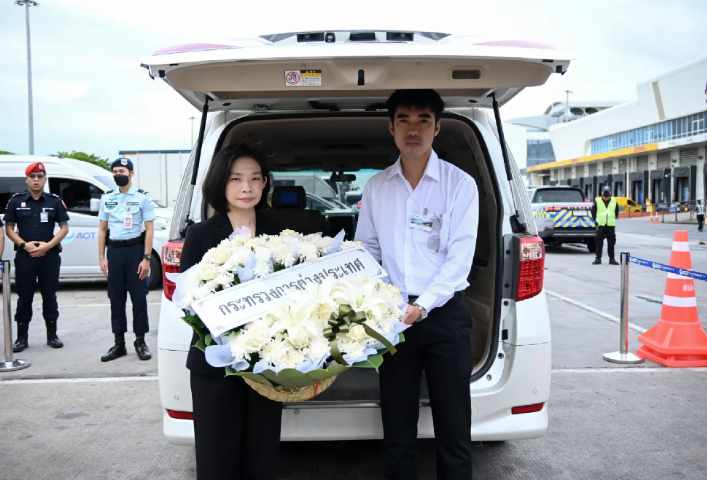
Thailand's Ministry of Foreign Affairs has successfully arranged the return of the body of renowned travel content creator Bavorntat Pengsuk, professionally known as 'Hlun Solo', following his unexpected death in Tbilisi, Georgia, on 14 July 2026. The 27-year-old YouTuber, who had cultivated a substantial following documenting his journeys across the globe, passed away in the Georgian capital under circumstances that are still being investigated. The repatriation process, which concluded this week, represents the culmination of coordinated diplomatic efforts between Thai officials and their Georgian counterparts to bring the popular vlogger home.
Jaithai Upakarnitikaset, director-general of the Department of Information serving as the Foreign Ministry's official spokesperson, announced on Thursday that Deputy Prime Minister and Foreign Minister Sihasak Phuangketkeow had designated Prathuangtip Sirivithes, acting director-general of the Department of Consular Affairs, to receive Bavorntat's remains upon their arrival in Thailand. This assignment reflects the high-profile nature of the case and the Thai government's commitment to ensuring respectful handling of repatriation procedures for prominent Thai nationals abroad. The involvement of senior officials underscores both the public interest in the matter and the diplomatic importance attached to facilitating the return of Thai citizens who die overseas.
Diplomatic engagement proved essential in expediting the process, as the Royal Thai Embassy in Ankara—which holds consular responsibility for Georgia—immediately established contact with Bavorntat's family, Georgian authorities, and other relevant agencies upon notification of his death. This multi-stakeholder coordination was necessary not only to navigate the complexities of international repatriation protocols but also to address what the Foreign Ministry characterised as earlier administrative delays in Georgia. Embassy staff were dispatched directly to Tbilisi to ensure momentum was maintained throughout investigations into the cause of death and to actively manage the formalities required to release the deceased's remains for transport to Thailand.
The circumstances surrounding Bavorntat's death remain under investigation, with Thai authorities and Georgian officials working to establish a definitive cause. His family has arranged for a comprehensive forensic examination to be conducted upon the remains' arrival in Thailand, a standard measure that will provide additional medical clarity and documentation. This examination phase is expected to conclude before the commencement of formal funeral observances, ensuring that both the family and authorities have complete information regarding the circumstances of his passing.
Bavorntat's case reflects a growing reality for Southeast Asian digital content creators: as more young Thais build international audiences through travel vlogging and social media entrepreneurship, they inevitably spend extended periods abroad, creating new consular challenges for their home governments. His death abroad, while tragic, has also highlighted how the Foreign Ministry's consular apparatus responds when high-profile Thai nationals encounter emergencies in distant locations. The efficiency with which repatriation was arranged suggests that Thailand's diplomatic infrastructure, despite occasional friction with host nations, can mobilise effectively when circumstances demand.
Following the completion of all procedures in Thailand, Bavorntat's remains will be transported to his native Somdet district in Kalasin province, a region in northeastern Thailand. There, his family plans to conduct traditional Buddhist funeral rites, honouring both his memory and the cultural and spiritual customs integral to Thai society. These ceremonies will provide an opportunity for his family members, friends, and the substantial online community he cultivated through his content to pay respects and celebrate his life and contributions to travel entertainment.
Bavorntat had cultivated a dedicated following through his YouTube channel, where he documented travels to various destinations, sharing experiences and cultural observations with viewers across Southeast Asia and beyond. His sudden death at such a young age has shocked both his online audience and the broader content creation community in Thailand, where travel vlogging has emerged as a significant and lucrative field for digital entrepreneurs. His passing underscores the sometimes-precarious circumstances faced by individuals who travel extensively for work, regardless of their fame or resources.
The repatriation process itself, while now concluded, involved navigating international legal frameworks, coordinating between two nations' authorities, managing logistics across continents, and addressing the emotional and practical needs of a grieving family. That these procedures were completed relatively swiftly reflects both Thailand's diplomatic relationships and international norms governing the treatment of deceased nationals. For families facing similar circumstances abroad, the handling of Bavorntat's case may provide a template for what consular assistance can realistically deliver during profoundly difficult circumstances.
The incident also highlights broader questions about duty of care for Thai nationals working in high-risk environments or undertaking extensive travel. While travel content creation may seem less hazardous than occupations traditionally associated with expatriate risk, the reality of constant mobility across unfamiliar environments presents its own challenges. As Thailand continues to export young talent and entrepreneurs into digital spaces with significant international dimensions, ensuring robust consular support and emergency response capabilities remains an ongoing policy consideration for the Foreign Ministry.

