Thailand's Prime Minister Anutin Charnvirakul and his wife Thananon have arrived in Malaysia for an official two-day visit, marking Anutin's first trip to the country since his reappointment to the top job in March 2026. The pair touched down at Kuala Lumpur International Airport on Thursday where they were accorded a formal welcome ceremony at the Bunga Raya Complex, signalling the diplomatic significance of the engagement between the two neighbouring nations.
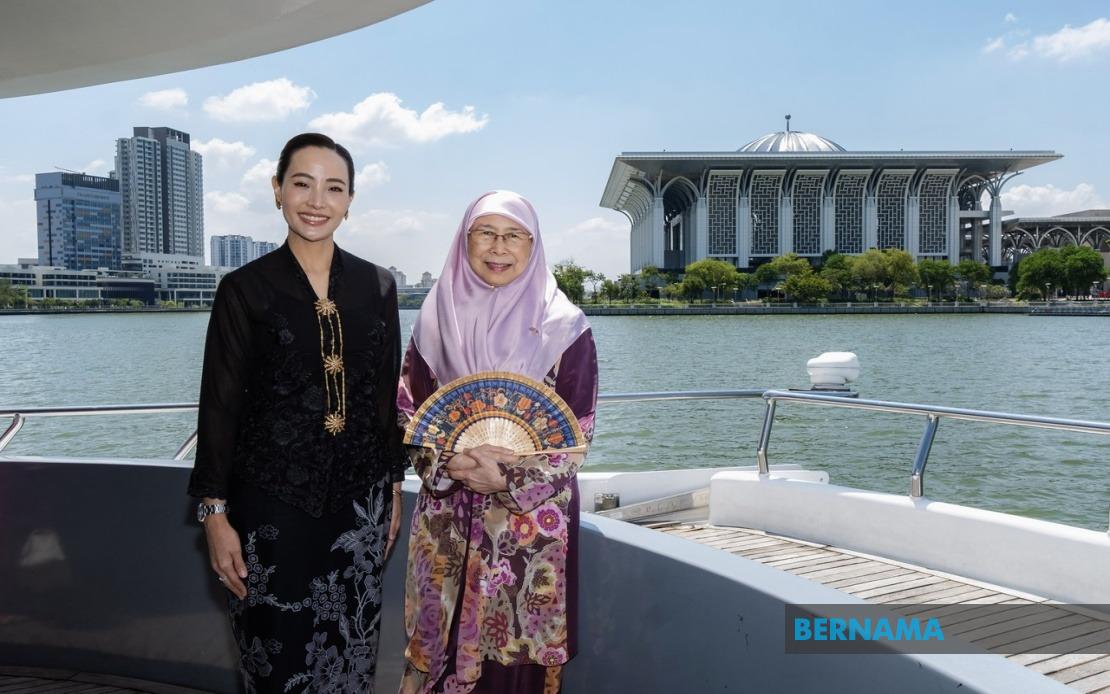
Thananon spent Thursday afternoon enjoying a 45-minute cruise across Tasik Putrajaya, Malaysia's scenic man-made lake that forms the centrepiece of the federal administrative hub. The leisurely waterborne tour allowed the Thai Prime Minister's wife to savour sweeping vistas of Putrajaya's modern architectural landscape and heritage structures, many of which define the capital's distinctive character. She boarded the vessel around 12.10 pm, embarking on what proved an unhurried cultural and geographical immersion into Malaysia's purpose-built seat of government.
The visit was facilitated by senior Malaysian dignitaries keen to showcase the nation's achievements. Datuk Seri Dr Wan Azizah Wan Ismail, wife of Prime Minister Datuk Seri Anwar Ibrahim, received Thananon upon arrival and accompanied her throughout the lake cruise. The pair were observed in animated discussion as they drifted past Putrajaya's signature edifices, creating an informal yet substantive opportunity for interpersonal connection between the two nations' top political families. Their relaxed engagement suggested both sides view the visit as more than mere ceremonial obligation.
Also participating in the arrangements was Hannah Yeoh, Minister in the Prime Minister's Department responsible for the Federal Territories portfolio. Her presence underscored the Malaysian government's intention to demonstrate competent stewardship of the national capital and its attractions, while reinforcing the central importance placed on the Thai delegation's comfort and impression during their stay. The involvement of multiple cabinet-level officials reflects how seriously Malaysia treats high-level bilateral engagement.
The timing and nature of Anutin's visit carry particular significance for Malaysia-Thailand relations. Anutin's reappointment as Prime Minister in March 2026 represented a consolidation of his political position after navigating Thailand's complex and frequently turbulent political landscape. By accepting an invitation to visit Malaysia so soon after securing his reappointment, Anutin signals his government's commitment to maintaining and deepening engagement with key regional partners. For Malaysia, receiving a freshly reconfirmed Thai Prime Minister demonstrates the country's continued relevance as a diplomatic destination and trusted neighbour in Southeast Asia.
The two-day itinerary encompasses more than sightseeing and social pleasantries. Both governments have identified substantial opportunities for cooperation spanning multiple sectors of mutual economic and strategic interest. The visit provides a platform for substantive discussions about how Malaysia and Thailand can coordinate on issues ranging from trade and investment to security cooperation and people-to-people exchanges. The longstanding bilateral relationship between the nations, rooted in geographical proximity and shared regional challenges, creates natural alignment on numerous fronts.
For Malaysia, Thailand represents a crucial partner within ASEAN and across the wider Southeast Asian region. Thailand's role as a major economy, tourism destination, and influential diplomatic player makes it a natural focus of Malaysian foreign policy attention. Conversely, Malaysia's position as a developed economy with strong institutional capacity and strategic location along key shipping routes makes it equally valuable to Thai strategic interests. The visit reinforces the reality that both nations benefit from coordinated approaches to regional challenges and opportunities.
The choice of Tasik Putrajaya as a venue for the first substantive engagement of the visit was particularly apt. The lake and its surroundings represent Malaysia's modernity and forward-thinking development philosophy. By showcasing this space, Malaysia communicates not only aesthetic achievement but also competence in large-scale infrastructure development and environmental planning. For visitors unfamiliar with Putrajaya, the cruise provides essential context for understanding modern Malaysia's ambitions and capabilities.
The visit also carries implications for Malaysia's broader positioning within Southeast Asia at a time when regional dynamics remain fluid. Thailand has long served as a bridge between mainland and maritime Southeast Asia, with significant influence across ASEAN forums. Strengthening ties with Bangkok helps Malaysia maintain its own diplomatic reach and ensures alignment with an influential regional player on key issues. The personal dimension of the visit—involving family members alongside official delegations—deepens the interpersonal relationships that often prove decisive in diplomatic negotiations.
Looking ahead, the Anutin visit provides opportunity to reset and revitalise Malaysia-Thailand engagement across multiple domains. Economic cooperation, particularly in trade and investment, remains an area where both nations can achieve mutual gains. Security cooperation on transnational challenges ranging from people trafficking to maritime issues offers another avenue for deepened coordination. Cultural and educational exchanges strengthen the bonds between ordinary citizens of both nations, creating constituencies for continued good relations beyond government circles.
The visit also occurs within the broader context of Malaysia's commitment to maintaining balanced relationships across Southeast Asia while preserving its own sovereignty and interests. Thailand, similarly, must navigate complex regional relationships while pursuing its development objectives. Official visits such as these serve as anchors for bilateral relationships, preventing drift and maintaining momentum on shared priorities. The presence of both wives during public-facing activities like the Tasik Putrajaya cruise also reflects evolving diplomatic conventions that increasingly recognise the importance of spousal participation in building cross-national understanding and rapport.

