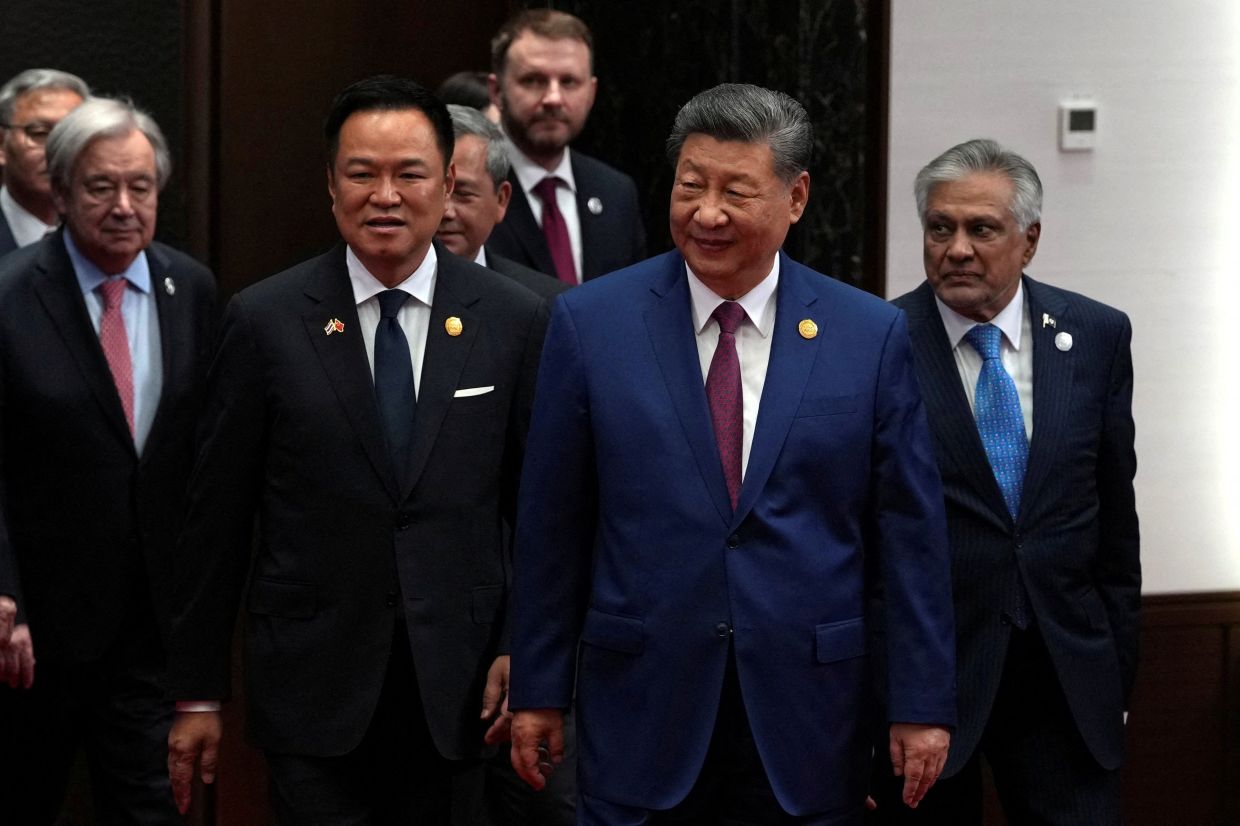
Thai Prime Minister Anutin Charnvirakul has discovered an unconventional path to building international rapport, leveraging his musical talents as a bridge-building tool in formal diplomatic settings. During a recent state lunch in Beijing on Monday, the Thai leader performed a rendition of a classic Teresa Teng song while seated alongside Chinese Premier Li Qiang, delivering what observers have characterised as a distinctly personal approach to bilateral relations. The moment, captured in footage released by his office, showed the Thai PM gripping a microphone as assembled dignitaries—seated beneath Thai and Chinese flags—provided warm applause, accompanied by piano accompaniment that underscored the theatrical nature of the encounter.
This Beijing performance represents merely the latest chapter in what has become Anutin's hallmark diplomatic methodology. Earlier in July, he collaborated with Malaysian Prime Minister Anwar Ibrahim to perform "My Way", the Frank Sinatra standard, at what observers described as an informal yet symbolically significant bilateral moment. In that performance, Anutin transitioned from vocalist to saxophonist, demonstrating versatility in his instrumental arsenal while allowing his Malaysian counterpart to take the vocal lead. The choice of "My Way" carried particular resonance—a song celebrating individual determination and autonomy—perhaps resonating with themes of national sovereignty that drive contemporary Southeast Asian politics.
The pattern of musical diplomacy extends beyond China and Malaysia into Vietnam, where Anutin visited Hanoi last month and performed traditional Vietnamese instruments alongside local musicians in front of Prime Minister Le Minh Hung. This sequence of performances suggests a deliberate strategy: rather than confining engagement to conventional ceremonial frameworks, Anutin has chosen to inject cultural and personal dimensions into high-stakes diplomatic encounters. The strategy reflects an increasingly sophisticated understanding of soft power in regional relations, where genuine connection and shared cultural appreciation can complement—or even supersede—formal negotiating positions.
Anutin's background explains part of his unconventional approach. Though he inherited significant wealth as a scion of Thailand's construction dynasty, he has consistently cultivated an image as a figure of the people rather than an aloof elite. This carefully constructed public persona gained particular prominence following his ascension to the prime ministerial position in September 2024, which he subsequently consolidated through electoral victory in February 2026. His diverse skill set—ranging from aviation (he holds jet pilot certification) to instrumental proficiency across piano and traditional Thai flute—provides him with genuine cultural assets that few modern political leaders can deploy.
Simultaneously, Anutin's political positioning embraces Thailand's traditional hierarchical structures and conservative social values, a stance that resonates powerfully within Thai society's still predominantly traditional orientation. This apparent contradiction—a wealthy heir positioning himself as an accessible leader while defending conventional power structures—has proven electorally effective. His musical performances operate within this framework, humanising the prime ministerial office while maintaining respect for established protocols and decorum. The formal settings in which he performs, complete with flags and dignified audiences, ensure that his performances enhance rather than diminish state dignity.
The broader implications of Anutin's approach warrant consideration for Malaysian audiences and Southeast Asian observers. Thailand's diplomatic initiatives, particularly toward China and Vietnam, carry significance for regional balance and economic partnership. Musical diplomacy, whilst seemingly lightweight, serves functional purposes: it generates positive media coverage, creates memorable moments that transcend translation, and establishes personal rapport between leaders that can facilitate smoother negotiations on substantive matters. In an era where digital platforms amplify every interaction, Anutin's performances receive viral distribution, reaching audiences far beyond formal diplomatic circles.
Recently, Anutin expanded his cultural engagement further by performing alongside a Thai teenager who achieved international recognition through a powerful instrumental performance on the American television programme America's Got Talent. This collaboration illustrates how Anutin leverages contemporary cultural moments and younger talent, further broadening his appeal across demographic lines. The choice to associate with viral content creators and youth-oriented entertainment reflects sophisticated understanding of modern celebrity and influence dynamics.
For Malaysia and the broader Southeast Asian region, Anutin's diplomatic style offers lessons in creative statecraft. As nations navigate increasingly complex relationships with major powers and seek to differentiate themselves in crowded regional landscapes, cultural diplomacy provides avenues for distinction. Thailand's musical overtures to its neighbours—whether China, Malaysia, or Vietnam—establish Thailand as a culturally confident nation unafraid to project its identity through arts and entertainment. This approach complements rather than replaces traditional bilateral mechanisms, creating multiple channels through which relationships can develop and deepen.
The sustainability of Anutin's musical diplomacy remains an open question. Whilst novelty generates initial interest, the approach's long-term effectiveness depends on whether the personal connections forged through performance translate into concrete policy coordination and mutual benefit. Nonetheless, Anutin's willingness to break from conventional prime ministerial reserve and present himself as a multifaceted cultural participant demonstrates how modern leaders can reshape diplomatic engagement. His performances across Asia underscore that international relations increasingly involve the entire spectrum of human connection—not merely formal negotiation but genuine cultural exchange that acknowledges the shared humanity of political actors.

