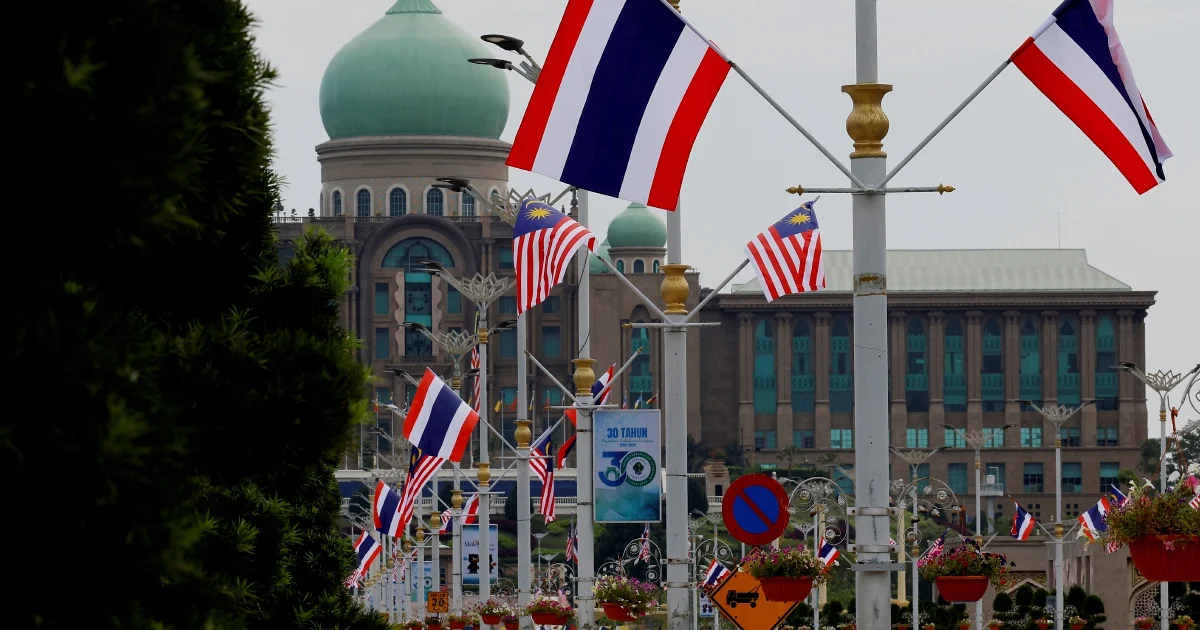
Thai Prime Minister Anutin Charnvirakul will arrive in Malaysia on Thursday for a two-day official visit aimed at deepening bilateral cooperation on border infrastructure and agricultural development. The visit represents a significant diplomatic engagement between Bangkok and Kuala Lumpur, with particular emphasis on connectivity projects that could reshape regional trade patterns and people-to-people exchange across their shared border.
The centrepiece of Anutin's visit will be the official inauguration of a new border road, a project that symbolises the two countries' commitment to facilitating smoother cross-border traffic and commerce. Malaysian Prime Minister Anwar Ibrahim is expected to join the Thai leader for this ceremonial occasion, underscoring the high-level nature of these engagements. Such infrastructure developments are crucial for Southeast Asian economies, as they reduce transit times and logistics costs that ultimately benefit consumers and businesses throughout the region.
Border connectivity has emerged as a priority for both nations, particularly as supply chains become increasingly integrated across ASEAN member states. Improved road networks facilitate not only commercial movement of goods but also tourism flows, which have grown substantially in recent years. The new border crossing infrastructure promises to alleviate congestion at existing crossing points and provide alternative routes that could ease transportation bottlenecks that have periodically disrupted bilateral trade.
Agriculture forms the second pillar of this diplomatic engagement, reflecting the shared economic interests of both nations. Thailand and Malaysia both rely significantly on agricultural exports, and cooperation in this sector—whether through knowledge exchange, pest management initiatives, or harmonised standards—can enhance competitiveness in international markets. Discussion during the visit is likely to cover agricultural research collaboration, supply chain coordination, and perhaps mechanisms to address climate-related challenges affecting farming communities in both countries.
For Malaysia, strengthening ties with Thailand holds particular strategic importance given the geographic proximity of the northern states to Thailand's southern provinces. Enhanced cooperation can address transnational challenges including wildlife trafficking, environmental protection, and security concerns that often require coordinated policy responses. The agricultural dimension is especially relevant to Kedah, Perlis, and Terengganu, where farming communities depend on cross-border market access and seasonal labour arrangements that function more effectively within frameworks of bilateral goodwill.
Thailand's perspective on this visit reflects its broader regional strategy to position itself as a connectivity hub within Southeast Asia. By strengthening infrastructure links with major neighbours like Malaysia, Thailand enhances its role as a transit country while attracting regional investment and business activity. The visit also signals Thailand's commitment to deepening ASEAN integration at the bilateral level, complementing the bloc's broader work on regional connectivity frameworks.
The timing of this official visit carries additional significance given the evolving geopolitical landscape in Southeast Asia. As regional powers increasingly compete for influence through infrastructure investment and trade partnerships, bilateral engagements between ASEAN members reinforce intra-regional ties and demonstrate commitment to multilateral cooperation over external alignment. Malaysia and Thailand, as founding ASEAN members, have substantial stakes in ensuring the bloc remains cohesive and forward-looking.
Beyond infrastructure and agriculture, these high-level visits typically provide opportunities to discuss broader regional security and economic issues. Discussions may touch upon tourism recovery following pandemic-related disruptions, investment promotion in border regions, and coordination on matters affecting the Straits of Malacca and regional maritime security. Educational and cultural exchanges often feature prominently in such visits, fostering deeper mutual understanding between populations.
The economic implications of improved border connectivity extend beyond bilateral trade to encompass third-country commerce. Malaysia's role as a hub for regional logistics means that enhanced routes to Thailand facilitate not only Thai-Malaysian trade but also commerce flowing through both nations to other ASEAN destinations. Similarly, agricultural cooperation can strengthen the competitiveness of both nations' farm sectors in competition with suppliers elsewhere in Asia and globally.
For Malaysian businesses, particularly those in logistics, agriculture, and tourism, this visit signals policy commitment to border region development that may unlock investment opportunities. Companies operating in these sectors often face regulatory uncertainty at border areas, and high-level diplomatic engagement typically precedes policy clarification and implementation of facilitative measures.
The visit also reflects successful management of bilateral relations, as Thailand and Malaysia have occasionally experienced tensions over maritime boundaries and resource sharing in the past. Focusing on mutually beneficial projects like border infrastructure and agricultural cooperation demonstrates a pragmatic approach to navigating differences while emphasising shared interests and complementary economic structures.
As the visit unfolds, observers will watch for announcements regarding timeline and funding for additional infrastructure projects, potential new agricultural initiatives, and any formal agreements on cooperation frameworks. Such concrete outcomes would validate the diplomatic effort and provide direction for future bilateral engagement.

