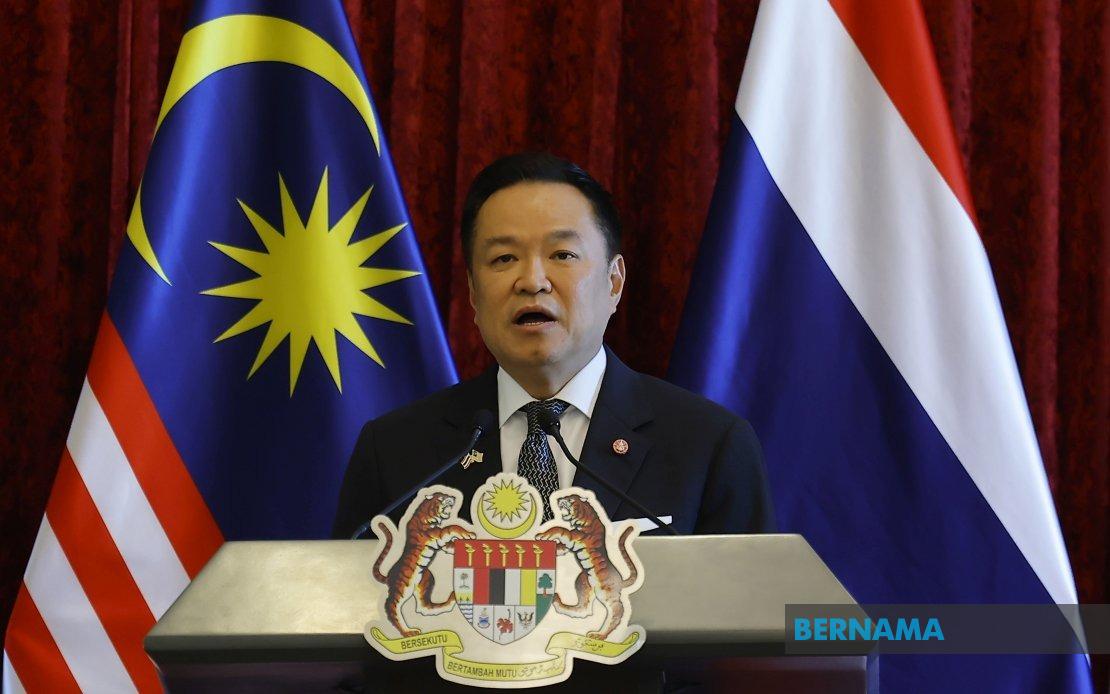
Thailand's Prime Minister Anutin Charnvirakul travelled to Putrajaya on July 9 to offer his support to Malaysia's Prime Minister Datuk Seri Anwar Ibrahim ahead of the Johor state election, underscoring the strengthening personal rapport between the two regional leaders. The Thai leader's well-wishes came during a joint press conference concluding his official two-day visit to Malaysia, an engagement that reflects the deepening strategic partnership between Bangkok and Kuala Lumpur. Anutin's gesture, whilst diplomatic in nature, carries significance given the considerable regional attention focused on the electoral contest unfolding in Malaysia's southern states.
The Johor state election, slated for polling this Saturday, represents a significant political contest within Malaysia's complex electoral landscape. A total of 172 candidates are vying to secure one of 56 available seats in the state assembly, creating a competitive field across all constituencies. Anwar's coalition, Pakatan Harapan, has committed to fielding candidates throughout the entire state, assembling teams from its three core component parties: PKR, DAP, and Amanah. The lineup deliberately balances experienced politicians with fresh political talent, a strategic approach intended to project both continuity and renewal to Johor's electorate.
Anwar's characterisation of his meeting with Anutin emphasised the personal warmth and diplomatic comfort that has developed between the two premiers. In his remarks, the Malaysian Prime Minister drew parallels to friendships forged over time, suggesting a level of familiarity and mutual understanding that extends beyond the ceremonial formalities typical of bilateral state visits. His invitation for Anutin to return soon to Malaysia reflects Malaysia's commitment to sustaining engagement with its northern neighbour, a relationship that carries particular importance for regional stability and economic cooperation in Southeast Asia.
Anutin's visit marks his first return to Malaysia since his reappointment to Thailand's premiership in March 2026, an interval that underscores the significance attached to this particular engagement. The Thai leader's decision to time his visit during Malaysia's electoral period, whilst offering election wishes, demonstrates Bangkok's interest in maintaining strong ties with Malaysia's government regardless of electoral outcomes. This diplomatic positioning is consistent with Thailand's broader strategy in Southeast Asia, where cultivating relationships with multiple Malaysian political actors ensures continuity in bilateral arrangements.
The bilateral agenda during Anutin's visit extends beyond electoral pleasantries to substantive matters affecting both nations. The two governments have identified numerous areas requiring deepened cooperation, encompassing trade, security, transboundary issues, and regional integration initiatives. Malaysia and Thailand, as neighbouring members of the Association of Southeast Asian Nations, face shared challenges in border management, infrastructure development, and economic complementarities that demand ongoing policy coordination. The strengthening of personal relationships between leaders often facilitates more effective governmental cooperation on these practical matters.
From Malaysia's perspective, Anwar's government appears intent on positioning the country as a stable and reliable partner within Southeast Asia during a period of significant regional geopolitical flux. Thailand's confirmation of confidence in Malaysia's leadership, expressed through Anutin's visit and well-wishes, contributes to this positioning. The timing of the Thai premier's visit, coinciding with an important domestic electoral moment, suggests both nations understand the value of demonstrating regional continuity and institutional strength during transitional political periods.
The Johor election carries implications extending beyond the state itself, as electoral outcomes often signal broader shifts in Malaysia's political dynamics. Pakatan Harapan's performance in this contest will provide meaningful indicators regarding the coalition's capacity to sustain electoral momentum and voter support in key peninsular states. For regional observers including Thailand, understanding Malaysia's domestic political evolution remains important for predicting the country's foreign policy direction and commitment to regional initiatives.
Anutin's official visit represents the culmination of sustained diplomatic engagement between Malaysia and Thailand at the highest levels. These interactions, whether occurring during elections or routine bilateral business, reinforce the institutional frameworks and personal relationships that anchor Southeast Asian regional cooperation. The Thai premier's warm and public expression of support for Anwar's electoral prospects demonstrates the mutual respect that characterises contemporary Malaysia-Thailand relations, a foundation that transcends individual electoral cycles.
Looking forward, the Johor election results will likely shape the composition of Malaysia's state governments and potentially influence the trajectory of national politics. Thailand's demonstrated interest in maintaining strong working relationships with Malaysia's leadership, as evidenced by Anutin's high-level visit, reflects Bangkok's pragmatic approach to regional diplomacy. Regardless of electoral outcomes, the groundwork laid by leaders like Anutin and Anwar ensures that bilateral cooperation between these two significant ASEAN members remains resilient and forward-looking, supporting both nations' shared interests in regional peace, prosperity, and integration.

