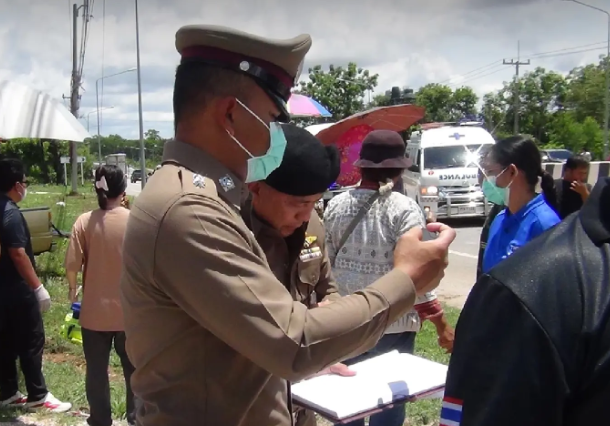
A tragic vehicular incident in Thailand's northeast has resulted in the deaths of 10 Buddhist monks, with the toll climbing after an 11-year-old child commandeered a pickup truck and drove it directly into a procession of religious devotees on Thursday. The collision occurred in Mukdahan province as monks and lay followers participated in a pilgrimage journey along a rural roadside. Emergency services were called to the scene, where immediate triage separated the critically injured from those with less severe trauma, yet despite rapid medical response, the toll would steadily rise as victims succumbed to their injuries throughout Friday and into the hospital recovery phase.
Hospital authorities at Mukdahan Hospital provided updates indicating that ten additional people sustained injuries in the crash, with two remaining in critical condition as medical staff worked to stabilise their vital functions. Eight other patients faced non-critical injuries requiring ongoing treatment and observation. The scale of the incident—impacting a group numbering approximately 40 individuals comprising 35 monks and five civilian followers—underscores the magnitude of devastation wrought in those moments when the vehicle struck the defenceless procession. The hospital's continued care for survivors reflects the region's medical response capacity while highlighting the sheer force of impact that would claim lives both instantaneously and in subsequent hours.
Investigations by Mukdahan City Police, headed by chief Prayut Ruanthongkam, quickly identified the driver as an 11-year-old child who had taken his parents' vehicle without authorisation. The circumstances surrounding how a young boy obtained access to keys and managed to operate a full-sized pickup truck—and subsequently how he came to be on the roadway at the moment of collision—remain subjects of ongoing inquiry. Prayut confirmed to international media that the boy was unable to provide coherent statements to investigating officers, a condition that could stem from shock, injury, or the psychological trauma of having caused such devastation. Rather than proceeding through criminal channels, the child was referred to child welfare authorities for comprehensive psychological and physical assessment, accompanied by his mother.
Thailand's legal framework affords significant protections to children under 12 years of age, who carry no criminal liability regardless of the severity of circumstances they may cause. This provision reflects international child protection principles but also creates investigative complexities when minors are involved in catastrophic incidents. Law enforcement officials pivoted their inquiry toward gathering evidence from witnessing monks and procession participants who survived the impact, their testimonies potentially illuminating the moments preceding collision, the vehicle's speed, and whether warning signs were visible. These statements would form the evidentiary foundation of any subsequent report, though the absence of criminal charges against the child fundamentally alters the nature of the investigation.
The monks who perished represent a profound loss within Thai Buddhist communities, where monastic orders occupy a uniquely revered position in society and spiritual life. Five monks died instantly at the crash scene, their bodies remaining at the site until formal procedures could be initiated, while an additional five perished later within hospital walls despite medical interventions. Buddhist monastic tradition emphasises the monks' roles as custodians and transmitters of the Buddha's teachings, making their deaths not merely personal tragedies but losses affecting the broader religious and cultural fabric of Thai society. The reverence with which monks are regarded—evidenced by widespread public almsgiving practices and ceremonial respect—means that news of such deaths resonates deeply across the nation.
Religious processions form an integral component of Thai Buddhist practice, with monks regularly undertaking public walks to receive alms, distribute blessings, and engage in community spiritual life. These processions typically proceed along established routes during auspicious occasions and religious observances, creating what many Thais perceive as sacred public spaces. The pilgrimage underway in Mukdahan province on Thursday would have followed customary patterns, yet the intrusion of a motor vehicle operated by a child without driving competency transformed an expected spiritual exercise into a scene of tragedy. The incident raises troubling questions about vehicular safety near religious gatherings and community spaces where vulnerable populations congregate.
Wat Roi Phra Phutthabat Phu Manorom, a hilltop temple located in Mukdahan, became a receiving point for surviving monks and lay followers affected by the crash. The temple's capacity to shelter and support recovery efforts for affected individuals reflects the Buddhist institution's practical role beyond spiritual guidance. Monks who survived the physical trauma now require both medical care and psychological support as they process the loss of their companions. The temple has mobilised resources to provide sanctuary and pastoral care, embodying the Buddhist principle of communal responsibility and mutual aid during periods of collective suffering.
The incident occurs within a broader context of road safety challenges across Southeast Asia, where vehicle-related fatalities rank among leading causes of preventable death. Thailand particularly grapples with traffic safety issues stemming from various factors including enforcement gaps, driver training deficiencies, and vehicle maintenance standards. This tragedy, rooted in a child's unauthorised vehicle operation, adds a distinct dimension—highlighting inadequate supervision mechanisms and vehicle security measures within households. Parents' responsibility to secure vehicle access from children remains imperfectly addressed across the region despite repeated incidents underscoring such risks.
For Malaysia and other Southeast Asian nations, the incident offers cautionary implications regarding traffic safety protocols, child supervision standards, and the protection of religious gatherings in public spaces. The tragedy underscores recurring vulnerabilities in vehicle access control and the potential for catastrophe when preventive measures fail. Malaysian authorities and community leaders may find relevance in examining similar risks within their own jurisdictions, particularly concerning religious processions, temple visits, and other gatherings where congregations of vulnerable individuals occupy roadways or transit zones. The Mukdahan incident stands as a sobering reminder that infrastructure safety and social responsibility interconnect in preventing such devastation.

