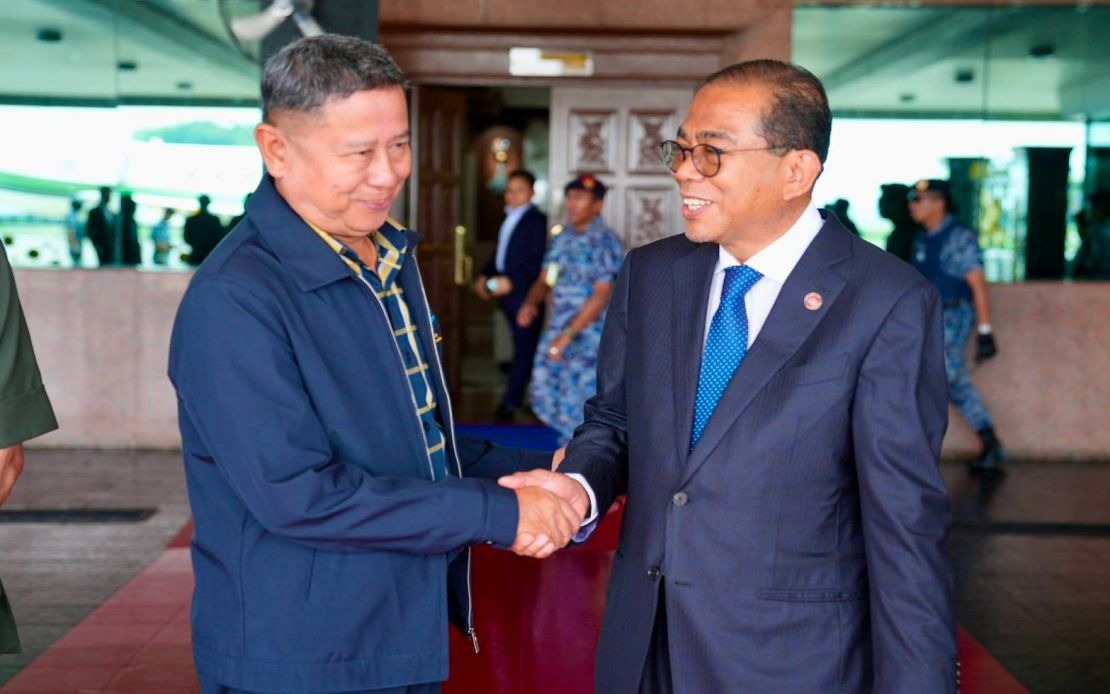
Thailand's Defence Minister Lt Gen Adul Boonthamcharoen travelled to Kuala Lumpur on Wednesday for an unscheduled meeting with Malaysian Defence Minister Datuk Seri Mohamed Khaled Nordin, underscoring Bangkok's concern over deteriorating security conditions in its troubled southern border provinces. The high-level encounter came at a particularly sensitive moment, just one day after Thailand announced the temporary suspension of long-awaited peace negotiations with southern insurgent groups that had been scheduled to convene in Malaysia in September.
The timing of the diplomatic engagement reflects the gravity of the security situation facing both nations. A significant attack in Narathiwat province the previous week had prompted the Thai government to implement martial law across 13 districts, signalling an escalation in violence that threatens the fragile peace-building framework both countries have invested considerable resources in maintaining. The immediate convening of defence ministers underscores how closely aligned Bangkok and Kuala Lumpur remain on regional security matters, despite the setback to formal negotiations.
During their discussions, the Thai side presented comprehensive briefings on recent security developments and outlined Bangkok's ongoing strategic response to the insurgency. Thai Defence Ministry officials emphasised Thailand's unwavering commitment to advancing the peace-building process while maintaining public safety and elevating living standards for inhabitants of the affected regions. The Thai government also stressed its determination to rebuild confidence among all stakeholders in the conflict, recognising that sustainable resolution requires trust-building alongside security operations.
The exchange of perspectives between Adul and Datuk Seri Mohamed Khaled Nordin focused specifically on the rapidly changing security landscape in Thailand's southern border areas. Both ministers discussed the complex interconnections between cross-border military operations, intelligence operations, and the broader regional stability concerns that affect both nations. The conversation revealed mutual recognition that security challenges do not respect international boundaries, and that coordinated action remains essential for addressing transnational threats.
Crucially, the two ministers reaffirmed their mutual commitment to expanding bilateral security cooperation through multiple channels. They prioritised enhanced intelligence-sharing mechanisms, improved border security coordination, and joint planning to address the evolving threat environment that has characterised the region in recent years. This cooperative framework extends beyond reactive responses to immediate security incidents, reflecting instead a strategic vision for deeper institutional ties that can withstand fluctuations in the political situation.
Adul articulated Thailand's perspective on the relationship between the two nations, emphasising that Bangkok views Malaysia not merely as a neighbouring state but as a crucial security partner whose role is indispensable to regional stability. The Defence Minister highlighted that proximity, shared interests, and complementary security concerns create natural grounds for comprehensive cooperation. He underscored that Thailand intends to build this partnership on foundations of mutual confidence and respect, rather than pursuing security objectives unilaterally or in ways that might compromise Malaysian interests.
The Thai government's position, as articulated in the Defence Minister's statement, positions cooperation and collective action as prerequisites for achieving lasting peace in the southern border provinces. Rather than suggesting that either nation can resolve the insurgency through independent military or diplomatic means, Thai officials acknowledged that sustainable peace requires genuine partnership, honest dialogue among all parties, and coordinated efforts across multiple domains. This framing suggests Thai recognition that Malaysia's role as a neutral ground for talks and a neighbouring country with its own security interests makes it indispensable to any resolution process.
For Malaysia, this engagement carries particular significance. As the traditional venue for peace negotiations and a state with deep cultural and religious ties to Thailand's Malay-Muslim population, Malaysia occupies a unique position in Thailand's peace-building efforts. The briefing suggests Bangkok values Malaysian understanding of the complexities involved and seeks to ensure that Kuala Lumpur remains committed to supporting the peace process even as negotiations face setbacks. Maintaining Malaysian backing is strategically important, as Thailand must demonstrate to insurgent groups that regional powers support its peace initiatives.
The suspension of peace talks announced by National Intelligence Agency Director Thanat Suwannanont, who heads the Southern Border Provinces Peace Dialogue Panel, represents a significant setback to diplomatic efforts that have consumed years of negotiation. The deadly Narathiwat attack that triggered the suspension serves as a stark reminder that the conflict remains active and capable of claiming lives despite ongoing diplomatic engagement. The decision to impose martial law in 13 districts reflects Bangkok's dilemma: security operations necessary to contain violence risk undermining the atmosphere of trust essential for meaningful negotiations.
This security crisis illuminates the broader challenge facing Southeast Asia's most intractable conflicts. The Thailand insurgency combines elements of separatism, religious grievance, criminal networks, and cross-border support structures that no single nation can adequately address alone. Malaysia's geographical position and diplomatic experience make it crucial to any sustainable solution. The bilateral defence dialogue thus represents not merely a response to immediate events but part of a longer-term strategy to maintain regional cooperation frameworks even when formal negotiations must be suspended.
For Malaysian readers and policymakers, the significance extends beyond bilateral relations with Thailand. The southern border conflict affects regional security architecture, influences migration patterns, impacts trade flows through the Strait of Malacca, and shapes broader perceptions of Southeast Asian stability. Malaysia's role as mediator and partner in Thailand's peace efforts carries genuine weight in regional calculations. The Defence Ministry engagement suggests Malaysia's commitment to remaining actively involved in addressing this challenge, recognising that Thailand's security directly affects Malaysian interests.

