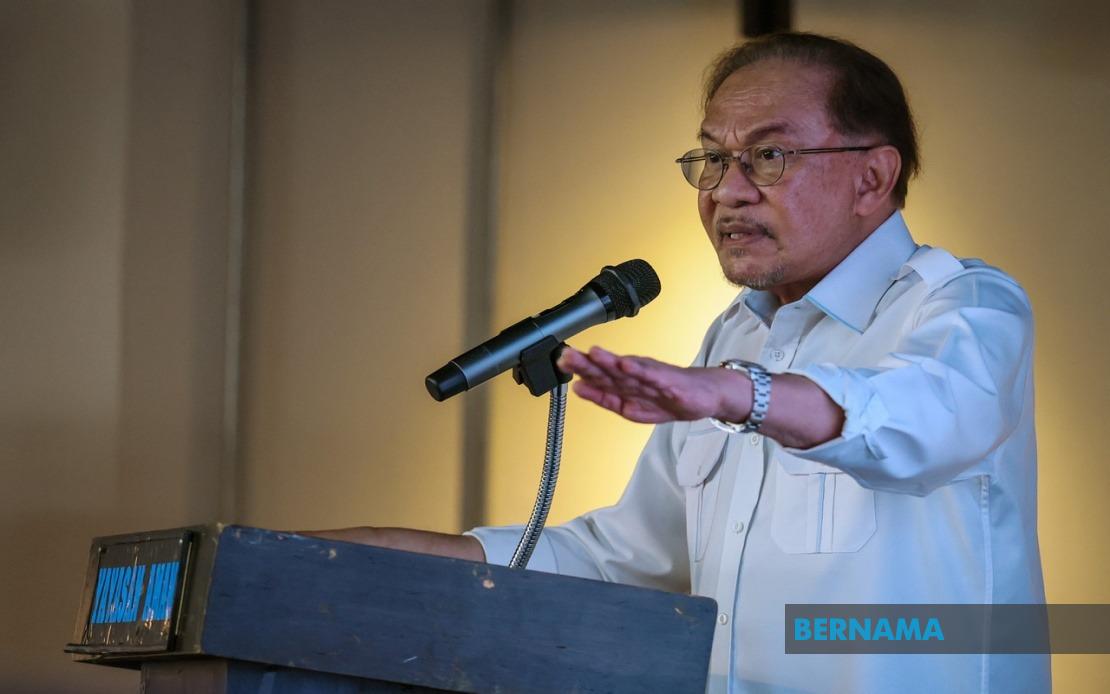
Prime Minister Datuk Seri Anwar Ibrahim has reiterated the government's determination to continue investigations into findings from the Royal Commission of Inquiry report on Lembaga Tabung Haji, underscoring that any action taken must be anchored firmly in evidence and adherence to the law. Speaking during a MADANI Permatang Pauh Usahawan Bangkit Scheme launch at Dewan Yayasan Aman in Penanti, Anwar stressed that allowing wrongdoing to pass unaddressed would expose the country to ongoing financial damage, yet acknowledged the political difficulty of pursuing accountability measures.
The Prime Minister articulated a frustration with the contradiction he perceives in public reaction to his administration's handling of the Tabung Haji situation. He pointed out that critics argue both against taking action to address losses and against implementing corrective measures when they are proposed, creating an untenable position. This tension reflects a broader challenge facing Malaysian governance: balancing the imperative to recover state assets and punish malfeasance against concerns about due process, political motivations, and the credibility of investigations.
Anwar specifically highlighted the scale of the alleged losses, referencing claims that RM12 billion had been compromised. However, he emphasised that mere assertion of financial harm is insufficient; the investigation must establish precisely how those losses occurred, when they took place, and who bears responsibility for them. This methodical approach reflects an attempt to ground the inquiry in verifiable facts rather than political narrative, though critics have questioned whether the government possesses the institutional capacity and political will to follow such evidence wherever it leads.
The Prime Minister outlined what he views as the proper framework for accountability in Malaysia: investigations must be thorough, evidence must be gathered and evaluated rigorously, charges should be filed only when the case is sufficiently strong, and ultimately judicial determination should be relied upon rather than political pronouncement. This framework nominally respects the separation of powers and the independence of the judiciary, though observers have noted persistent questions about whether these institutions operate free from political influence in high-profile cases affecting government institutions.
Anwar's remarks come at a sensitive juncture for the Tabung Haji issue, which has emerged as one of the most controversial episodes affecting the Malaysian government's financial stewardship and institutional integrity. The RCI report revealed substantial irregularities in how the hajj savings body managed funds, raising questions about governance, oversight, and whether deliberate wrongdoing or systemic negligence allowed losses to accumulate. For many Malaysian Muslims who contributed to Tabung Haji expecting their savings to be protected, the findings triggered profound concerns about institutional trustworthiness.
The government's approach to the Tabung Haji matter carries implications beyond the immediate case. How decisively and fairly authorities pursue the RCI recommendations will signal to the public whether the administration can credibly investigate and prosecute wrongdoing within state institutions, particularly those affecting ordinary citizens' savings and religious institutions. A perception that investigations are pursued selectively or influenced by political considerations could further erode public confidence in institutional integrity.
Anwar's insistence on due process and evidentiary foundation also reflects awareness of legitimate concerns about weaponising investigations for political purposes. Malaysia's political history includes instances where inquiries have been perceived as tools for settling scores rather than establishing truth, and international observers have periodically commented on questions regarding judicial independence in sensitive cases. By anchoring the Tabung Haji investigation explicitly in law and evidence, the Prime Minister attempted to position it as distinct from potential politically-motivated action.
The challenge confronting the government involves pursuing accountability without appearing vindictive, recovering compromised assets while respecting individual rights, and maintaining public confidence that the process serves the national interest rather than factional advantage. These tensions are particularly acute given that several individuals potentially implicated in Tabung Haji irregularities have political connections, raising inevitable questions about whether investigations will be pursued with equal vigour regardless of political affiliation.
For Malaysian citizens and observers in Southeast Asia, the Tabung Haji RCI outcome carries broader significance regarding institutional governance in the region. State-owned enterprises and Islamic financial institutions managing public funds face constant pressure to balance commercial objectives with fiduciary responsibilities. How Malaysia's government responds to evidence of systematic failure at Tabung Haji will influence expectations and standards across the region regarding accountability for institutional lapses.
Anwar's statements suggest the government intends to pursue the Tabung Haji investigation methodically rather than seeking rapid political resolution. Whether investigations will yield prosecutions, asset recovery, and institutional reforms that genuinely address the underlying governance failures remains to be determined. The coming months will clarify whether the government's commitment to evidence-based accountability translates into concrete action that satisfies both the public demand for accountability and international standards of due process.

