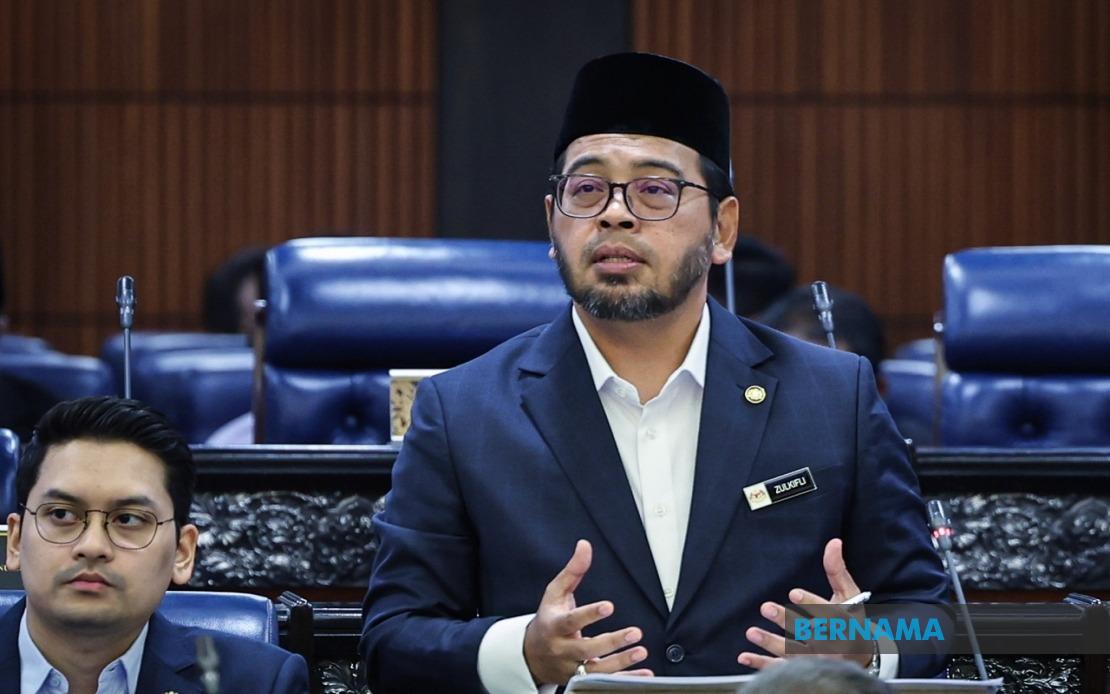
Lembaga Tabung Haji's financial collapse could have been prevented entirely had the Islamic pilgrimage fund heeded repeated warnings from Bank Negara Malaysia, according to Religious Affairs Minister Dr. Zulkifli Hasan, speaking during parliament's special session to debate the Royal Commission of Inquiry's damning findings on the institution's mismanagement and near-insolvency.
Zulkifli told the Dewan Rakyat that BNM dispatched five formal warning letters to TH's leadership between August 2014 and September 2016, flagging serious concerns about the organisation's financial health, reserve adequacy, and liquidity management. Rather than triggering decisive intervention, these alerts were largely ignored by TH's management and the ministry overseeing it, allowing deteriorating conditions to compound unchecked for years.
The cumulative cost of this negligence became starkly apparent by late 2018, when TH's liabilities exceeded its assets by approximately RM10 billion—a deficit so severe that only a government bailout could prevent a systemic financial crisis. The minister's remarks underscore a troubling pattern: institutional warnings that should have prompted immediate corrective action instead languished without meaningful response, transforming what could have been a manageable governance issue into a national scandal affecting millions of Malaysian pilgrims whose savings were at stake.
A particularly damning finding in the RCI report concerns TH's audit history. Rather than receiving clean certificates from its auditors, the institution should have been flagged with qualified opinions noting serious departures from acceptable financial practice. The most egregious violations involved dividend declarations made when liabilities exceeded assets—a direct contravention of Section 22 of the Tabung Haji Act. This wasn't a one-time accounting error but a sustained practice, continuing through 2017, that artificially distributed the organisation's remaining capital while its financial position deteriorated.
The dividend payments took a particularly troubling form in the hibah distributions, where TH granted investor returns that bore no relationship to actual financial performance or the organisation's true condition. These grants continued without prudential oversight, misleading savers about the health of their investments and accelerating the depletion of reserves. For Malaysian Muslims who had contributed to the fund as part of their spiritual obligation to perform the Hajj pilgrimage, these practices represented not merely financial mismanagement but a betrayal of trust.
Zulkifli acknowledged that BNM, acting within its mandate to safeguard Malaysia's financial stability, had maintained ongoing monitoring of TH and engaged in discussions with management about remedying the identified deficiencies. However, TH's response proved entirely inadequate. Despite claims of taking corrective steps, the evidence presented to parliament demonstrated that management paid scant regard to the central bank's warnings, allowing problems to mushroom rather than contract.
The government's remedial response now encompasses multiple fronts. Amendments to the Tabung Haji Act 1995 are being fast-tracked through parliament to strengthen governance architecture and prevent recurrence of similar abuses. Forensic auditing has already commenced on the problematic investment portfolios identified in the RCI investigation, while a proposed Multi-Agency Task Force will systematically examine each at-risk investment to quantify losses and trace how assets were misapplied.
These measures reflect acknowledgment that TH's failings represented systemic governance breakdown rather than isolated mistakes. The institution's board, management, and oversighting ministry all bore responsibility for allowing conditions to deteriorate for years despite explicit warnings. For Malaysian depositors and prospective pilgrims, the reforms signal a commitment to restore institutional credibility, though rebuilding trust after such comprehensive failure will require sustained demonstration of improved practices.
The parliamentary debate itself highlighted the parliament's appetite for accountability, with 39 members participating across more than ten hours of discussion. Speaker Tan Sri Johari Abdul noted that a third meeting devoted to TH accountability is scheduled for October, signalling that legislators intend to maintain pressure on the government to implement promised reforms and recover misallocated assets where possible.
For Southeast Asia's broader financial regulatory ecosystem, TH's experience offers cautionary lessons about the importance of heeding regulatory warnings and maintaining robust governance standards in large institutions managing public savings. Many regional pilgrimage and retirement funds operate under similar structures, making the case study particularly relevant to policymakers across Muslim-majority nations concerned with protecting accumulated capital in the hands of trust-based institutions.
The government's commitment to investigation, enforcement action, asset recovery, and legislative strengthening represents the minimum necessary response. However, the preventable nature of this crisis—explicitly avoidable had 2014 warnings been taken seriously—raises questions about the broader culture of regulatory compliance and accountability within Malaysian public institutions that will likely extend beyond TH itself.

