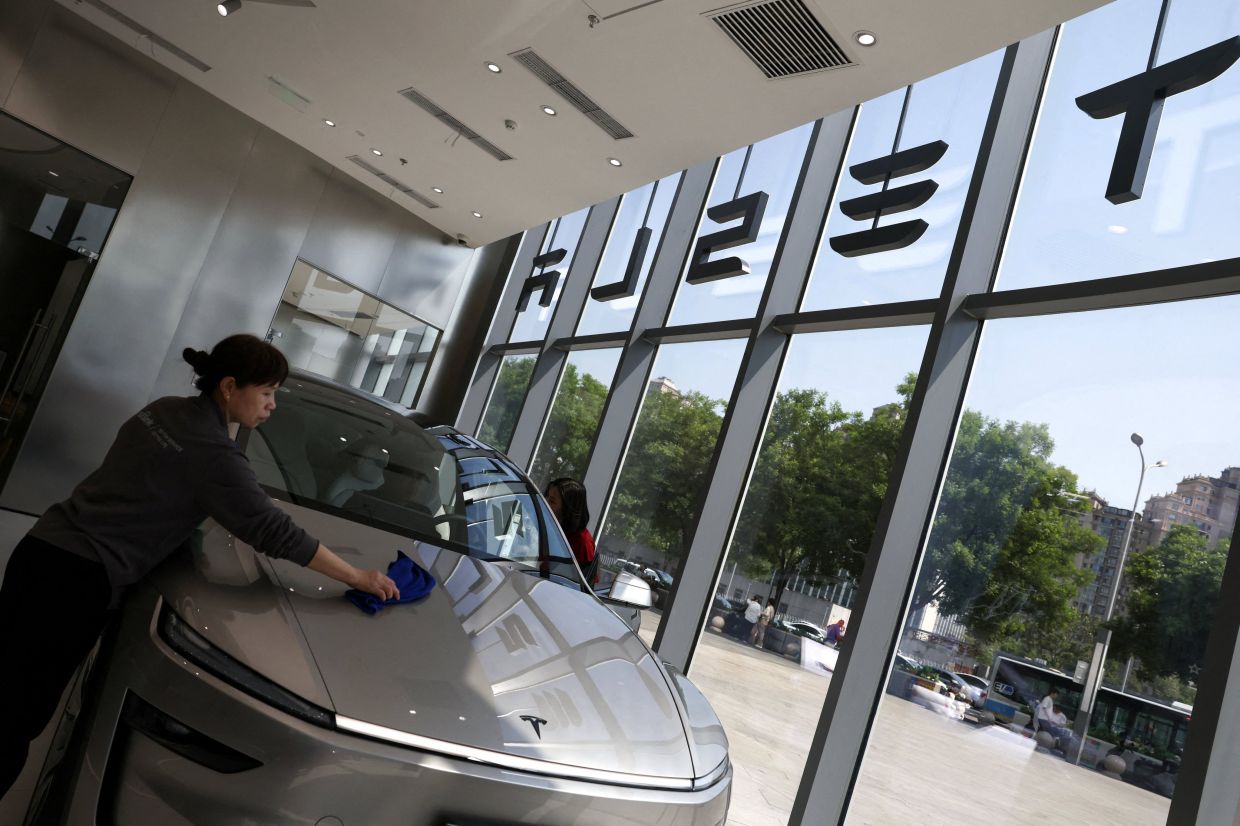
Tesla faces an unprecedented challenge in its second-largest market as it navigates a sweeping safety crackdown in China. The US automaker has announced a massive recall encompassing 2.98 million vehicles, marking the most significant product recall ever issued in mainland China's electric vehicle sector. The recall underscores growing tension between international manufacturers and increasingly stringent Chinese safety standards, while also reflecting broader consumer anxieties about emerging EV technologies that prioritise design aesthetics over mechanical safety features.
The regulatory intervention stems from a tragic incident that galvanised public concern throughout the country. In October of last year, a fatal accident involving a Xiaomi SU7 Ultra electric car in Sichuan province exposed a critical vulnerability in retractable door-handle designs. When the vehicle caught fire, bystanders attempting to rescue the 31-year-old driver discovered they could not manually open the doors, prompting urgent questions about whether such sleek, technology-dependent features compromise occupant safety during emergencies. The incident triggered a cascade of regulatory scrutiny that has since reshaped industry standards across the sector.
Responding to mounting public concern and regulatory pressure, China's Ministry of Industry and Information Technology formally announced plans in February to eliminate retractable door handles from new vehicle designs. Beginning next year, all cars sold in the Chinese market must incorporate both internal and external door handles capable of mechanical operation at all times, regardless of whether the vehicle has suffered an accident, experienced power failure, or encountered any other malfunction. This mandate represents a significant departure from the minimalist design philosophy that has defined premium electric vehicles in recent years, forcing manufacturers to reconsider fundamental engineering approaches.
Tesla's response demonstrates the scale of the challenge facing global automakers attempting to balance innovation with safety compliance. The company will implement multiple corrective measures across its recalled fleet. Starting from September 25, Tesla will affix warning labels to internal door handles on all affected vehicles. Simultaneously, the manufacturer will deploy over-the-air software updates to modify window-control functionality, automatically lowering windows following a collision to provide an alternative emergency exit mechanism. These technical solutions attempt to address regulatory concerns without requiring complete mechanical redesign, though their effectiveness remains subject to ongoing evaluation.
The recall encompasses vehicles produced across multiple Tesla factories, with particularly significant consequences for the Shanghai manufacturing facility. Approximately 2.74 million Model 3 and Model Y vehicles assembled at this location will undergo additional software updates to enhance driver-assistance systems. These modifications ensure that assisted steering and other safety functions remain engaged when drivers fail to respond appropriately during collision scenarios, adding a critical layer of automated protection during emergencies. The Shanghai plant's production capacity, which generated roughly 851,000 vehicles in 2025 destined for both Chinese and international markets, underscores the facility's central importance to Tesla's global operations.
Tesla's overall production numbers reveal the severity of recent market pressures. In 2025, global output dropped 8.6 percent to 1.63 million units compared to the previous year, a decline that coincides with intensifying competition in China's electric vehicle market and regulatory challenges. Despite this contraction, China remains Tesla's second-largest market worldwide, surpassed only by the United States in terms of revenue and strategic importance. The country's manufacturing base and consumer demand make Chinese regulatory compliance non-negotiable for the company's long-term viability in the region.
While Tesla carries primary responsibility for the largest announced recall, the company remains merely one participant in a broader regulatory realignment affecting the entire automotive sector. Multiple domestic and international manufacturers produce vehicles with retractable door handles, and regulators have signalled that compliance expectations apply uniformly across all producers. Industry observers anticipate that Tesla's massive recall will catalyse comparable actions from competing manufacturers, potentially triggering a wave of large-scale recalls throughout 2025 and beyond as companies retrofit existing vehicles and modify future production lines.
Zhang Wenjie, who operates a car maintenance workshop in Shanghai, characterises the regulatory intervention as an overdue market correction. The safety emphasis emerging from regulators and consumers has fundamentally shifted industry priorities, according to his assessment. The recall phenomenon, while costly for manufacturers, may ultimately strengthen the sector by establishing design standards that prioritise mechanical reliability over technological innovation. This recalibration reflects a maturing market demanding that electric vehicle manufacturers demonstrate safety credentials comparable to conventional automobiles before introducing design features that compromise emergency functionality.
For Malaysian and Southeast Asian automotive stakeholders, the Chinese regulatory intervention carries significant implications. As regional markets increasingly adopt safety standards aligned with Chinese benchmarks, local consumers and policymakers should anticipate similar restrictions on retractable door handles and other technology-dependent safety features. The Tesla recall demonstrates that even the world's most prominent electric vehicle manufacturer must adapt rapidly to regional safety expectations, suggesting that Malaysian authorities and consumers should remain vigilant regarding imported vehicle designs that prioritise aesthetics over mechanical redundancy. The incident underscores the importance of establishing robust local testing and certification standards before allowing new technologies to proliferate throughout regional markets.

