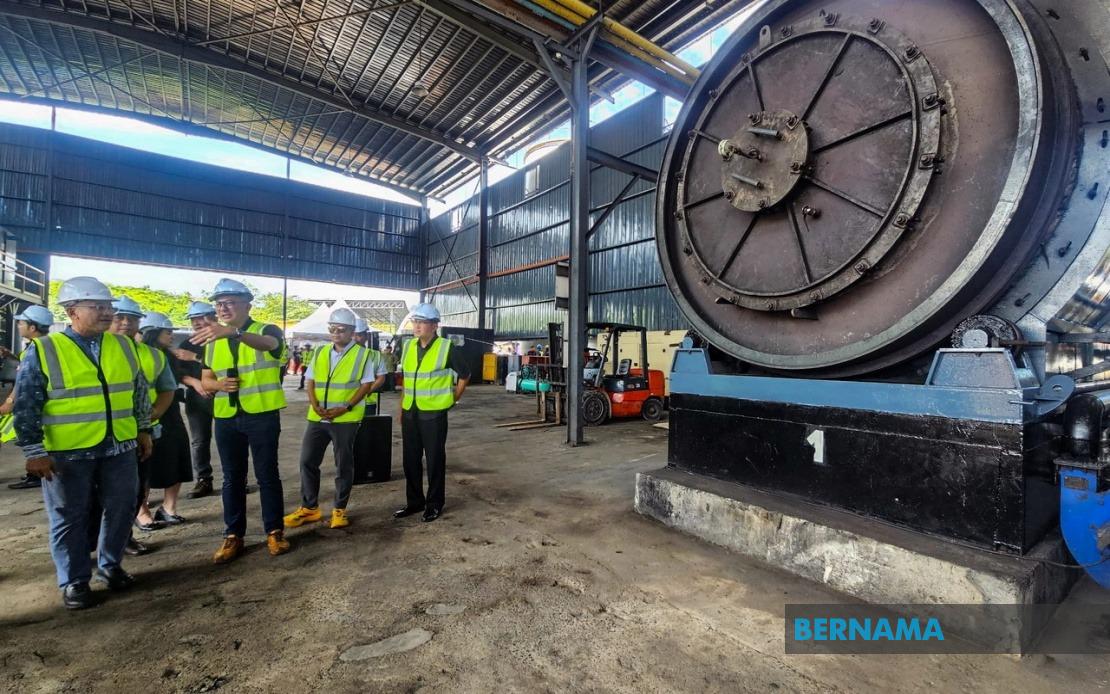
The Terengganu State Government is moving swiftly to develop transit-oriented projects around six East Coast Rail Link (ECRL) stations as the ambitious railway corridor prepares for its inaugural Phase 1 operations this December—substantially ahead of the originally planned January 2027 timeline. Menteri Besar Datuk Seri Dr Ahmad Samsuri Mokhtar outlined the acceleration strategy during a press conference at the launch of an industrial waste facility near Kerteh, signalling the state's determination to extract maximum economic benefit from the transformative infrastructure investment.
The expedited opening of the ECRL represents a significant milestone for Malaysian infrastructure development and regional connectivity. Phase 1 will run from Kota Bharu to Gombak, fundamentally reshaping how passengers and cargo move across the East Coast. Terengganu's approach to this opportunity differs markedly from treating the railway purely as a transport conduit—state officials view the corridor as a comprehensive economic catalyst that should generate ripple effects throughout the local business ecosystem. This perspective aligns with international best practices in transit-oriented development, where rail infrastructure becomes the spine supporting mixed-use development, commercial activity, and urban renewal.
Previous consultations between the state government, China Communications Construction Company Ltd (CCCC), Malaysia Rail Link Sdn Bhd (MRL), and the Ministry of Transport have identified the specific stations where TOD potential is highest. Rather than proceeding with a centralised development blueprint, the state government has chosen a pragmatic partnering model that distributes financial responsibility among multiple stakeholders. This approach shields the Terengganu treasury from shouldering development costs entirely, while still ensuring coordinated planning across the six nodes.
The state government's role focuses on foundational infrastructure provisioning—roads, electricity networks, and water supplies—creating the essential backbone upon which private investors and local entrepreneurs can build commercial enterprises. This division of labour reflects realistic budget constraints faced by many Malaysian state governments while encouraging private sector participation and risk-sharing. MRL and Terengganu Incorporated are currently engaging with potential investors to structure these partnerships, a critical phase that will determine how quickly development translates from planning documents to ground reality.
For local entrepreneurs and business owners throughout Terengganu, the ECRL stations represent unprecedented commercial opportunities. Ahmad Samsuri specifically appealed to residents to establish support businesses and services around the stations—retail, hospitality, logistics, and food services that will serve passengers and stimulate local purchasing power. This grassroots entrepreneurial engagement ensures wealth generation benefits flow to ordinary Terengganu residents rather than concentrating solely among large corporations or external investors.
Crucially, the state government is actively promoting ECRL's cargo capabilities alongside passenger services. This dual-purpose vision is economically significant, as freight revenues provide sustained income streams that pure passenger operations cannot match. Companies operating near or with access to ECRL stations are being encouraged to utilise the rail service for logistics, creating market demand that justifies the infrastructure investment and generates employment across the supply chain. Ahmad Samsuri emphasised that viewing ECRL merely as a people-mover misses the comprehensive economic potential available to Terengganu enterprises.
The planned connection to Kemaman Port substantially strengthens this cargo argument. Eastern Pacific Industrial Corporation (EPIC) Berhad, a state government subsidiary, and other port-based enterprises will gain direct rail access to hinterland markets. This port-rail integration could position Terengganu's maritime facilities as more competitive alternatives to other Malaysian ports, particularly for East Coast regional trade. Companies operating in the port precinct gain significant logistical advantages when containerised cargo can move efficiently by rail rather than relying exclusively on road transport.
Transport Minister Anthony Loke has tempered expectations by highlighting the stringent testing and commissioning requirements still underway. System Integration Testing (SIT) and Fault-Free Run (FFR) protocols must achieve completion without safety compromises—no shortcuts can be taken even to meet the December deadline. This testing rigor reflects responsible infrastructure management and ensures passengers enjoy a safe, reliable service from opening day rather than facing operational disruptions that would undermine public confidence and commercial viability.
The December acceleration compared to the original January 2027 target represents nearly a year advancement, a remarkable compression of the originally envisaged timeline. This faster realisation benefits Terengganu economically by allowing earlier revenue generation and employment creation. For Southeast Asian observers, the accelerated schedule demonstrates that the ECRL project has gained institutional momentum and management competence after earlier controversies and negotiations surrounding the project's scope and financing.
The TOD strategy reflects international urban planning wisdom increasingly adopted across Southeast Asia. Cities from Bangkok to Jakarta to Singapore have leveraged rail infrastructure to create mixed-use precincts where transport convenience attracts residential, commercial, and entertainment development. Terengganu's six-station approach will test whether this model works effectively in the Malaysian context, potentially providing a replicable template for other regions planning transit infrastructure. Success here could influence future development strategies nationwide.
Implementation success will ultimately depend on private investor confidence in the market potential around ECRL stations. Property developers, retail operators, and service providers must perceive genuine commercial viability to commit capital. The state government's commitment to basic infrastructure and regulatory clarity can facilitate this confidence, but market demand must ultimately justify private investment. How rapidly these six station precincts develop will signal whether Malaysian markets have genuinely embraced transit-oriented development principles or whether cultural preferences for distributed, car-oriented sprawl persist.
For Malaysia's broader infrastructure narrative, the ECRL represents a pivotal integration of the East Coast into national economic networks. Terengganu's proactive TOD planning ensures the railway becomes more than a transportation engineering achievement—it becomes a vehicle for regional economic transformation. The success or challenges encountered over the next two years will generate important lessons for infrastructure planning across Southeast Asia, where rail development and urban growth must be deliberately coordinated to maximise returns on substantial capital investments.

