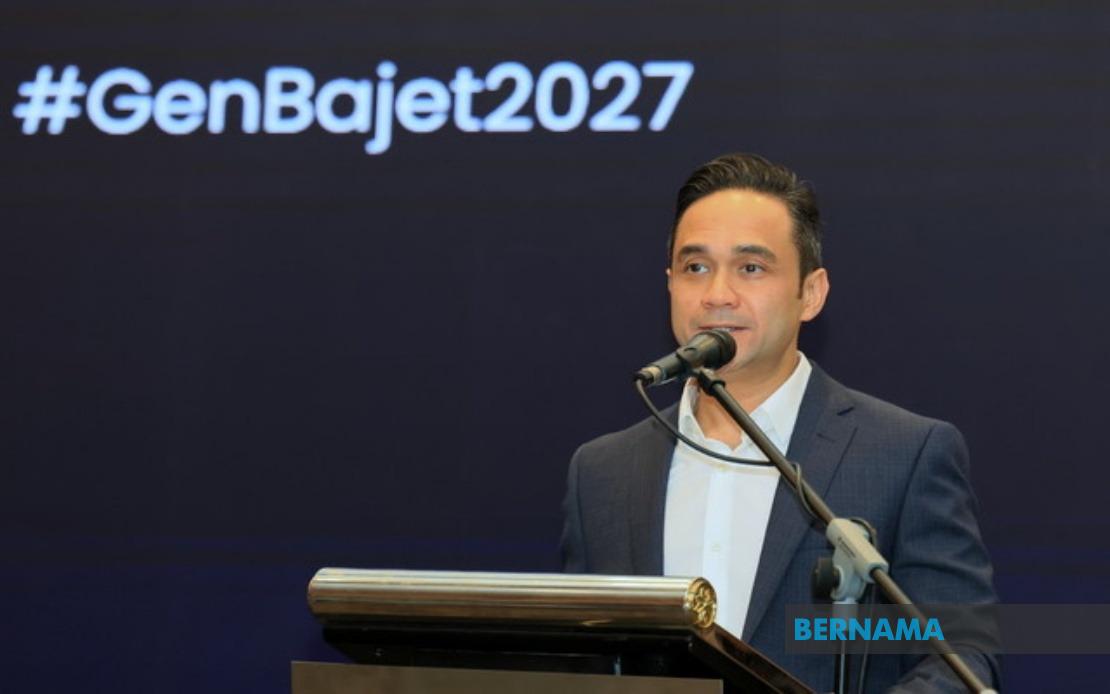
The Bumiputera Agenda Steering Unit (TERAJU) is positioning the upcoming Budget 2027 as a critical juncture for Malaysia's long-term economic empowerment strategy, calling for substantial fiscal commitment to sustain the implementation of the Bumiputera Economic Transformation Plan 2035 (PuTERA35). Speaking after attending an event in Cyberjaya on August 26, Nik Nazree Nik Abdul Rahman, senior director of TERAJU's Strategic Services Division, underscored that without adequate budgetary allocation, the government's ambitious vision to reshape Bumiputera economic participation risks stalling before reaching its full potential.
The PuTERA35 framework, launched in August 2024, represents a comprehensive decade-long strategy spanning from 2024 to 2035, designed to fundamentally transform the structure and depth of Bumiputera involvement across Malaysia's economy. The plan encompasses a sprawling architecture of 132 distinct initiatives organised around three core pillars and twelve operational drivers, all calibrated to increase Bumiputera participation, ownership, and economic control in line with the broader MADANI Economy framework championed by Prime Minister Datuk Seri Anwar Ibrahim. This structural approach reflects growing recognition among policymakers that incremental adjustments to existing programmes are insufficient; instead, a coordinated, multi-sector transformation is required to create sustainable competitive advantages for Bumiputera entrepreneurs.
Nik Nazree articulated the strategic rationale for elevated budget prioritisation, emphasising that financial resources must flow directly toward high-impact initiatives capable of delivering measurable improvements in Bumiputera socio-economic conditions. The framing moves beyond abstract targets to focus on tangible outcomes that would demonstrate whether policy implementation is genuinely strengthening Bumiputera enterprises and elevating living standards within targeted communities. This distinction between implementation progress and actual economic impact represents a subtle but significant shift in how government officials are publicly discussing these programmes, acknowledging that process metrics alone cannot validate policy success.
Energy transition emerges as a particularly compelling sector within TERAJU's budget advocacy, reflecting Malaysia's broader commitment to decarbonisation and regional competitiveness in clean energy markets. By channelling resources toward renewable energy projects and associated infrastructure development, TERAJU sees opportunities to position Bumiputera enterprises at the forefront of Southeast Asia's energy transformation, capturing value chains that will define economic competitiveness for decades. This framing connects Bumiputera economic empowerment to Malaysia's global sustainability positioning, suggesting that enhanced Bumiputera participation in energy transition is not merely a social goal but a national economic imperative.
Capital market development represents another domain where TERAJU believes Budget 2027 must deliver targeted support. The unit's analysis suggests that Bumiputera enterprises remain inadequately leveraged through equity financing and capital market mechanisms, representing an underutilised avenue for business expansion and wealth creation. By facilitating greater access to institutional capital markets, government policy could unlock growth pathways that traditional lending channels have failed to provide, particularly for ambitious mid-market Bumiputera firms seeking to scale operations regionally. This perspective reflects evolving economic thought within policy circles, recognising that equity and venture financing mechanisms may be more suited to supporting transformative business growth than conventional bank lending.
The implementation progress assessment reveals a sobering reality beneath surface-level metrics. While TERAJU reports achieving 67 per cent implementation status for PuTERA35 initiatives, Nik Nazree candidly acknowledged that this quantitative milestone does not automatically translate into qualitative economic improvements for the Bumiputera community. This gap between implementation progress and outcomes represents a persistent challenge in Malaysian economic policymaking, where governments have historically announced ambitious programmes that achieve bureaucratic completion without necessarily generating intended economic results. The candid acknowledgment suggests TERAJU leadership is grappling seriously with the distinction between administrative execution and genuine economic transformation.
Monitoring mechanisms have been embedded throughout PuTERA35's governance structure to theoretically prevent this outcomes-implementation gap from widening undetected. The Bumiputera Economic Council, chaired by Prime Minister Anwar Ibrahim, functions as the apex oversight body, while multiple working committees operate at operational levels to track progress across initiative clusters. This multi-tiered monitoring architecture theoretically enables course corrections before ineffective programmes consume disproportionate resources. However, the existence of robust monitoring structures does not automatically guarantee responsive policy adjustment, particularly when bureaucratic momentum or political considerations favour continuing programmes regardless of performance data.
The planned release of PuTERA35's comprehensive performance report at year-end signals an intent toward greater transparency and evidence-based policy refinement. This two-year retrospective assessment, emerging after approximately two years of implementation, will provide Malaysian policymakers and observers with detailed insights into which initiatives are generating measurable economic benefits and which require substantial redesign. For business stakeholders and investors monitoring Bumiputera-focused opportunities, this report may offer crucial signals about government priorities and commitment levels heading into Budget 2027 deliberations and beyond. The timing also positions the report as an input into budget negotiations, potentially strengthening TERAJU's advocacy for continued or expanded resource allocation.
The strategic alignment between PuTERA35 and the MADANI Economy framework deserves particular attention for Malaysian and regional observers seeking to understand long-term government economic direction. The MADANI framework prioritises inclusive growth, sustainability, and equitable prosperity distribution, conceptually positioning Bumiputera economic empowerment not as legacy affirmative action but as integral to modern prosperity architecture. This framing potentially broadens the coalition supporting PuTERA35 funding beyond traditional constituencies, appealing to business leaders and international investors concerned with sustainability and inclusive capitalism. Whether this reframing translates into sustained political commitment across electoral cycles remains a genuine uncertainty in Malaysian politics, where policy priorities can shift significantly following leadership transitions.
For Southeast Asian observers, Malaysia's PuTERA35 initiative carries broader implications regarding how middle-income countries approach indigenous economic empowerment in increasingly complex, globally integrated markets. The plan's sophistication—spanning multiple sectors, incorporating energy transition priorities, and attempting to leverage capital markets—suggests evolving approaches to reconciling equity objectives with competitiveness demands. Other Southeast Asian nations pursuing similar economic inclusion goals may study Malaysia's implementation experience, particularly regarding how well-designed programmes actually translate policy intent into measurable economic outcomes for target populations. The candid questions TERAJU is publicly raising about implementation effectiveness thus carry relevance extending beyond Malaysia's borders.
Budget 2027 negotiations will ultimately reveal the government's true commitment to PuTERA35 acceleration versus competing fiscal demands. Securing substantial additional allocation requires persuading Finance Ministry officials and parliamentary constituencies that enhanced Bumiputera economic transformation delivers returns justifying the investment relative to alternative spending priorities. TERAJU's advocacy positioning is methodologically sound—presenting performance data, identifying high-impact opportunities, and connecting Bumiputera empowerment to broader economic goals like energy transition. Whether such rational argumentation proves decisive in Malaysia's budget process, or whether political considerations and competing ministries' claims prove more influential, will become apparent as Budget 2027 takes shape in coming months.

