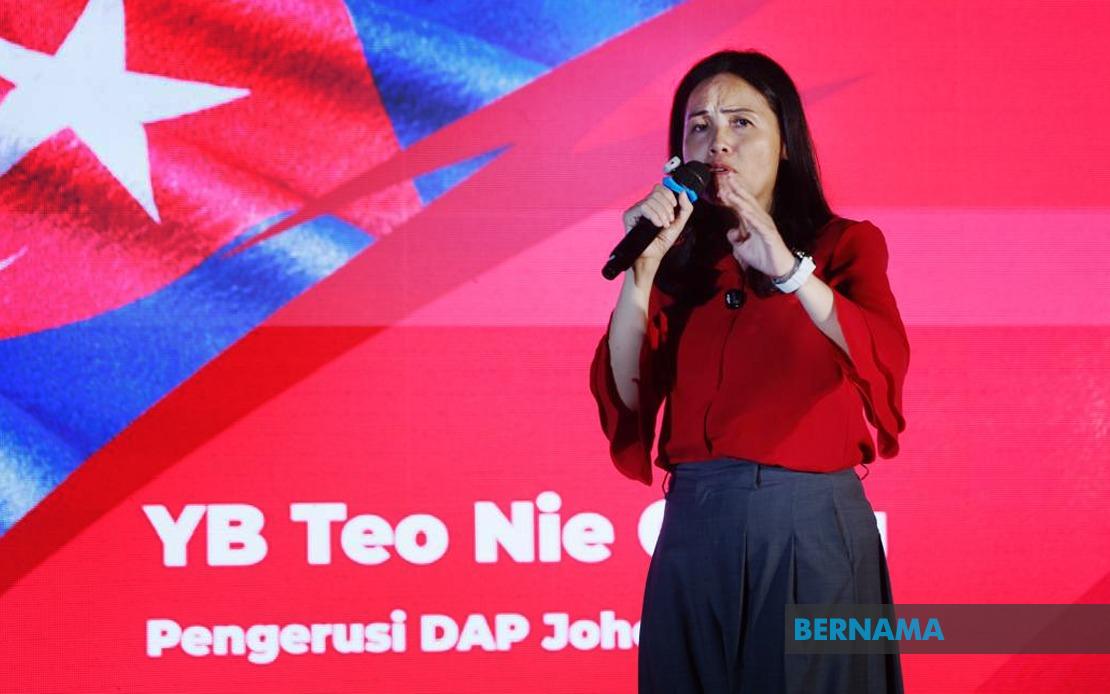
The Johor state government's controversial decision to introduce appointed state assemblymen has drawn sharp criticism from opposition figures campaigning ahead of Saturday's polls. Teo Nie Ching, the DAP's Johor chairman and Deputy Communications Minister, raised fundamental questions about the true motivations behind creating positions filled without electoral mandate, addressing a campaign rally in Paloh yesterday.
The state legislative assembly passed amendments on May 7 that would permit the appointment of up to five assemblymen, ostensibly to strengthen the legislative body's overall function and composition. However, the timing of the measure—just weeks before a state election—has fueled suspicion about its actual purpose. Teo's comments at the Pakatan Harapan rally highlighted a core tension in Malaysia's democratic practice: whether appointed positions serve legitimate institutional needs or represent a mechanism for rewarding political allies who failed to secure popular support through elections.
Teo's questioning cuts to the heart of democratic accountability. She expressed concern that appointed representatives would circumvent the scrutiny voters impose through the ballot box, potentially weakening transparency and oversight mechanisms. By bypassing electoral validation, such appointees could operate without the constituency pressure that typically constrains elected officials' behaviour. This structural gap raises legitimate questions about how appointed assemblymen would answer to constituents and whether they would face the same electoral consequences as elected members for poor performance or misconduct.
The DAP leader posed pointed questions about who would ultimately receive these appointments, particularly given the complex political dynamics within Johor. She suggested the appointments might benefit political partners who assisted the ruling coalition during campaigning, specifically referencing PAS's support in the state election. This concern reflects broader anxieties across Malaysia about how coalition politics can sometimes prioritise factional loyalty over democratic principle, potentially using institutional mechanisms to entrench political positions rather than serve public interest.
Despite her criticism of the appointed assemblymen proposal, Teo mounted a broader defence of the federal Unity Government's overall record, arguing that meaningful reforms have materialised across multiple policy domains despite inevitable imperfections. She acknowledged the administration has substantial room for improvement but contended that genuine systemic changes have been implemented to benefit ordinary Malaysians, with several achievements worth highlighting to voters approaching the weekend's election.
In education, Teo pointed to the guaranteed matriculation placement for all SPM students achieving ten A grades regardless of socioeconomic background—a policy shift that addresses longstanding concerns about equitable access to post-secondary education in Malaysia. The government has also expanded educational opportunities for students holding the Unified Examination Certificate, broadening pathways for Chinese-educated pupils who previously faced constrained progression options. These measures represent substantive departures from historical practice and suggest the current administration has taken seriously concerns about educational equity that persist across Malaysian communities.
Funding increases for Chinese independent schools further illustrate the Unity Government's willingness to address specific community needs. Allocations jumped to RM20.16 million this year from RM12 million in 2019, reflecting a substantial real-terms increase that signals genuine commitment to sustaining alternative educational institutions. For a government reliant on support from diverse coalition partners with distinct constituencies, such targeted spending carries political significance beyond mere numbers, demonstrating responsiveness to Chinese educational communities' priorities.
Teo situated these achievements within a framework of patient, incremental reform, explicitly rejecting the notion that meaningful change should emerge rapidly across complex governmental systems. She framed democracy as fundamentally a long-distance endeavour requiring sustained commitment, cautioning against expecting transformation overnight. This perspective resonates with international experience showing that institutional reforms typically require multiple election cycles and bureaucratic adaptation periods to embed fully, particularly when touching sensitive matters of education policy and social provision.
The context of this campaign messaging remains crucial for Malaysian observers. With approximately 2.7 million voters expected to cast ballots for 56 state representatives, Johor represents a significant battleground where coalition performance will influence broader perceptions of Unity Government effectiveness. The state's political complexities—involving Malay-Muslim majority constituencies, substantial Chinese and Indian communities, and competing visions of governance—make it representative of many Malaysian states' electoral dynamics.
Teo's dual emphasis on cautioning against appointed assemblymen while defending the Unity Government's reform agenda highlights an internal coalition tension that will likely persist through the current political cycle. The DAP seeks to maintain pressure on governance standards while sustaining the federal coalition that granted it ministerial positions and policy influence. This balancing act requires criticising specific government actions while demonstrating that partnership with PH has produced tangible benefits for constituents—a calculus that becomes increasingly challenging when component parties propose measures that seem to privilege political convenience over democratic principle.
The appointed assemblymen controversy also reflects broader Southeast Asian debates about representation and accountability as populist movements globally challenge traditional democratic structures. Across the region, governments have experimented with hybrid appointment-election systems, typically justifying them through narratives about efficiency or expertise, though critics argue such mechanisms often serve to entrench ruling coalitions' power. Malaysia's experience with appointed senators and other nominated positions suggests that once institutional mechanisms for non-electoral appointment take root, constituencies become accustomed to their existence, making subsequent removal politically difficult.
The significance of Teo's intervention extends beyond the immediate election campaign. By raising transparency concerns about appointed positions, the DAP maintains credibility with voters concerned about democratic erosion while signalling that the party retains independent voice within coalition structures. This positioning matters for post-election coalition sustainability; if current government performance is perceived as heavily compromising democratic norms, component parties face potential voter backlash even when individual welfare policies have improved.
As Malaysians approach Saturday's poll, the interplay between specific governance reforms and larger democratic questions will influence how voters evaluate the current administration's tenure. The Johor election offers an opportunity for the electorate to assess whether the Unity Government's claimed policy achievements outweigh concerns about institutional changes that may undermine democratic transparency and accountability—a calculation that extends well beyond Johor's boundaries into national political dynamics.

