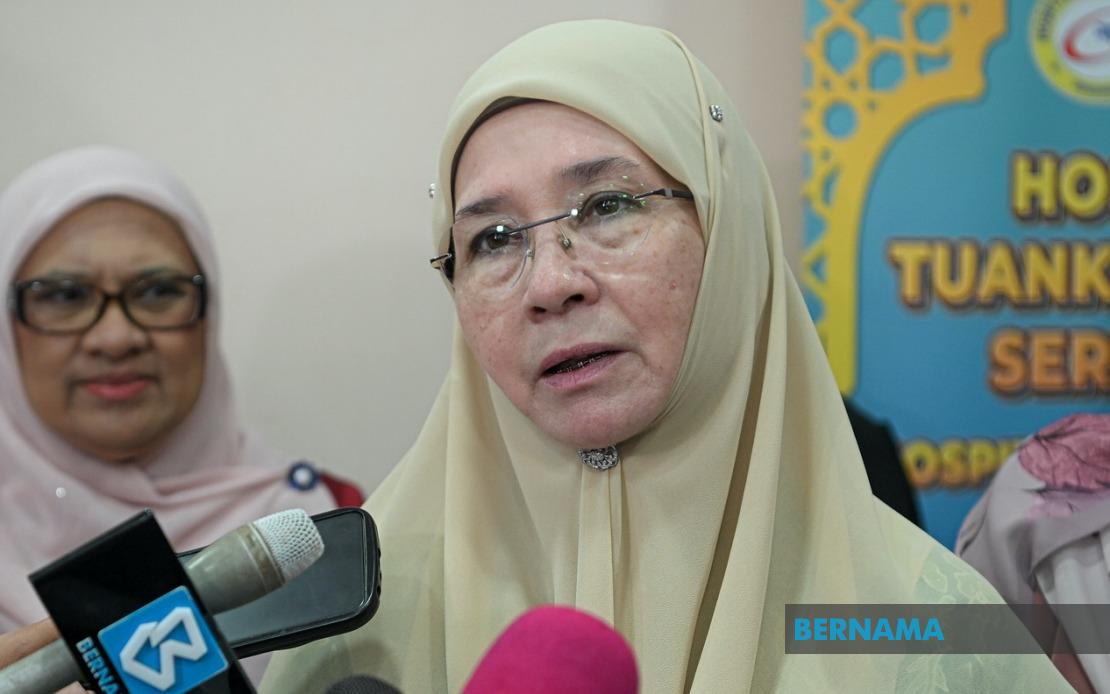
Tengku Ampuan Pahang Tunku Azizah Aminah Maimunah Iskandariah has stepped in to address the housing crisis facing Orang Asli families caught in a protracted land dispute centred on Kampung Sungai Cot in Maran, extending an offer of temporary sanctuary on property she owns in the nearby Kuala Wau area. The intervention signals heightened royal attention to indigenous welfare concerns in Pahang, with the Comptroller of the Royal Household for the Sultan of Pahang, Major General Datuk Mohamed Zahari Yahya, formally announcing the initiative and emphasising the Tengku Ampuan's long-standing commitment to the community's wellbeing.
The gesture reflects deeper engagement by Tengku Azizah with Orang Asli affairs than conventional ceremonial involvement, rooted partly in academic pursuit. Through doctoral research she is currently conducting, the Tengku Ampuan has developed substantive knowledge of the indigenous peoples' historical contributions to Pahang's development and their contemporary struggles. This scholarly foundation has reinforced her conviction that Orang Asli welfare deserves priority status within state governance and royal consciousness alike.
Major General Mohamed Zahari emphasised that the offer extends beyond immediate crisis response, framing it as insurance against future marginalisation. Should development eventually occur on the Kuala Wau land, the Comptroller stated unequivocally that Tengku Azizah would guarantee continued residential security for Orang Asli families, preventing displacement through infrastructure projects or commercial development. This assurance addresses a pattern whereby indigenous communities face successive upheaval whenever land transitions from informal to formal economic utilisation.
The hospitality is not restricted to Kampung Sungai Cot residents alone. Tengku Azizah has opened the door to any Orang Asli family across Pahang experiencing housing insecurity, subject to formal royal approval and compliance with applicable legislation. This broader scope acknowledges that the Maran dispute, whilst headline-capturing, represents merely one manifestation of systemic indigenous housing deprivation across the state, suggesting the royal initiative tackles structural problems rather than isolated incidents.
The Maran land dispute itself has acquired political prominence reaching federal level. Prime Minister Datuk Seri Anwar Ibrahim is anticipated to engage with the Pahang state government regarding the matter, though the constitutional framework constrains federal involvement since land administration remains a state prerogative under Malaysia's federal system. This jurisdictional reality means that despite national political interest, ultimate resolution depends on decisions made at state level, where the dispute must navigate existing property law, indigenous rights frameworks, and competing land claims.
Tengku Azizah's intervention carries symbolic weight beyond its immediate practical dimensions. Royal patronage of indigenous causes historically carries moral authority within Malaysian society, potentially mobilising broader public sympathy and official responsiveness toward Orang Asli grievances. By personally engaging with housing solutions, the Tengku Ampuan models a compassionate approach to indigenous policy that transcends bureaucratic indifference, positioning royal leadership as attentive to marginalised communities' actual lived experiences rather than treating indigenous affairs as abstract policy matters.
The offer simultaneously positions Tengku Azizah as an advocate for dialogue and mutual understanding, explicitly calling on all parties to prioritise constructive consultation and balanced outcomes rather than adversarial litigation or confrontation. This diplomatic language suggests royal preference for settlements emerging through negotiation and consensus-building, consistent with Malaysian governance traditions emphasizing harmony and consensus where indigenous interests intersect with competing land claims or development aspirations.
From a Southeast Asian perspective, royal intervention in indigenous welfare reflects broader patterns across the region wherein traditional monarchies increasingly view support for indigenous peoples as integral to modern kingship. This positioning aligns with contemporary international emphasis on indigenous rights, sustainable development, and cultural preservation, enhancing monarchical relevance in societies navigating postcolonial identity formation and inclusive governance.
The Kuala Wau resettlement represents pragmatic short-term intervention addressing immediate homelessness rather than comprehensive legal resolution of underlying land disputes. Orang Asli advocates may view the initiative as charitable palliative rather than structural justice, though temporary housing relief remains materially crucial for vulnerable families facing immediate displacement. Whether this royal offer catalyses broader policy reform addressing systematic indigenous land insecurity or remains a compassionate exception remains uncertain.
For Malaysian policymakers and Pahang state officials, Tengku Azizah's initiative creates subtle pressure to demonstrate equivalent commitment toward indigenous welfare through official channels. Royal leadership on social issues frequently establishes benchmarks against which governmental performance is measured, particularly when senior members of the royal household employ personal resources to address gaps in public provision. The initiative implicitly questions whether state mechanisms adequately protect Orang Asli interests or whether indigenous families require royal intervention to secure basic housing security.
The Maran dispute ultimately reflects longstanding tensions between development imperatives, indigenous land rights, property law, and social protection in Malaysia. As urbanisation and economic expansion accelerate, indigenous communities increasingly find ancestral territories contested by development projects, agricultural enterprises, or competing ownership claims. Tengku Azizah's offer acknowledges these pressures whilst seeking humane responses, though sustainable indigenous welfare requires comprehensive land rights recognition and governance reform extending beyond individual acts of royal generosity.

