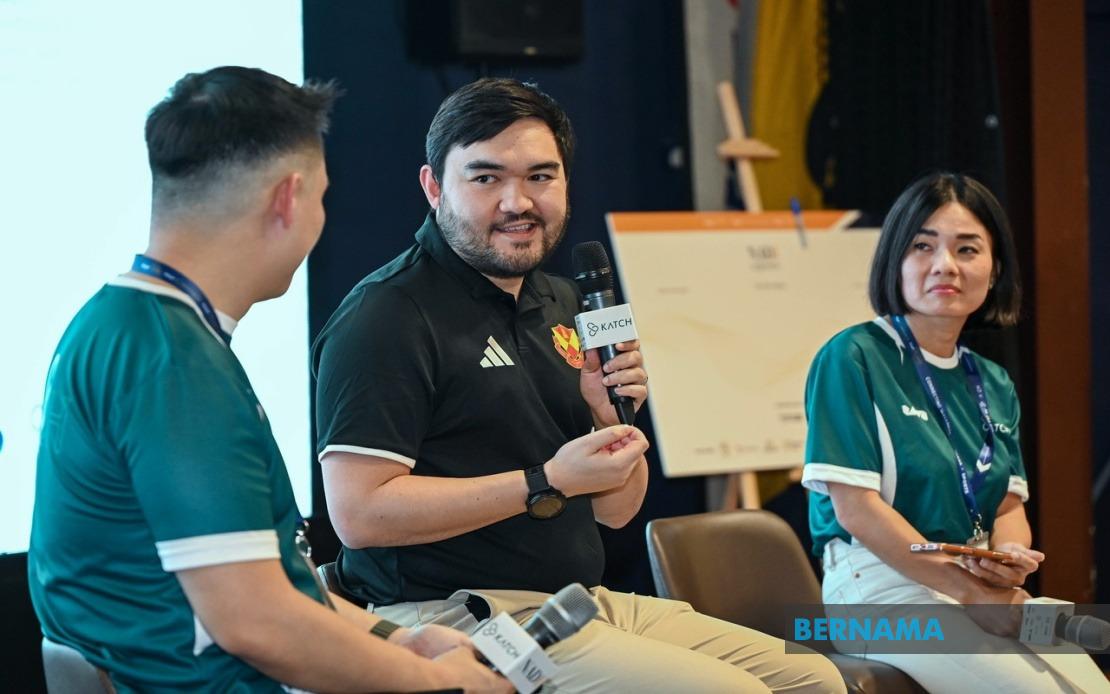
Selangor's commanding performance at the Malaysia Games (SUKMA) 2026 has prompted a broader conversation about sustaining competitive momentum beyond the biennial national event. The Raja Muda of Selangor, Tengku Amir Shah Sultan Sharafuddin Idris Shah, has used the state's overall championship victory as a springboard for advocating deeper investment in grassroots sports infrastructure, particularly through the establishment of regular weekend competitions that would keep young athletes engaged year-round.
The strategic importance of consistent competition cannot be overstated in Malaysian sports development. Tengku Amir Shah underscores that young athletes require not merely training facilities or coaching, but tangible competitive outlets that provide regular testing grounds for their abilities. By participating in structured competitions every weekend, youth players develop the psychological resilience and goal-oriented discipline that separates casual recreational athletes from potential champions. This philosophy reflects international best practices in sports talent identification and development, where exposure to regular competitive environments is recognised as essential to building sustainable athletic pipelines.
During remarks at the NADI Connecting Wellness, Fitness and Sports event in Petaling Jaya, Tengku Amir Shah articulated a vision where competition serves as the primary motivational driver for weekly training regimens. When athletes possess clearly defined competitive targets, their preparation becomes purposeful rather than routine. This framework transforms training from a solitary pursuit into a mission-driven endeavour where each practice session directly supports performance objectives. The psychological dimension matters considerably: young competitors who understand the connection between their daily efforts and upcoming tournament opportunities develop intrinsic motivation that often outlasts external incentives.
Selangor's dominance at SUKMA 2026, achieved through a medal haul of 101 gold, 73 silver and 71 bronze medals, did not materialise through chance or isolated pockets of excellence. The state's success reflects systemic investments in youth development infrastructure that extends beyond elite training centres. Tengku Amir Shah's long-standing commitment to grassroots initiatives, particularly his earlier involvement with the Selangor Youth Community and subsequent engagement with football administration, demonstrates how structured pathways can generate consistent high-level performance across multiple sporting disciplines.
The Selangor Champions League exemplifies the model Tengku Amir Shah champions as scalable and transferable. Established under his initiative to aggregate and elevate community-level football participation, the league transformed recreational social football into competitive platforms where talent identification becomes organic. Rather than relying solely on traditional academy systems or top-down talent scouting, the competition-centred approach democratises opportunity: players from diverse socioeconomic backgrounds and club affiliations gain exposure on unified platforms where merit determines advancement. This accessibility factor particularly resonates in the Malaysian context, where talent disparity often correlates with institutional advantages rather than raw ability.
The expansion of similar competitive models to emerging sports gaining traction nationally offers intriguing possibilities for Southeast Asian sports development. Tengku Amir Shah specifically cited pickleball and chess as sports demonstrating public momentum in Selangor. Both sports share characteristics distinct from traditional football dominance: lower infrastructure barriers to entry, growing recreational participation, and increasing international competitiveness from Asian nations. Establishing grassroots competition frameworks for these disciplines early positions Malaysia competitively as these sports mature within regional sporting ecosystems.
The fundamental argument extends beyond individual sporting disciplines to encompass broader questions about national sporting culture. Societies that embed competitive participation as a normalized weekend activity—where youth athletes across multiple sports pursue structured competitions regularly—develop stronger athletic infrastructures than those relying on occasional showcase events. SUKMA itself, occurring biennially, cannot sustain competitive development momentum across the two-year intervals between games. Grassroots competitions fill this temporal gap, maintaining competitive culture during periods when national attention focuses elsewhere.
Tengku Amir Shah's emphasis on competitive mindset development addresses a sometimes-overlooked dimension of sports excellence. Technical skills, physical conditioning, and tactical knowledge remain necessary but insufficient for championship performance. Athletes operating at elite levels must cultivate psychological capacities for pressure management, resilience following defeats, and sustained focus toward distant objectives. Regular competitive exposure in youth development programs systematically builds these mental faculties, preparing athletes for the demands of major competitions like SUKMA and ultimately international representation.
The convergence of grassroots competition expansion with SUKMA success creates policy momentum for state governments and national sports bodies. Malaysian sports administrators have historically concentrated resources on elite pathways and national teams, treating grassroots development as secondary. However, evidence from Selangor's SUKMA performance suggests this resource allocation may warrant reconsideration. States investing deliberately in continuous grassroots competition platforms demonstrate competitive advantages in major games, potentially justifying increased funding allocation toward community-level sporting infrastructure across all Malaysian states.
Implementing such expansion presents logistical and financial challenges requiring coordination among sports associations, state governments, and local authorities. Establishing sustainable weekend competition calendars across multiple sports demands standardised regulations, qualified officials, and reliable funding mechanisms. Nevertheless, the demonstration effect of Selangor's success provides compelling justification for pursuing these initiatives. As Malaysia competes within Southeast Asian sporting contexts against nations like Thailand and Vietnam, which have invested substantially in grassroots development models, capacity-building at community levels becomes strategically important for maintaining regional competitiveness.
The broader implication for Malaysian sports policy involves recognising that championship performances at SUKMA emerge not from isolated training camps but from comprehensive development ecosystems supporting continuous participation and competition. Tengku Amir Shah's advocacy for grassroots expansion, grounded in practical experience with sports administration and youth engagement, articulates a vision where competitive opportunity becomes normalized rather than exceptional. If implemented systematically across states and sporting disciplines, this approach could fundamentally transform Malaysian sports development trajectories, creating sustainable pathways from recreational participation through elite competition that stronger compete internationally.

