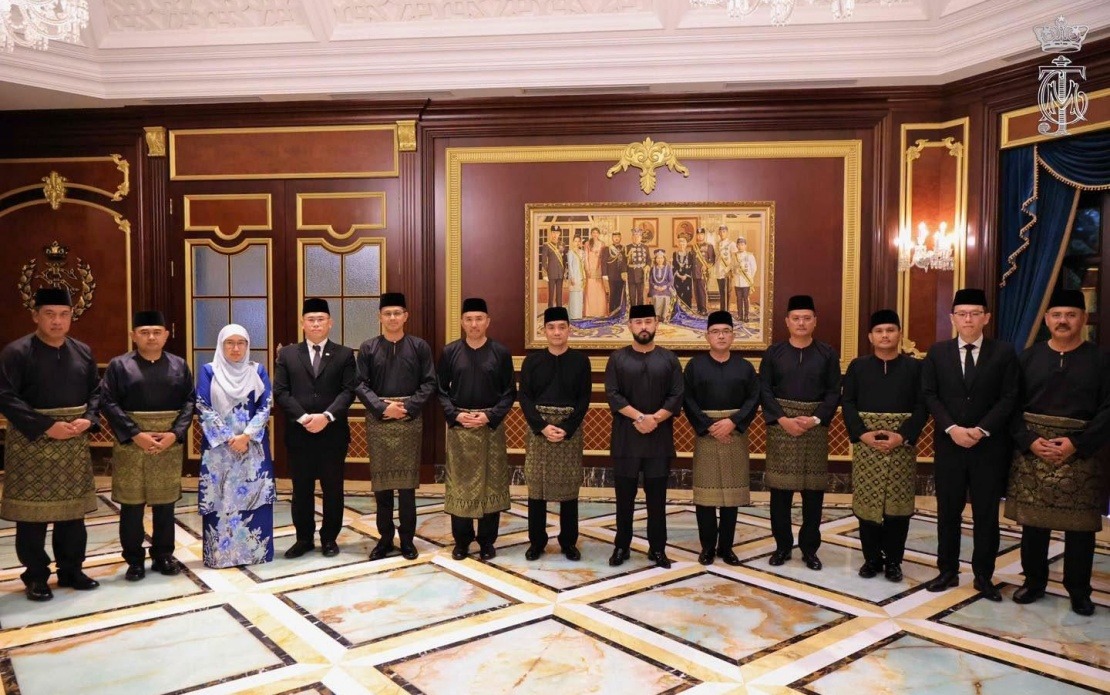
Ten Johor assemblymen were formally inducted into the State Executive Council in a ceremony held at Istana Bukit Serene, with the Regent of Johor, Tunku Mahkota Ismail, presiding over the oath-taking. The appointments represent the next phase of governance consolidation following the coalition's commanding performance at the polls, and signal the composition of the state government's cabinet-level operations moving forward. The event underscored the constitutional protocols governing executive appointments in Malaysia's monarchical system, where royal oversight remains integral to legitimising governmental authority at the state level.
Among those taking the oath were six established figures with prior experience in state-level administration. Mohd Hairi Mad Shah from the Larkin constituency, Datuk Mohd Jafni Md Shukor representing Bukit Permai, Mohd Fared Mohd Khalid from Semerah, Ling Tian Soon of Yong Peng, Lee Ting Han from Paloh, and Mohamad Fazli Mohamad Salleh representing Bukit Pasir collectively bring substantial experience to their respective portfolios. Their appointment maintains continuity in ministerial operations and demonstrates Menteri Besar Datuk Onn Hafiz Ghazi's strategy of retaining senior administrators whilst integrating fresh perspectives into the executive framework.
Four newcomers were elevated to executive positions, marking their inaugural appointments to the council. Md Israk Abdullah, Kukup's representative, P. Pannir Selvam of Perling, Hasrunizah Hassan from Pulai Sebatang, and Muhammad Naqib Md Ghazali representing Panti bring diverse backgrounds to the state administration. Their inclusion reflects an effort to broaden representation within the executive structure and potentially signals emphasis on developing next-generation leadership within Barisan Nasional's Johor wing.
The ceremony was attended by key state officials, including Royal Court Council Yang Dipertua Datuk Dr Abdul Rahim Ramli and State Secretary Datuk Mohammed Ridha Abd Kadir, alongside the Menteri Besar himself. The presence of senior court representatives emphasised the formal nature of the appointments and the constitutional importance of royal validation in Malaysian federalism. Such ceremonial proceedings serve to reinforce institutional legitimacy and the established hierarchy of power distribution in the state's governance structure.
Menteri Besar Onn Hafiz Ghazi, representing the Machap constituency, was himself sworn in for a consecutive second term as chief minister merely days prior to this executive council appointment. His re-election followed Barisan Nasional's decisive performance in the sixteenth Johor state election, where the coalition secured 48 of the state assembly's 56 seats. This substantial parliamentary majority provides the government considerable latitude in legislative matters and signals voter endorsement of the incumbent administration's policies and performance during its previous tenure.
Onn Hafiz's personal electoral victory in Machap proved particularly decisive, with the Menteri Besar capturing the seat by a margin exceeding 15,375 votes. This commanding personal mandate strengthens his political standing within both the state government and the broader Barisan Nasional framework, effectively cementing his authority to shape the composition and direction of the executive council without significant internal dissent. The magnitude of his victory suggests strong grassroots support and constituency-level confidence in his stewardship.
Barison Nasional's dominance across Johor represents a significant political development for the nation. The coalition's capture of 85.7 percent of available seats demonstrates substantial voter confidence in the traditional ruling alliance at the state level, notwithstanding broader national political dynamics. This performance provides the state government with substantial legislative capacity to advance its development agenda and implement policy initiatives without dependency on opposition support or coalition partners' acquiescence. The electoral outcome represents a counterweight to more competitive political environments in other Malaysian states.
The formation of this executive council configuration carries implications for Johor's trajectory in the coming years. With a unified government enjoying overwhelming parliamentary support, the state administration can prioritise longer-term infrastructure, economic, and social initiatives without constant legislative obstruction. However, such substantial majorities also place heightened responsibility on governing capacity and administrative competence, as voters grant mandates expecting tangible delivery of campaign promises and improved public services.
For Malaysian federal politics, Johor's political stability and Barisan Nasional's strength in the state remain strategically significant. The coalition's commanding performance provides valuable political capital and demonstrates continuing electoral viability in a major economic and population centre. This outcome may influence national political calculations and inter-coalition dynamics, particularly given Johor's historical importance as a political bellwether and its substantial number of parliamentary constituencies.

