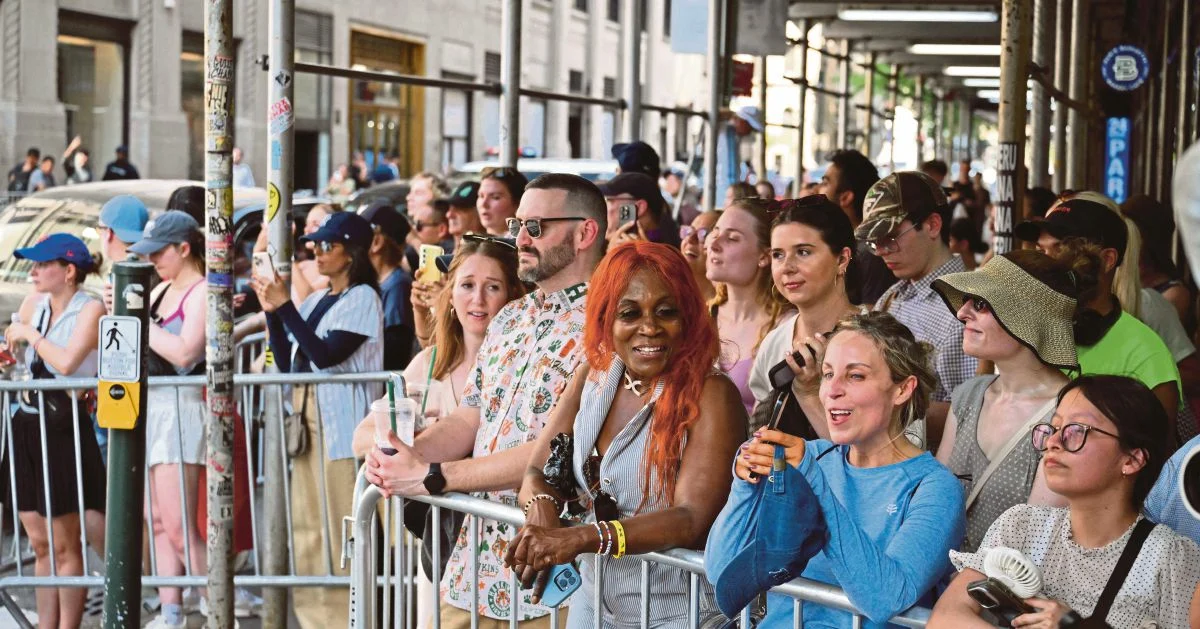
Pop music's reigning superstar Taylor Swift exchanged vows with National Football League star Travis Kelce in an exclusive ceremony held at Madison Square Garden in New York on Saturday, marking one of the entertainment world's most anticipated nuptials. The iconic venue, steeped in decades of cultural significance, played host to an invitation-only celebration that drew an impressive constellation of A-list celebrities, entertainment executives, and fashion luminaries to witness the union of two figures who have dominated their respective domains.
The couple's decision to marry at Madison Square Garden reflects both Swift's deep connection to the historic arena—where she has staged some of her most memorable performances—and the couple's desire to create a setting befitting the scale of their public profiles. The venue's capacity to accommodate hundreds of guests while maintaining strict security protocols made it an ideal choice for an event of this magnitude, where privacy remained paramount despite the inevitable global media attention.
Guests arrived dressed in haute couture and bespoke formal wear, with fashion observers noting that the wedding represented one of the season's most significant sartorial showcases. The guest list reportedly included figures from entertainment, sports, fashion, and business, reflecting Swift's expansive network built across her two-decade career and Kelce's prominence within the NFL and broader celebrity ecosystem. The sealed-off nature of the festivities underscored the couple's commitment to controlling access and ensuring that the event remained an intimate affair despite its public significance.
Swift and Kelce's relationship has captivated global audiences since becoming public earlier this year, capturing headlines across sports and entertainment media. Their union represents a convergence of two powerful spheres—music and professional athletics—combining fanbases and commercial interests that span continents. For Malaysian and Southeast Asian audiences, the couple's wedding embodies the globalized celebrity culture that increasingly shapes popular discourse, transcending traditional boundaries between different forms of entertainment.
The timing of the ceremony, deliberately scheduled to extend into the early hours of July 4th, carried symbolic significance as the celebration would straddle the American Independence Day holiday. This juxtaposition of private celebration with national commemoration added another layer of cultural resonance to the event, situating the couple's personal milestone within the broader American social calendar.
The wedding's execution at such a prominent New York landmark speaks to broader trends in contemporary celebrity culture, where major personal milestones increasingly become major media events with significant economic and cultural implications. The choice of Madison Square Garden rather than a traditional country estate or exclusive resort destination reflects the couple's confidence in their ability to command and control such a public space while simultaneously acknowledging the spectacle inherent in their status.
Security measures surrounding the event were reportedly extensive, with multiple layers of access control ensuring that only invited guests and essential personnel could enter the venue. This level of protection, standard for high-profile celebrity events, reflects both genuine security concerns and the desire to preserve the exclusivity of the occasion in an era of ubiquitous smartphones and social media documentation.
The guest list composition offers insights into Swift's and Kelce's respective circles and the degree to which their personal networks overlap. Entertainment industry figures, fellow musicians, actors, athletes, and business leaders all reportedly gathered to celebrate the couple's commitment. This assemblage itself becomes newsworthy, as celebrity attendees often attract as much media scrutiny as the primary event itself.
For global audiences monitoring the wedding through news outlets and social media, the event represents a significant cultural moment that transcends sport and music to touch on broader themes of celebrity, romance, and the increasing intersection of entertainment and athletics in contemporary popular culture. Swift's influence extends across generational and geographic boundaries, while Kelce's prominence in American football has grown substantially in recent years, making their union meaningful to diverse constituencies worldwide.
The couple's wedding also underscores the economic and cultural power wielded by contemporary celebrities, particularly those operating at the highest levels of their respective industries. Swift, with her record-breaking tours and album releases, and Kelce, with his elite athletic achievements and growing media presence, represent a particular form of modern stardom that commands attention, resources, and cultural capital at unprecedented scales.
The celebration's duration, extending into Independence Day morning, allowed guests to transition seamlessly from witnessing the couple's vows to participating in broader holiday festivities. This extended party structure, common at major celebrity events, reflects the expectation that such occasions should provide immersive experiences for attendees rather than brief formal ceremonies followed by dispersal.
As news of the wedding spreads through global media networks, the event will likely generate substantial commentary regarding celebrity culture, the aesthetics of contemporary weddings, and the public's insatiable appetite for details about high-profile relationships. For Malaysian readers engaging with international celebrity news, Swift and Kelce's marriage illustrates how modern fame transcends traditional boundaries, creating shared cultural moments that connect distant audiences through their interest in prominent public figures.

