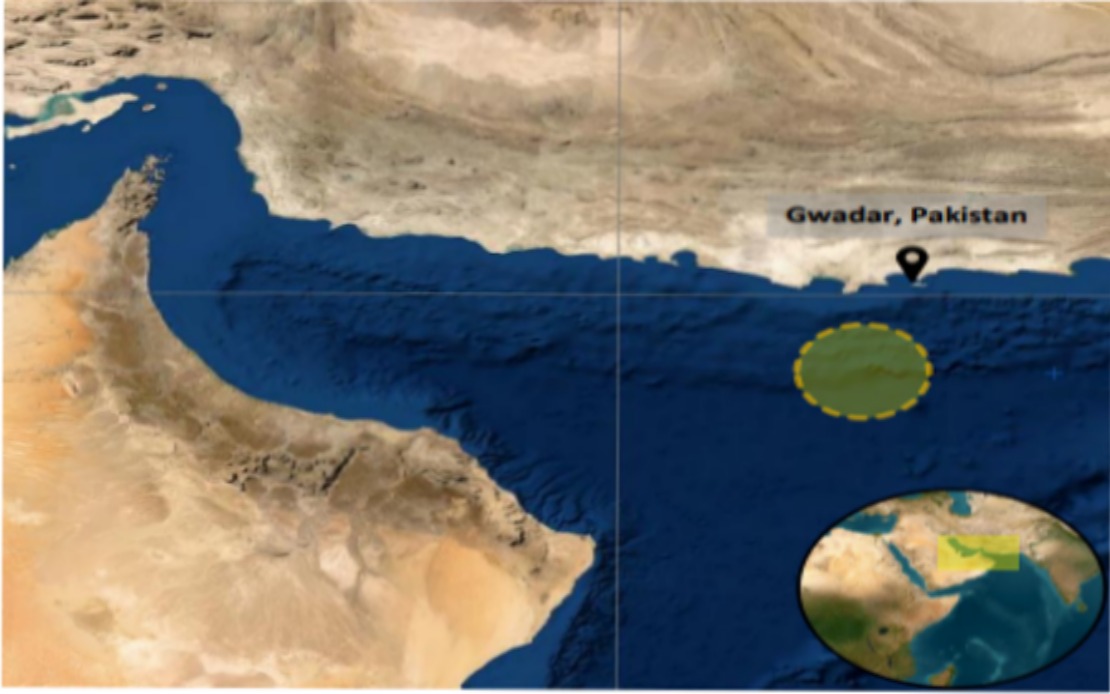
The UK Maritime Trade Operations (UKMTO) has flagged a significant incident in the Gulf of Oman involving a tanker and military forces near Gwadar, Pakistan's key southwestern port city, raising fresh alarm bells about maritime security in one of the world's most critical shipping corridors. The advisory, issued on Tuesday, provides scant detail about the specific nature of the confrontation, the vessel involved, or the identity of the military actors, but it underscores how fragile conditions remain across the Arabian Sea's vital chokepoint.
In its formal statement, UKMTO cautioned all maritime traffic transiting the region to "consider the latest maritime security information and maintain awareness of the evolving operational environment." This measured language masks what has become an increasingly volatile situation: shipping operators now routinely navigate these waters under constant vigilance, aware that a random inspection or shadowing by military assets could quickly escalate into a dangerous encounter. For Malaysian and Southeast Asian shipping companies with substantial operations in the Middle East, such advisories carry direct operational implications, requiring fleet operators to reroute vessels, increase insurance premiums, and invest in enhanced security protocols.
The timing of this incident is particularly significant given the broader geopolitical context dominating the region. The Strait of Hormuz and its surrounding waters have been subject to mounting tensions stemming from the contentious relationship between Washington and Tehran. Recent military confrontations, aerial incursions, and naval posturing between the United States and Iran have created an atmosphere of unpredictability that extends far beyond the strategic waterway itself. Any incident in the Gulf of Oman—whether it involves Iranian Revolutionary Guard Corps vessels, American Navy assets, or commercial shipping caught in between—carries the potential to rapidly destabilise an already precarious security balance.
What makes this particular incident noteworthy is its proximity to Gwadar, a Pakistani port facility that has emerged as a central piece of China's Belt and Road Initiative and critical infrastructure development strategy. The deepwater port, located on Pakistan's Balochistan coast, has become increasingly important as a transhipment hub and strategic asset. An incident occurring in these waters near such a significant strategic asset signals that security concerns are not confined to the Strait of Hormuz itself but extend to the broader Gulf of Oman maritime space. This geographic reality carries implications for Pakistan's maritime security responsibilities and for regional stability more broadly.
The UKMTO has confirmed that relevant authorities remain aware of the situation and that investigations are proceeding, but the agency has deliberately withheld operational details that might clarify what exactly transpired. This opacity is typical when incidents involve classified military movements or when diplomatic sensitivities are involved. Shipping operators, however, operate without such luxury. They must make immediate decisions about routing, security measures, and risk assessment based on fragmentary information. The absence of confirmation regarding casualties or material damage does little to reassure vessel owners and insurers already operating under heightened alert status.
For Malaysian readers and business interests, the implications warrant careful consideration. Malaysia maintains substantial maritime commerce through these waters, and any sustained disruption to shipping lanes inevitably reverberates through Southeast Asia's complex supply chains and trading networks. Malaysian shipping companies, petrochemical exporters, and manufacturers dependent on imported materials cannot afford to ignore warnings emanating from such critical passages. The Gulf of Oman and surrounding waters represent not merely a distant geopolitical concern but a direct factor affecting Malaysia's economic resilience and trading relationships with Middle Eastern partners.
The underlying cause of tension in these waters remains fundamentally rooted in the United States-Iran standoff that intensified following American withdrawal from the Joint Comprehensive Plan of Action in 2018. Subsequent maximum pressure sanctions, Iranian retaliation through maritime harassment and occasional attacks on shipping infrastructure, and the deployment of American military assets have created a complex security environment where miscalculation risks remain perpetually elevated. Each incident—whether a tanker experiencing engine failure, a vessel being intercepted for inspection, or actual military confrontation—carries potential to escalate beyond its immediate parameters.
The UKMTO advisory represents a mechanism through which maritime information sharing operates at the international level, serving as an early warning system for commercial shipping. Its effectiveness depends on transparency and timely dissemination, yet the very nature of military incidents often militates against full disclosure. The balance between security and transparency remains delicate. Shipping companies must simultaneously acknowledge risks without inducing panic that might trigger unnecessary rerouting and economic inefficiency across global trade patterns.
Moving forward, the persistent volatility affecting the Gulf of Oman will likely continue shaping maritime strategy for operators throughout Asia and beyond. Investment in alternative routes, enhancement of vessel security systems, and diversification of supply chain relationships have become strategic imperatives rather than optional precautions. The incident near Gwadar serves as a reminder that the geopolitical stability of the Middle East remains inextricably linked to the economic fortunes of Southeast Asia, making regional developments worthy of sustained attention from Malaysian policymakers, business leaders, and strategic analysts seeking to protect national interests across the broader Indo-Pacific system.

