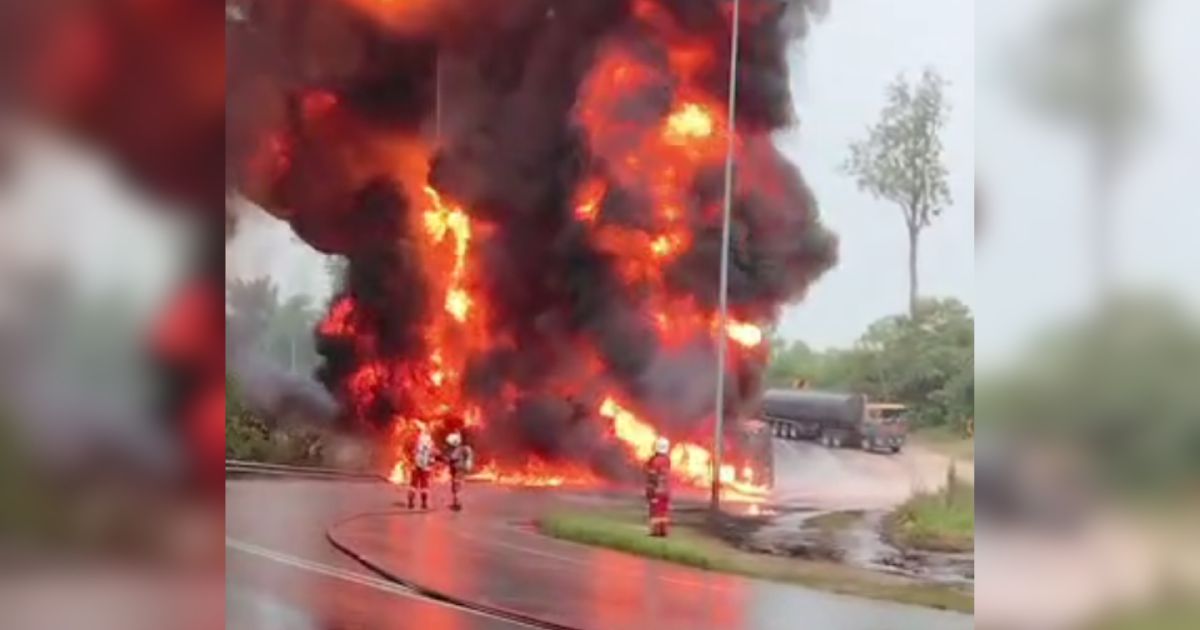
The driver of a fuel tanker involved in a fatal traffic collision in Temerloh has been placed under a four-day remand order to assist authorities with their ongoing investigation. The accident, which occurred at kilometre nine on the Temerloh-Triang road near Kampung Lebak, resulted in the deaths of a mother and her young son, marking another tragedy on Malaysia's increasingly congested highway network.
The incident highlights the persistent hazards posed by heavy vehicles on regional routes, particularly in sections of Pahang where traffic volume has grown significantly in recent years. The Temerloh-Triang corridor serves as a crucial link between the east coast and central areas of peninsular Malaysia, facilitating the movement of goods, fuel, and agricultural products. Such routes experience considerable daily traffic, combining commercial vehicles with family cars and motorcycles, creating complex risk scenarios that demand heightened vigilance from all road users.
The remand period will permit investigators to conduct a comprehensive examination of the circumstances surrounding the collision. Authorities typically employ this window to gather forensic evidence, analyse vehicle mechanics, review potential witness statements, and assess whether factors such as mechanical failure, driver fatigue, excessive speed, or road conditions contributed to the tragedy. The severity of the outcome—involving fatalities rather than injuries alone—naturally triggers more extensive scrutiny of all contributory elements.
Fuel tanker operations present distinct challenges on Malaysian roads. These vehicles require specialist handling due to their cargo's hazardous nature, the weight distribution challenges they present, and the particular braking dynamics required when fully laden. Operators are bound by stringent regulations regarding driver rest periods, vehicle maintenance schedules, and load specifications. Any deviation from these protocols can exponentially increase accident risk, particularly in scenarios involving sudden manoeuvres or emergency responses.
The loss of a mother and child in a single incident underscores the devastating ripple effects of road accidents beyond the immediate fatalities. Extended family members, community networks, and support systems bear profound psychological and practical consequences. For the broader community in Temerloh and surrounding districts, such incidents serve as sobering reminders of road safety's centralality to public welfare and economic stability.
Road safety remains a pressing concern across Southeast Asia, where infrastructure development has frequently outpaced improvements in enforcement and driver behaviour modification. Malaysia's fatality rates on highways have prompted recurrent government initiatives focused on speed enforcement, vehicle inspection standards, and driver education programmes. However, translating policy into sustained behavioural change across the diverse driving population continues to present implementation challenges.
The investigation's outcome may influence future regulatory approaches to heavy vehicle operations on regional routes. Should mechanical defects be identified, manufacturers and maintenance providers may face scrutiny. Should driver fatigue be implicated, this could strengthen arguments for tighter enforcement of rest-break regulations. If road infrastructure proves contributory, this might catalyse infrastructure upgrades or revised traffic management strategies for the corridor.
Temerloh, positioned at the confluence of the Pahang and Pekan rivers, serves as an important commercial hub and transportation junction. The town's growth has brought increased vehicular traffic, with many drivers unfamiliar with the specific hazards of particular road sections. Local authorities have periodically implemented safety campaigns, yet sustained reduction in accident frequencies requires multi-faceted approaches incorporating enforcement, infrastructure improvement, and driver education.
The four-day remand provides law enforcement adequate time to determine whether charges will be pursued against the driver. Malaysian criminal law distinguishes between driving-related offences of varying severity, from negligence causing death to more complex charges depending on established causation. The investigation's findings will fundamentally shape the legal trajectory of this case and may set precedents influencing how similar incidents are adjudicated.
Beyond the immediate legal proceedings, this tragedy exemplifies the transportation sector's ongoing safety imperatives. For fuel distribution networks, for road authorities responsible for route maintenance and signage, and for individual drivers who share responsibility for collective road safety, incidents like this demand continuous reflection and improvement. The mother and son's deaths represent not merely a statistical entry in accident records, but a call for renewed commitment to the measures—enforcement, infrastructure, training, and vehicle maintenance—that protect lives on Malaysia's roads.

