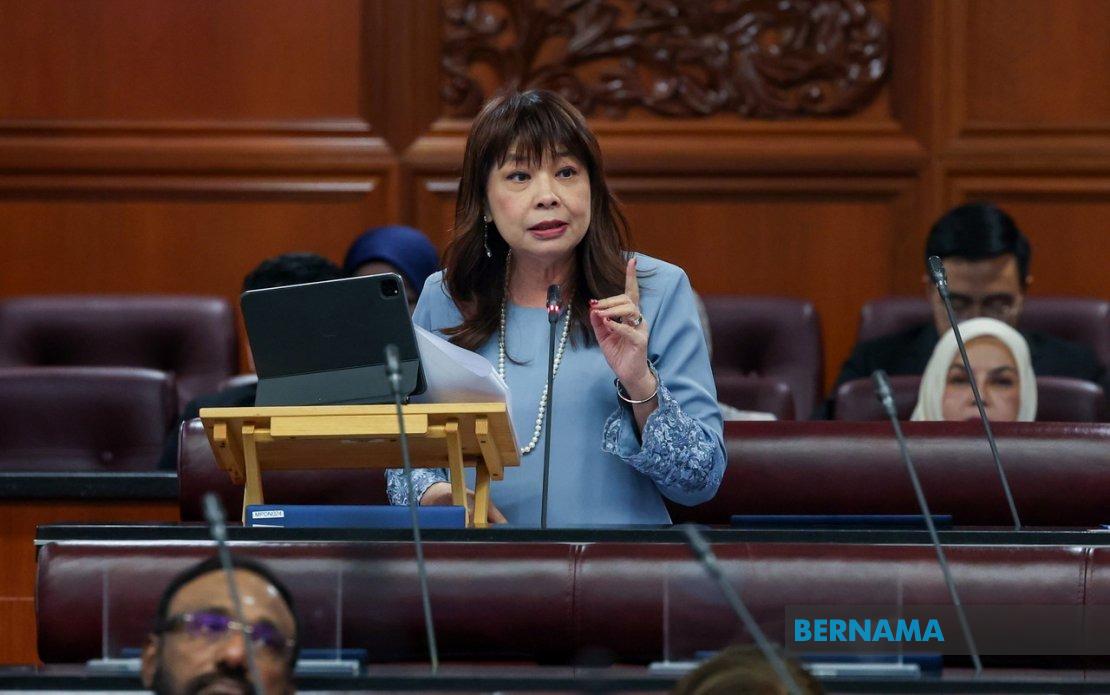
Malaysia's dedicated domestic violence hotline Talian Kasih 15999 has received 9,327 calls related to family violence over the past three years, according to Deputy Minister of Women, Family and Community Development Lim Hui Ying, who disclosed the figures during Parliamentary proceedings on June 30. These calls constitute roughly seven percent of the hotline's broader service load, which totalled 127,000 inquiries spanning various social and welfare matters throughout the 2022 to May 2025 timeframe.
The resolution performance of the hotline demonstrates substantial progress in addressing victim needs. Across the entire period from 2022 through 2025, every domestic violence complaint received through the service has been successfully resolved, indicating a commitment to comprehensive follow-up and support. During the initial five months of this calendar year specifically, the hotline logged 470 domestic violence incidents, of which 406 have been closed and 64 remain under active management. This ongoing workload reflects the persistent nature of family violence in Malaysian society and the continued demand for accessible reporting mechanisms.
When responding to questioning from Datuk Muslimin Yahaya, a Perikatan Nasional representative for Sungai Besar, regarding the hotline's operational effectiveness, Lim outlined the range of protective interventions deployed after complaints are filed. The ministry facilitates access to Emergency Protection Orders and Interim Protection Orders, both crucial legal instruments that provide immediate restraint against perpetrators. Additionally, the department connects vulnerable individuals with shelter placements, ensuring physical safety whilst longer-term support systems are activated. These layered responses address immediate safety concerns whilst enabling broader therapeutic and legal processes to unfold.
A notable shift in the nature of reported incidents has emerged from the data accumulated over recent years. Traditionally viewed as primarily affecting women, domestic violence complaints increasingly involve male victims seeking protection and support. Although men represent a smaller proportion of total reports, the rising trajectory of such cases signals an important evolution in how Malaysian society understands family violence. This development challenges conventional assumptions about abuse patterns and reflects growing willingness among men to disclose incidents and seek institutional assistance. The trend underscores the complex dynamics within Malaysian households and the importance of gender-neutral policy approaches.
The ministry's formal position, as articulated by Lim, positions protection services as universally available irrespective of the victim's gender, ethnicity, or religious background. This inclusive framework represents a departure from historically female-centred programming and acknowledges that family violence transcends demographic categories. By framing support as available to all Malaysians regardless of identity, the ministry signals recognition that safeguarding domestic relationships requires comprehensive institutional response rather than targeted assistance for particular groups. This principle carries implications for resource allocation, training protocols, and public awareness campaigns designed to reach diverse victim populations.
The Talian Kasih hotline operates within Malaysia's broader architecture of family welfare services, complementing the work of state-level social welfare departments, non-governmental organisations, and law enforcement agencies. The 15999 number has functioned as an accessible reporting channel enabling individuals to disclose incidents without navigating complex bureaucratic procedures or physical office visits. This accessibility has likely contributed to the substantial call volume and the relative completeness of case resolution. For many vulnerable individuals facing threats or ongoing abuse, the existence of a simple, toll-accessible reporting mechanism reduces barriers to seeking intervention.
The parliamentary revelation of these statistics provides rare public transparency regarding the actual incidence of family violence in Malaysia. Whilst media reporting occasionally highlights spectacular cases involving serious injury or death, comprehensive official data on the broader phenomenon remains scarce. The Talian Kasih figures offer insight into reported incidents at the population level, though they represent only those cases funnelled through this particular service channel. Many incidents undoubtedly remain unreported, managed through family structures, religious authorities, or informal dispute resolution mechanisms without triggering formal hotline contact. The true prevalence of domestic violence likely substantially exceeds the recorded figures.
For regional observers, Malaysia's experience with family violence hotlines and response systems provides instructive comparison with approaches adopted across Southeast Asia. Several neighbouring countries have developed similar dedicated services, though implementation consistency and resource levels vary considerably. Malaysia's achievement of complete case resolution across a multi-year period, if sustained, distinguishes its performance and may offer models worthy of regional study. Conversely, the rising volume of calls and the increasing proportion involving male victims parallel trends observed in more developed economies, suggesting that family violence prevention remains a maturing challenge for Malaysian policymakers regardless of progress achieved to date.
The integration of protective orders and shelter placement into the hotline response framework represents an evolution beyond simple complaint recording toward active victim protection. By enabling rapid legal intervention through EPO and IPO mechanisms, the system addresses the most dangerous phase of family violence escalation. Shelter placement ensures physical separation between victims and perpetrators, creating space for individual stabilisation and decision-making away from immediate threat. These practical interventions, combined with presumably ongoing counselling and social support, establish the conditions necessary for individuals to recover and chart pathways toward safety and autonomy.
Looking forward, the ministry faces questions about resource adequacy, staff training, cultural competency, and victim satisfaction with services received through Talian Kasih. The handling of 127,000 calls across multiple welfare categories suggests the hotline operates at substantial capacity, raising considerations about response times and depth of initial assessment. The shift toward recognising male victims necessitates staff training adaptations and revised public communication strategies to encourage men experiencing abuse to come forward. Additionally, ongoing evaluation of whether protective orders and shelter placements translate into sustained safety improvements would strengthen evidence regarding which interventions prove most effective for different victim populations and circumstances.

