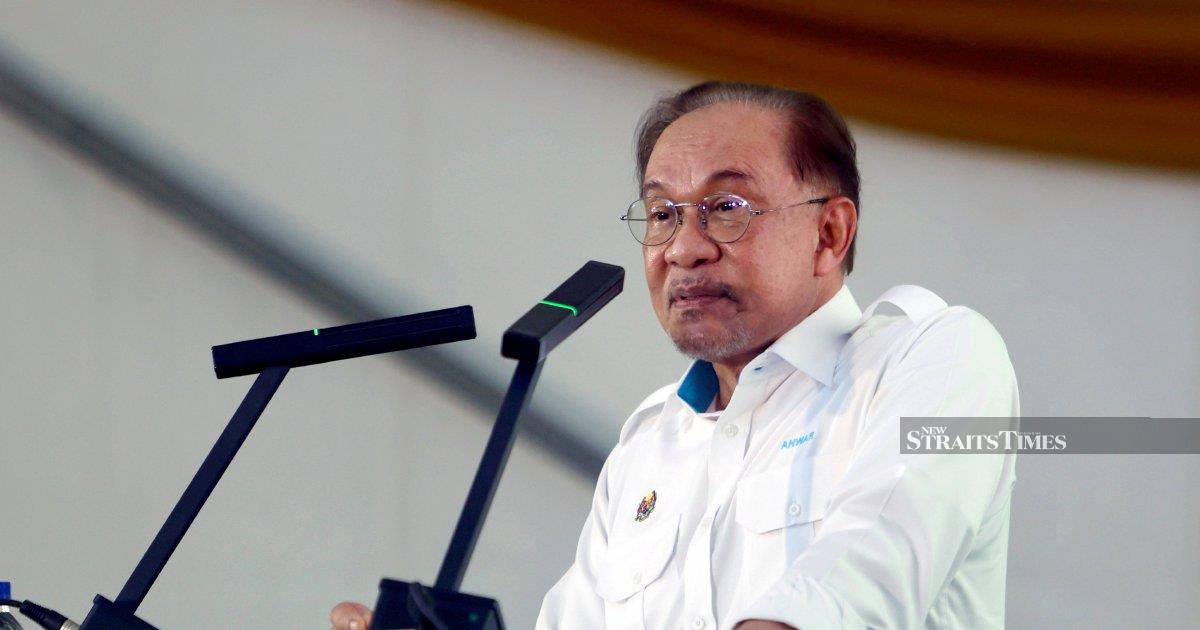
The Taiwan Chamber of Commerce & Industry in Malaysia (TCCIM) has signalled alarm over Prime Minister Datuk Seri Anwar Ibrahim's latest comments positioning Taiwan as an integral part of China, raising apprehension that such a stance could discourage major semiconductor and technology sector investments flowing into the country.
The chamber's statement represents a rare and pointed intervention by Taiwan's business representative body into Malaysia's political discourse, underscoring the sensitivity surrounding cross-strait relations and their direct bearing on foreign direct investment patterns in Southeast Asia. TCCIM's decision to make its position public suggests that Taiwan-based corporations and investors operating through Malaysian channels view the prime minister's remarks with genuine unease, fearing they may signal a shifting diplomatic orientation that could affect their commercial expansion plans in the region.
For Malaysia, the potential implications are substantial. Taiwan has emerged as a pivotal player in the global semiconductor supply chain, and Malaysian territory has attracted considerable Taiwanese industrial investment over recent decades. The city of Penang, in particular, has developed as a major electronics manufacturing hub, with numerous Taiwan-backed enterprises establishing significant operations there. Any cooling of investment sentiment from Taipei-based companies could have tangible consequences for Malaysia's manufacturing sector, employment figures, and technology transfer initiatives that have historically benefited the local economy.
The timing of TCCIM's intervention is particularly noteworthy given Malaysia's intricate balancing act in navigating great power competition in Southeast Asia. As a country deeply embedded in regional supply chains and dependent on foreign investor confidence, Malaysia has traditionally sought to maintain pragmatic relationships with both Beijing and Taipei without formally endorsing either side's political claims. Anwar Ibrahim's characterisation of Taiwan's political status may be interpreted, especially by foreign investors, as a departure from this established equilibrium, potentially signalling preferential alignment with China's geopolitical position.
Taiwan's technology sector holds strategic significance beyond mere economic metrics. The island dominates advanced chip manufacturing through Taiwan Semiconductor Manufacturing Company (TSMC) and other leading producers, making it indispensable to global technology supply chains. Malaysian operations frequently serve as secondary manufacturing bases, assembly points, and logistics hubs supporting these Taiwanese firms. Investment decisions by Taiwanese companies are therefore sensitive to political signals and diplomatic atmospherics, as corporate leadership assesses stability and consistency in host country policy frameworks.
The semiconductor industry's importance to Malaysia's economic future cannot be overstated. With global demand for chips accelerating due to artificial intelligence, digital infrastructure expansion, and electric vehicle proliferation, countries competing for this sector's investment must project reliability and strategic neutrality. Remarks that appear to favour one side of the Taiwan-China dispute may introduce ambiguity regarding Malaysia's long-term policy consistency, potentially causing investors to redirect capital toward jurisdictions perceived as more politically stable or diplomatically aligned with their home nation.
TCCIM's public statement also reflects broader concerns within Taiwan's business community about how Malaysia's political leadership frames the island's status. While many nations maintain pragmatic silence on Taiwan's constitutional position, explicit statements characterising Taiwan as part of China run counter to the practical independence that Taiwan exercises and that international business partners rely upon when conducting commerce with Taiwanese entities. This distinction matters to investors evaluating contractual frameworks, intellectual property protections, and regulatory stability.
The chamber's invocation of investment concerns carries particular weight in the Malaysian context, where policymakers have consistently prioritised foreign direct investment as essential to job creation and industrial upgrading. Tech sector investment has become especially critical given Malaysia's aspirations to transition from lower-value manufacturing toward higher-technology production. Taiwanese investors have historically been partners in this journey, bringing expertise, capital, and market linkages. Any erosion of confidence among these investor groups could complicate Malaysia's economic restructuring objectives.
There is also a secondary diplomatic dimension to consider. Malaysia's relationship with Taiwan operates largely through businessmen and technical forums rather than formal governmental channels, given Malaysia's recognition of the People's Republic of China. The chamber's statement implicitly appeals to Anwar Ibrahim to recognise this de facto arrangement and to avoid language that might be perceived as unnecessarily provocative to Taiwan's political sensibilities or business community. Such appeals reflect the reality that Malaysia's economic interests often diverge from strict adherence to Beijing's political narrative regarding Taiwan's status.
Looking forward, the incident underscores the complex intersection of commerce and statecraft in Southeast Asia. Business communities frequently serve as conduits for expressing concerns that official diplomatic channels may find difficult to raise directly. TCCIM's intervention suggests that Taiwan's investors are watching closely how Malaysian political figures discuss the island, with real implications for capital allocation decisions affecting thousands of Malaysian workers and hundreds of millions of ringgit in potential investment.
The broader question for Malaysian policymakers involves whether emphasising alignment with Beijing's position on Taiwan offers sufficient compensatory benefits to offset potential losses in Taiwanese investor confidence and technology sector inflows. In an era of semiconductor scarcity and heightened competition for advanced manufacturing capabilities, such calculations warrant careful consideration beyond immediate political considerations.

