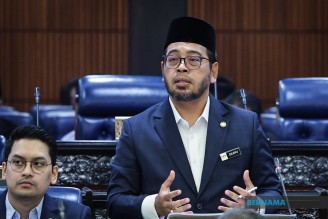
The Lembaga Tabung Haji (TH) suffered substantial financial damage through its involvement with Putrajaya Perdana Bhd, a decision that inadvertently entangled Malaysia's pilgrimage savings institution in the troubled 1Malaysia Development Bhd network, according to a comprehensive Royal Commission of Inquiry report now under public scrutiny. Minister in the Prime Minister's Department (Religious Affairs) Dr Zulkifli Hasan revealed during a parliamentary briefing that the RM145.3 million loss from the Putrajaya Perdana investment represented one strand of a much broader pattern of financial mismanagement uncovered in the inquiry's findings.
The circumstances surrounding TH's Putrajaya Perdana involvement illustrate how governance oversights at the institution created pathways for questionable capital deployment. According to Zulkifli, TH not only invested in Putrajaya Perdana but also positioned its then-chairman to chair the company itself—a structural arrangement that essentially merged TH's interests with an entity entangled in 1MDB dealings. The appointment effectively exposed TH to the financial consequences of 1MDB's troubled transactions during the period when the development company faced mounting scrutiny over its investments and use of funds. This interconnection raises fundamental questions about institutional independence and conflict of interest management at TH during the 2014-2020 period that the inquiry examined.
The most troubling dimension of this arrangement concerns the divided loyalties and information asymmetries it created. Zulkifli pointedly questioned whether TH's investments during this period genuinely served the institution's fiduciary duty to its members or instead functioned as a financial bailout mechanism for other struggling entities. The fact that TH's chief executive officer simultaneously served on 1MDB's board of directors created further opacity, raising serious questions about whose interests actually guided TH's capital allocation decisions. Such dual roles conventionally trigger substantial conflict-of-interest concerns in corporate governance frameworks, yet these appear to have gone unexamined during the period in question.
TH's exposure extended beyond Putrajaya Perdana to direct land transactions with 1MDB itself. When the sovereign wealth fund was at the centre of a major national controversy, TH purchased land at the Tun Razak Exchange from 1MDB, further deepening the institution's entanglement with a discredited entity. This transaction occurred precisely when 1MDB's financial practices were under intense public and official scrutiny, making the timing particularly questionable. For Malaysian observers, the willingness of a major institutional investor to acquire 1MDB assets during this period highlights the opacity surrounding what should have been conservative investment decisions at TH.
The FGV Holdings saga compounds the picture of problematic investment decisions during this era. While the Federal Government Ventures subsidiary's initial public offering in 2012 raised over RM10 billion and was celebrated as Malaysia's largest IPO achievement, TH's position as a substantial shareholder ultimately proved disastrous. As share valuations collapsed, TH continued holding its position even as values declined by over 80 per cent, suggesting either institutional paralysis or unrealistic expectations about market recovery. More troublingly, TH subsequently modified its impairment accounting policies rather than take appropriate write-downs, effectively obscuring losses that accumulated to over RM1 billion. This accounting adjustment, rather than reflecting genuine market optimism, appeared designed to mask deteriorating asset quality from TH's members and regulators.
Recognising its past strategic errors, TH has begun reversing some of the most damaging decisions, though this restorative process inherently involves accepting substantial losses. The institution repurchased TRX land that it had sold in 2018 for RM400 million, but at the current market valuation of only RM270 million—locking in a RM130 million loss on the transaction. This reversal, while necessary to restore TH's operational integrity, demonstrates the long-term financial damage caused by the original 1MDB-connected transactions. Similarly, TH reacquired the UJ Estates oil palm plantation that it had previously divested for RM800 million, purchasing it back at approximately RM695 million in current market value, again acknowledging substantial depreciation in the asset base.
The 211-page Royal Commission of Inquiry report, released publicly on July 29, documented management and operational weaknesses spanning the 2014-2020 period, a interval coinciding with TH's most questionable investment decisions. The commission generated 25 specific recommendations for institutional reform and enhanced governance practices, with TH management reporting that approximately 75 per cent of these recommendations had achieved implementation by late July. This remedial progress suggests institutional awareness of governance deficiencies, though the scale of accumulated losses indicates that stronger oversight mechanisms should have been operational years earlier.
The governance framework governing TH requires scrutiny across multiple dimensions highlighted by this inquiry. An institution managing the collective savings of millions of Malaysian Muslims undertaking the hajj pilgrimage carries profound fiduciary responsibilities that extend beyond financial returns to encompass preservation of the sacred trust invested by members. The institution's involvement in complex, controversy-adjacent investments fundamentally misaligned with this foundational purpose. The research and due diligence processes that might have flagged the reputational and financial risks associated with 1MDB-connected investments appear to have functioned inadequately, if at all.
For Malaysian policymakers and institutional investors more broadly, the TH experience offers sobering lessons about interconnected governance risks. Financial institutions with substantial asset bases and influential management positions occupy critical economic infrastructure roles that demand stringent conflict-of-interest protocols and transparent decision-making processes. The ability of single individuals to occupy multiple board positions across connected entities creates information advantage scenarios that inevitably compromise independent judgment. TH's predicament resulted not from isolated mistakes but from systemic governance failures that allowed questionable decisions to accumulate unchecked across multiple consecutive years.
The establishment of the Royal Commission of Inquiry itself in 2021, with members appointed in January 2022, reflected growing acknowledgment within government that TH's financial trajectory required formal investigation. The presentation of findings to the King in August 2022 signalled the severity of issues uncovered. However, the gap between inquiry commencement and formal investigation—spanning several years after the period under examination—highlights how institutional problems often remain unaddressed until they reach crisis proportions requiring high-level intervention. Moving forward, TH's restoration requires not merely reversing individual transactions but fundamentally reconstituting governance frameworks that prioritise institutional independence and member protection above competing financial objectives.
As TH implements the Royal Commission recommendations, Malaysia's broader investment community will observe whether the pilgrimage institution can genuinely restore financial stability while rebuilding member confidence. The RM145.3 million Putrajaya Perdana loss, while substantial, forms only one component of a much larger pattern of capital misdeployment. TH's recovery ultimately depends upon whether institutional leadership can establish governance practices that prevent similar entanglements with problematic entities and ensure that investment decisions consistently prioritise member interests above external relationships or complex financial architecture.

