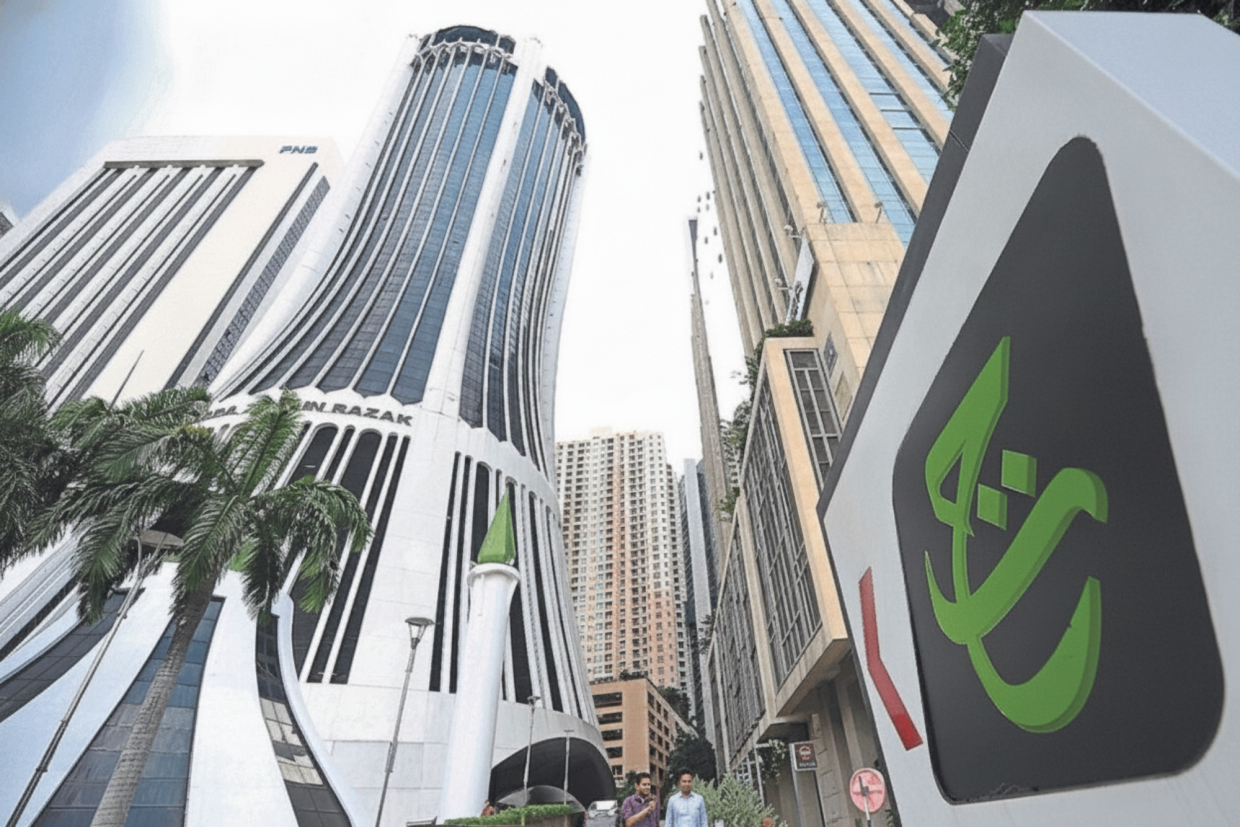
The financial management of Tabung Haji came under severe scrutiny after a Royal Commission of Inquiry report exposed how the Islamic pilgrimage fund's accounting policies were manipulated within hours to present a misleading financial picture for 2017. According to the findings presented to Parliament, the institution's impairment policy was adjusted twice on the same day—shifting from 70 per cent to 85 per cent and then to 90 per cent—a move that allowed Tabung Haji to declare profits when it should have reported substantial losses. Minister in the Prime Minister's Department (Religious Affairs) Dr Zulkifli Hasan outlined these findings during a ministerial briefing on the Royal Commission report, revealing the extent to which accounting standards were compromised to meet depositor expectations rather than reflect true financial health.
The mechanics of the manipulation illustrate how far accounting principles were bent to serve institutional objectives. Tabung Haji's approach to asset impairment deviated sharply from requirements outlined in Financial Reporting Standards, particularly FRS 139. To illustrate the severity of the issue, Dr Zulkifli cited an example where a share investment initially valued at RM1,000 would only trigger impairment when its market value plummeted to RM100—a threshold that bore no relation to prudent accounting practice. In reality, if Tabung Haji had attempted to sell such shares at market rates during 2017, it would have realised only RM100, yet the financial statements continued to reflect the original RM1,000 valuation. This accounting sleight of hand meant that Tabung Haji's balance sheet bore virtually no resemblance to the institution's actual financial position, fundamentally misleading both internal stakeholders and the public about the fund's viability.
Parallel to the asset impairment changes, Tabung Haji also overhauled its profit distribution methodology during 2017. The shift from calculating distributions based on average monthly deposit balances to average annual lowest balances represented another policy reversal designed to reduce apparent profit payouts. However, when depositors expressed dissatisfaction with these changes, the institution responded by reversing course again—implementing policy adjustments that would permit the distribution of an additional RM600 million based on the original monthly lowest balance method at rates of 4.50 per cent plus 1.75 per cent. Rather than make decisions grounded in sound financial principles or long-term sustainability, Tabung Haji appeared to calibrate its accounting treatments to match whatever distribution promises had been communicated to its millions of contributing members.
The Royal Commission's investigation uncovered testimony from Tabung Haji's then chief financial officer that acknowledged the policy changes were explicitly intended to facilitate profit distributions aligned with depositor expectations, rather than to ensure that asset values reflected fair market value as mandated by accounting standards. This admission was particularly damning because it confirmed that the institution's senior finance leadership understood precisely what they were doing and why—the changes represented a deliberate choice to prioritise distribution commitments over accurate financial reporting. Such decisions would ordinarily trigger warnings from external auditors and regulatory bodies, raising questions about the oversight mechanisms that failed to prevent or adequately challenge these practices at the time.
When the Malaysian Financial Reporting Standards were properly applied retrospectively, the divergence between reported and actual performance became starkly evident. Rather than the RM3.4 billion profit that Tabung Haji announced for 2017, the institution should have recorded a net loss of RM1.4 billion under correct accounting principles. This swing of approximately RM4.8 billion between stated and actual performance underscores the magnitude of the accounting distortion. For Malaysian depositors who had entrusted savings to Tabung Haji with the expectation that the institution would manage funds responsibly and transparently, such a revelation inevitably damaged confidence in the institution's stewardship.
The questionable practices extended beyond 2017 to encompass the entire period from 2014 to 2017, during which the institution employed a methodology known as realisable asset value, or RAV, to justify profit distributions. The RAV approach served a specific purpose: it allowed Tabung Haji to continue distributing profits to members even during years when liabilities exceeded assets—a condition that should have triggered strict limitations on distributions under the Tabung Haji Act 1995. By adopting RAV calculations rather than adhering to generally accepted accounting standards, the institution effectively masked the deterioration of its financial position and maintained the appearance of stability when underlying conditions had grown precarious. This approach violated both the letter and spirit of Section 22 of the Tabung Haji Act 1995, which established the legislative framework governing the fund's operations.
The Royal Commission's critique extended to the institutional governance structures that permitted such departures from accounting norms. Dr Zulkifli emphasised that the impairment policy changes contravened the Statutory Bodies (Accounts and Annual Reports) Act 1980, which explicitly requires statutory bodies to apply generally accepted and consistent accounting principles. The fact that these violations persisted across multiple years and were approved by the minister responsible at the time suggests systemic weaknesses in oversight and accountability mechanisms. Without independent auditor challenge or regulatory intervention, Tabung Haji's senior management appeared to have enjoyed considerable latitude in reshaping accounting policies to achieve desired financial outcomes.
In terms of implications for Malaysian savers and the broader financial ecosystem, the findings raise troubling questions about institutional accountability. Tabung Haji is not merely a commercial entity competing in markets—it is a statutory body entrusted with savings from millions of Muslim Malaysians preparing for the Hajj pilgrimage, one of Islam's five pillars. The manipulation of financial reporting strikes at the core of fiduciary responsibility. Depositors had no realistic way to discern that their apparent profit distributions were funded by accounting adjustments rather than genuine investment returns, leaving them unable to make informed decisions about whether to continue maintaining balances or redirect savings elsewhere.
The Royal Commission report, released publicly on July 29 with its 211 pages of findings covering the period 2014 to 2020, contained 25 recommendations for institutional reforms. As of late July, Tabung Haji had reportedly implemented 75 per cent of these recommendations, suggesting at least a measure of responsiveness to the inquiry's conclusions. However, implementation of recommendations addresses forward-looking governance rather than remedying damage to institutional credibility or compensating depositors who received inflated distribution calculations during the period of accounting irregularities. The inquiry process itself, initiated in 2021 with member appointments in January 2022 and conclusions presented to the King in August 2022, represented a lengthy investigation into practices that the financial community arguably should have identified and challenged in real time.
Looking ahead, the exposure of Tabung Haji's accounting manipulations carries broader significance for corporate governance standards across Malaysian institutions. It demonstrates how even statutorily-established entities can drift from required standards when oversight mechanisms prove insufficient and when institutional leadership prioritises distribution commitments over financial transparency. For other government-linked companies and statutory bodies managing public or community funds, the Tabung Haji case serves as a cautionary example of what can transpire when financial reporting discipline is compromised. Rebuilding depositor confidence will require not merely policy reforms but demonstrated commitment to accounting integrity and transparent communication about the institution's actual financial condition, whatever that reality might be.

