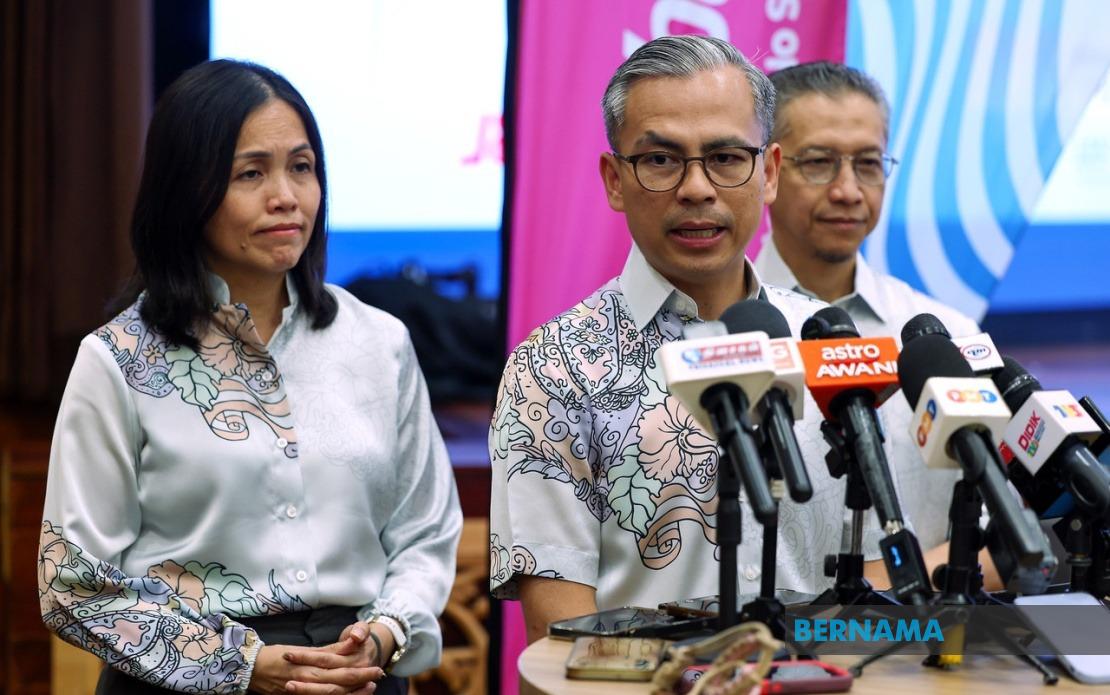
The Royal Commission of Inquiry report into the operations of Lembaga Tabung Haji will be distributed to multiple enforcement agencies for comprehensive investigation into the matters it uncovered, Communications Minister Datuk Seri Fahmi Fadzil confirmed on Tuesday in Putrajaya. The handover of the RCI findings marks the transition from the inquiry phase into active investigations by law enforcement and regulatory authorities tasked with examining potential wrongdoing at the pilgrimage savings body.
Fahmi outlined the scope of agencies that will receive the report and begin their respective investigations. The Royal Malaysia Police (PDRM) and Malaysian Anti-Corruption Commission (MACC) will lead criminal inquiries, while agencies administering the Anti-Money Laundering, Anti-Terrorism Financing and Proceeds of Unlawful Activities Act (AMLA) will examine potential financial crimes. Bank Negara Malaysia and the Inland Revenue Board (IRB) will scrutinise regulatory compliance and tax matters respectively, creating a multi-pronged investigation framework that reflects the complexity of the issues raised in the inquiry.
The distribution follows Prime Minister Datuk Seri Anwar Ibrahim's announcement regarding how findings would be handled. Fahmi noted that the referral includes not only the formal RCI report released publicly on July 29, but also supplementary information provided by Finance Minister II Datuk Seri Amir Hamzah Azizan and Minister in the Prime Minister's Department (Religious Affairs) Dr Zulkifli Hasan during a special parliamentary sitting the previous day. This additional material may provide context or clarifications that could assist investigators in their work.
The RCI's investigation spanned a crucial period for Tabung Haji's management, covering the years 2014 through 2020, when the organisation faced significant operational and financial challenges. The inquiry documented extensive management weaknesses and governance failures during this timeframe, producing 25 recommendations aimed at systemic improvement. By the time the report was published, Tabung Haji had already begun implementing these recommendations, with 75 per cent adopted as of late July, suggesting some institutional capacity for reform.
The referral to multiple agencies reflects an attempt to ensure comprehensive examination from criminal, anti-corruption, financial crime, and revenue perspectives. Rather than relying on a single investigative body, this distribution approach allows each agency to apply its specific expertise and statutory powers to different aspects of the RCI's findings. The MACC can focus on potential corruption by officials, the PDRM on criminal conduct, AMLA-designated agencies on suspicious financial flows, Bank Negara on regulatory breaches, and the IRB on any tax obligations.
The question of whether a new RCI should be established to examine Tabung Haji's operations during 2021 to 2025 has emerged as a political point of discussion. Both Barisan Nasional and Pakatan Harapan lawmakers have called for such an extension, reflecting concerns about potential ongoing issues post-2020. However, Fahmi explained that establishing a fresh RCI would require not just Cabinet approval but also the formal consent of the Yang di-Pertuan Agong, given the constitutional status of Royal Commissions of Inquiry. The governance requirements underscore that such decisions cannot be made through ordinary government procedures.
During the parliamentary sitting to discuss the RCI report, Bersatu MPs chose to participate in the debate, a decision Fahmi characterised as judicious and appropriate. This contrasted sharply with several Perikatan Nasional opposition parties, which abstained entirely from the proceedings. Fahmi's comments suggested that participating in the parliamentary discussion represented responsible conduct by the Bersatu contingent, despite their affiliation with the broader PN coalition.
Fahmi drew attention to the historical context of the RCI's establishment, noting that when the inquiry was initiated in 2021, PAS members and the then-Leader of Opposition Datuk Seri Hamzah Zainudin held ministerial positions within the government. He expressed disappointment that these parties, which had been present during the RCI's initiation and completion, subsequently refused to attend the parliamentary debate, describing their absence as a missed opportunity to engage substantively with the findings. His comments reflected broader frustration with what he characterised as evasive tactics.
The parliamentary sitting itself attracted 39 MPs to debate the RCI findings after Dr Zulkifli Hasan delivered his ministerial briefing on the matter. However, the proceedings were marked by political tension when opposition MPs staged a walkout and boycotted both the ministerial presentation and subsequent debate, objecting to Speaker Tan Sri Johari Abdul's decision to proceed without Prime Minister Datuk Seri Anwar Ibrahim's presence. The walkout underscored ongoing parliamentary friction and differing views on procedural propriety.
For Malaysian citizens and investors in Tabung Haji, the referral of findings to enforcement and regulatory authorities represents a critical juncture in accountability for the weaknesses identified during the 2014-2020 period. The multi-agency approach increases the likelihood that issues will be examined thoroughly, though the timeline for completion of investigations remains uncertain. The outcome will potentially determine whether individuals or entities responsible for management failures face legal consequences, influencing public confidence in the institution's future integrity.
The broader significance extends to Malaysia's regulatory framework for major government-linked financial institutions. The Tabung Haji inquiry and subsequent investigations demonstrate the system's capacity to scrutinise large statutory bodies, though questions persist about preventive mechanisms and oversight structures that might have caught problems earlier. The ultimate effectiveness of the multi-agency investigation approach in delivering meaningful accountability will establish precedents for how such cases are handled prospectively across the public sector.

