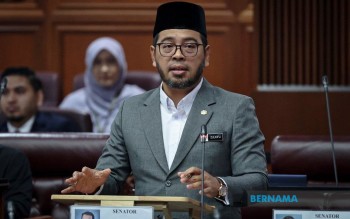
Tabung Haji (TH) is escalating its pursuit of a substantial financial recovery from Saudi Arabia-based property developer Al-Rawda Real Estates Development & Project Management Co Ltd, enlisting specialized asset tracing consultants after the company paid merely 14.9 million Saudi riyal of a 899 million Saudi riyal arbitration award. Dr Zulkifli Hasan, Minister in the Prime Minister's Department (Religious Affairs), disclosed this week that TH had terminated a November 2024 settlement agreement with Al-Rawda after the Saudi firm failed to honour its payment obligations, signalling a hardening of the government's stance towards recovering funds from troubled overseas investments that have plagued the pilgrimage fund.
The unfolding saga with Al-Rawda represents one of the most visible flashpoints in TH's broader financial turnaround, stemming from a series of extraordinary property transactions that occurred between 2015 and 2017. During this three-year window, TH committed approximately RM1.55 billion upfront to secure leasing agreements on four hotels located in Makkah and Madinah. These were not conventional property leases; rather, TH agreed to terms spanning between 10 and 18 years, representing what government officials have characterised as unusually aggressive deal structures for a religious institution managing public funds. The arrangements granted Al-Rawda operational control over the facilities through a separate management agreement that promised rental income valued at 2.49 billion Saudi riyal—payments that would never materialise.
The structural weakness embedded in these agreements became apparent only after Al-Rawda ceased rental payments in March 2019, leaving TH with hotels it could not effectively control and a promissory note from the company's owner, Dr Mashhoor Ali Omar Almadoodi, that proved worthless when enforcement became necessary. Rather than resolving matters swiftly, the dispute spiralled into protracted arbitration proceedings in Saudi Arabia, ultimately yielding a Final Award dated April 16, 2023 that vindicated TH's legal position but left the fund holding a judgment rather than recovered cash. The arbitration victory, while legally significant, exposed a fundamental challenge in cross-border asset recovery: a court order is only valuable if the debtor possesses sufficient liquid assets to satisfy it.
Dr Zulkifli's acknowledgement that Al-Rawda lacks the financial capacity to pay the full award amount raises uncomfortable questions about how thoroughly TH conducted due diligence before committing over a billion ringgit to the Saudi developer. The appointment of specialized asset tracing consultants suggests authorities now believe recoverable assets may exist but are hidden or distributed across multiple jurisdictions, a common tactic when debtors face substantial obligations. This investigative approach, while potentially productive, also underscores how much time and additional expense must be incurred to pursue money already owed under an arbitration award—a costly inefficiency that should have been preventable through more rigorous initial vetting.
The Al-Rawda situation functions as a case study illustrating the vulnerabilities that the recent Royal Commission of Inquiry (RCI) report on TH identified across the institution's investment strategy during 2014 to 2020. The RCI, whose findings were publicly released on July 29, identified Al-Rawda among 14 problematic investments collectively responsible for losses totalling billions of ringgit. The report's 211 pages document systemic weaknesses in management oversight, decision-making processes, and governance structures that allowed such transactions to proceed without adequate safeguards. For Malaysian observers, the Al-Rawda case illustrates how institutional failures compound over time: what began as a questionable but theoretically recoverable investment deteriorated into years of legal proceedings yielding a judgment against an insolvent counterparty.
The broader context of TH's financial rehabilitation remains significant for Malaysian Muslims and the public purse. The government's decision to establish the RCI in 2021, appoint members in January 2022, and present findings to the King in August 2022 reflected the seriousness with which authorities ultimately addressed the fund's crises. The RCI submitted 25 recommendations for operational improvement, with three-quarters implemented by late July 2024, suggesting genuine institutional reform is underway. However, the Al-Rawda recovery saga demonstrates that improving future governance cannot easily reverse past damage; damaged assets and insolvent counterparties remain obligations that must be managed despite corrective measures.
For regional context, the Al-Rawda dispute highlights risks that institutional investors across Southeast Asia face when expanding into Middle Eastern real estate markets. Saudi Arabia's property sector has attracted significant capital from Malaysian, Indonesian, and Singapore-based funds seeking exposure to Islamic finance opportunities and pilgrimage-related infrastructure. Yet as TH discovered, regulatory environments, enforcement mechanisms, and counterparty reliability in that region may differ substantially from domestic expectations. The case provides cautionary guidance for other religious or state-affiliated funds considering major commitments to overseas property development, particularly regarding the concentration of risk in single counterparties and the enforceability of agreements across international borders.
The settlement agreement that TH terminated in late 2024 represented a pragmatic effort to recover partial value quickly rather than pursue multi-year litigation. That Al-Rawda failed to comply with even a discounted payment schedule suggests the company's financial deterioration is severe or that management has deprioritised obligations to TH. The decision to terminate and shift toward asset tracing reflects acknowledgement that negotiated settlement is unlikely to yield additional recovery and that investigative measures may be the only remaining path to identify and access whatever resources the Saudi firm still controls. This approach consumes additional resources but may eventually yield results if hidden assets can be located and seized through Saudi courts or international enforcement mechanisms.
Looking forward, the Al-Rawda case will likely influence how TH and similar Malaysian institutions approach sovereign risk and counterparty assessment in future overseas ventures. The costs of the arbitration proceeding, the failed settlement negotiation, and the anticipated asset-tracing exercise represent a significant institutional expense layered atop the original RM1.55 billion investment loss. These compounding costs underscore why robust due diligence and conservative deal structuring prove far more economical than protracted legal recovery efforts. As TH continues its financial stabilisation, successfully recovering even a portion of the Al-Rawda judgment would represent both a practical financial gain and tangible evidence that institutional reform is yielding measurable results.

