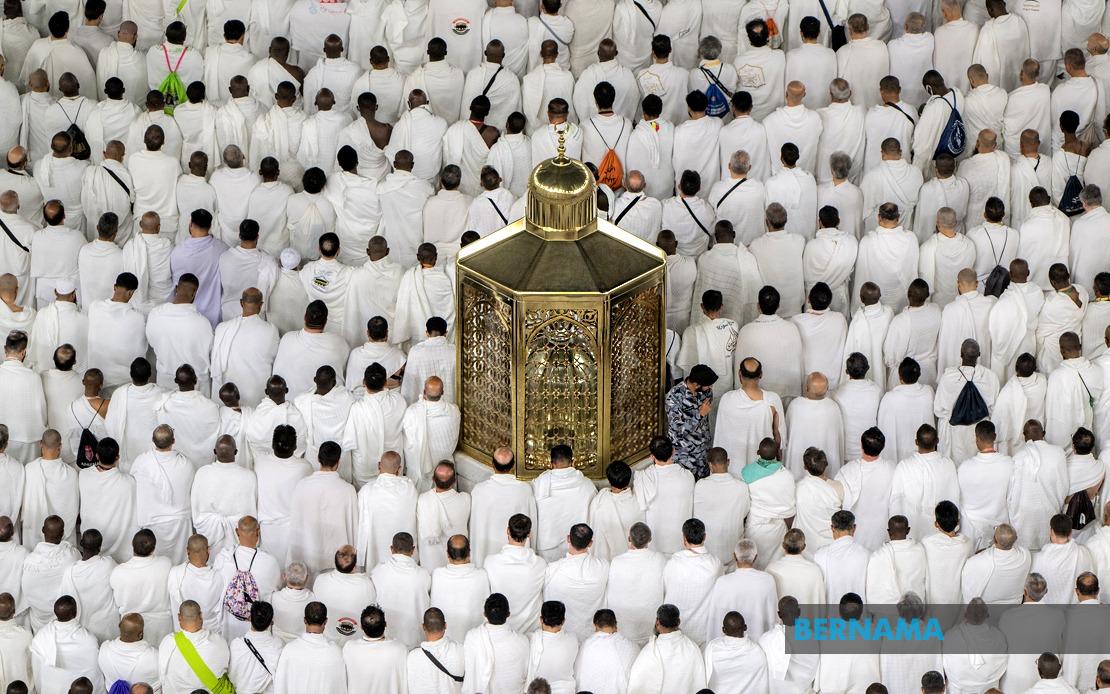
Malaysia's Tabung Haji has firmly committed to maintaining its "first-registered, first-served" allocation system for Haj pilgrimages, declining to introduce preferential categories that could undermine the established queue structure. The decision was articulated by Marhamah Rosli, Deputy Minister in the Prime Minister's Department (Religious Affairs), during parliamentary proceedings on July 13, reaffirming the institution's dedication to fairness and transparency in distributing limited pilgrimage slots among hundreds of thousands of Malaysian depositors.
The policy stance emerged in response to a proposal from Abdul Latiff Abdul Rahman, the Kuala Krai member of parliament representing Perikatan Nasional, who had suggested creating a special Haj category for compulsory retirees receiving gratuity payments. His rationale centred on the financial capacity of this demographic, despite their potentially extended waiting periods within the existing queue system. However, authorities rejected this approach, arguing that carving out privileged pathways would fundamentally distort the current waiting list and create disparities among depositors who have patiently accumulated savings and anticipated their turn over many years.
The government's resistance to special categories reflects a broader institutional principle that has governed Tabung Haji's operations for decades. Creating exceptions, officials contend, would not merely reorganize a queue but would breach the foundational promise that all Malaysian Muslims have equal standing in accessing this obligatory religious duty. The transparency and equity principles underpinning this decision carry particular weight in Malaysia's diverse society, where perceptions of fairness in religious services administered by government-linked entities can influence public confidence and community harmony. Any system perceived as favouring specific groups—whether based on retirement status, wealth, or professional standing—risks generating resentment among the broader Muslim population awaiting their turn.
To support depositors throughout their waiting period, Tabung Haji emphasizes that prospective pilgrims receive advance notification of their estimated Haj year, allowing them to prepare comprehensively across financial, health, and knowledge dimensions. This advance planning framework attempts to mitigate the challenge of extended waiting periods by enabling individuals to undertake phased preparations rather than facing sudden logistical demands. Nevertheless, the reality remains that some depositors face multi-year waits, creating pressure on policymakers to explore additional solutions.
A significant operational development introduced this Haj season involves stricter financial prerequisites for offer eligibility. Tabung Haji now mandates that prospective pilgrims maintain a minimum savings balance of RM15,000 before receiving a Haj offer letter, a threshold considerably lower than the actual pilgrimage cost of RM33,300 but designed to ensure basic financial readiness. This requirement serves as both a gateway mechanism and a prudential safeguard, ensuring that selected pilgrims possess demonstrated financial discipline and resources to complete arrangements.
For depositors facing genuine hardship or exceptional circumstances, the system does permit appeals that Tabung Haji evaluates individually according to established criteria and priority guidelines. This safety valve allows some flexibility within the rigid first-come, first-served framework, accommodating cases where standard sequencing might produce manifestly inequitable outcomes. The availability of appeal mechanisms, however carefully circumscribed, acknowledges that absolute inflexibility could occasionally conflict with justice in particular instances.
The core constraint underlying Malaysia's Haj allocation challenges is Saudi Arabia's quota system, which restricts the number of pilgrims each country may send annually. Malaysia received an official allocation of 31,600 pilgrims for the current Haj season, a figure substantially below the accumulated demand among Tabung Haji's depositors. This supply-demand imbalance is not a uniquely Malaysian phenomenon but reflects global pressure on the Haj infrastructure, where two million pilgrims from over 180 countries converge on Mecca during a concentrated period. The Saudi government maintains exclusive authority over quota expansion, leaving Malaysia's authorities to work within constraints they cannot unilaterally alter.
Recognizing this structural limitation, Tabung Haji continues submitting annual applications for quota increases to the Saudi authorities, though success depends entirely on Riyadh's capacity expansion and allocation priorities. This diplomatic engagement represents the only legitimate avenue for expanding opportunities, yet it offers no guaranteed outcomes. Consequently, the first-served allocation system remains the administratively defensible approach to distributing constrained resources fairly among competing claims.
Enforcement mechanisms supporting the allocation system have been strengthened to combat fraudulent practices that could compromise the system's integrity. Notably, Tabung Haji reported zero Haj package fraud cases to the dedicated Haj Fraud Task Force during the 1447 Hijrah season, an encouraging result attributed to enhanced enforcement and the "No Visa, No Haj" public awareness campaign. This initiative aligns with Saudi Arabia's "No Haj Without Permit" policy, creating mutually reinforcing safeguards that prevent unauthorized pilgrimage attempts and protect both Malaysian and Saudi interests. The absence of reported fraud suggests that strengthened controls and clear messaging can effectively deter irregular activities.
For Malaysian depositors, the implications are sobering but clear. The first-served system offers no shortcuts for those with financial means or retirement transitions approaching. The pathway to Mecca remains determined by registration order, maintained with institutional rigour to preserve systemic credibility. This approach may frustrate some who perceive their circumstances as meriting expedited treatment, yet it embodies a conception of fairness rooted in equal treatment rather than differentiation. The system implicitly respects the dignity of all depositors by refusing to translate worldly advantages into religious privileges, a principle with deep resonance in Islamic theology emphasizing the spiritual equality of all believers regardless of temporal status.

