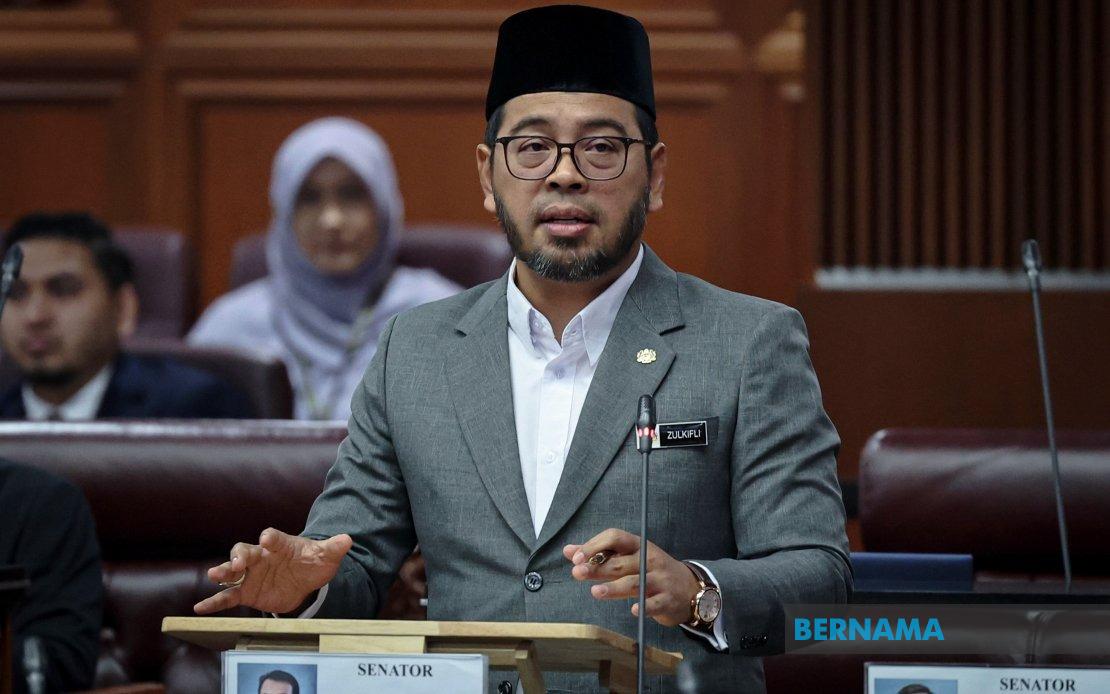
Religious Affairs Minister Dr Zulkifli Hasan has given assurance to Tabung Haji depositors that their zakat obligations have been properly discharged in full accordance with Islamic law and Syariah principles. Addressing Parliament during a special sitting, the minister sought to allay concerns over the institution's zakat practices, which had come under scrutiny following the release of a comprehensive Royal Commission of Inquiry report into the pilgrim fund's operations.
The minister grounded his reassurance in formal Islamic rulings. Tabung Haji's Syariah Advisory Committee had validated all zakat payments made on behalf of depositors prior to 2019, when the institution introduced the wakalah, or agency, concept for managing such obligations. This determination was reached at the committee's September 2020 meeting and affirmed that the previous practice remained valid and fully compliant with Syariah requirements. The committee comprises established scholars and Islamic finance professionals tasked with overseeing the institution's religious compliance.
A foundational Islamic decision underpins the broader framework. The National Fatwa Committee for Islamic Religious Affairs Malaysia had ruled in May 1979 that while Tabung Haji itself was not subject to zakat as an institution, it bore a specific obligation to discharge zakat on behalf of its depositors. This distinction is important: the fund acts as an agent collecting and distributing zakat rather than as a liable entity itself. Dr Zulkifli emphasised that Tabung Haji had consistently honoured this obligation over decades of operation, maintaining a practice rooted in that nearly 45-year-old fatwa.
The minister addressed a specific period that had generated questions. Between 2016 and 2019, when Tabung Haji operated under the Wadiah Yad Damanah contract structure, the zakat paid comprised business zakat, or khultah, calculated on the collective pool of depositor funds that were actively traded and invested. This methodology differed from earlier approaches but remained theologically sound, as zakat obligations on invested assets are recognised within Islamic jurisprudence. The distinction reflects the evolving operational structures of the fund rather than any deviation from core principles.
Following recommendations in the Royal Commission of Inquiry report, the matter of Tabung Haji's zakat practices was escalated for broader institutional review. The RCI had suggested that questions concerning zakat operations be referred to the National Council for Islamic Religious Affairs Muzakarah Committee, a body that serves as a deliberative forum for Islamic religious matters at the highest governmental level. Dr Zulkifli reported that this referral had proceeded, with the committee examining and endorsing the zakat arrangements in June 2024.
The approval chain extended further up the governmental hierarchy. The Muzakarah Committee's findings and endorsement were subsequently submitted to the 267th Meeting of the Conference of Rulers in October 2024. This step ensured that the nine hereditary rulers of Malaysia, custodians of Islam in their respective states, were briefed on the zakat practices of this major Islamic institution. The involvement of the Conference of Rulers lends additional legitimacy and oversight to the determination.
Dr Zulkifli's parliamentary statement emphasised that depositors faced no grounds for concern regarding their religious obligations. He stressed that Tabung Haji had executed all zakat operations methodically and in strict accordance with Islamic law. The fund's governance framework is anchored in comprehensive Zakat Guidelines that have been formally approved and are continuously monitored by the Syariah Advisory Committee, ensuring that expert oversight remains constant and rigorous.
Beyond zakat matters, the minister acknowledged the RCI's broader recommendations on pilgrimage management. Tabung Haji has taken note of suggestions to refine policies governing haj eligibility and waiting periods, recognising the need for systematic improvements in how the fund facilitates this important religious obligation for Malaysian Muslims. The institution is now in the final refinement stages of a revised haj management policy, expected to be unveiled shortly.
These improvements are being structured around the Islamic concept of istito'ah, which denotes the capability and readiness necessary for undertaking the haj. The enhanced policy framework will emphasise a more transparent, methodically planned and organised approach to haj facilitation, coupled with greater emphasis on preparation and advance readiness among intending pilgrims. This aligns with contemporary best practices in pilgrimage administration while remaining grounded in Islamic teaching.
The Royal Commission of Inquiry itself, established in 2021 and formally constituted in January 2022, released its comprehensive findings publicly on July 29, 2024. The 211-page report examined weaknesses in institutional management and operations spanning 2014 to 2020 and put forward 25 specific recommendations for strengthening the fund. As of late July, Tabung Haji had already implemented 75 percent of these recommendations, demonstrating institutional responsiveness to the inquiry's findings.
For Malaysian Muslims, particularly the estimated 11 million Tabung Haji depositors, these clarifications carry tangible significance. The fund manages hundreds of billions of ringgit in accumulated pilgrim savings and is entrusted with a quasi-religious function in facilitating haj journeys. The explicit parliamentary reassurance from the Religious Affairs Minister, grounded in formal Islamic rulings and high-level institutional endorsements, addresses theological anxieties that some depositors may harbour about whether their religious contributions are being managed correctly.
The broader context reveals how Malaysian Islamic governance structures operate across multiple levels. Institutional Syariah committees, the National Fatwa Committee, specialised government forums like the Muzakarah Committee, and the Conference of Rulers collectively form a layered oversight system. This architecture reflects Malaysia's constitutional framework, which vests Islamic authority in the rulers while assigning implementation responsibility to federal and state religious departments. The Tabung Haji case illustrates how modern religious institutions navigate this complex institutional terrain.

