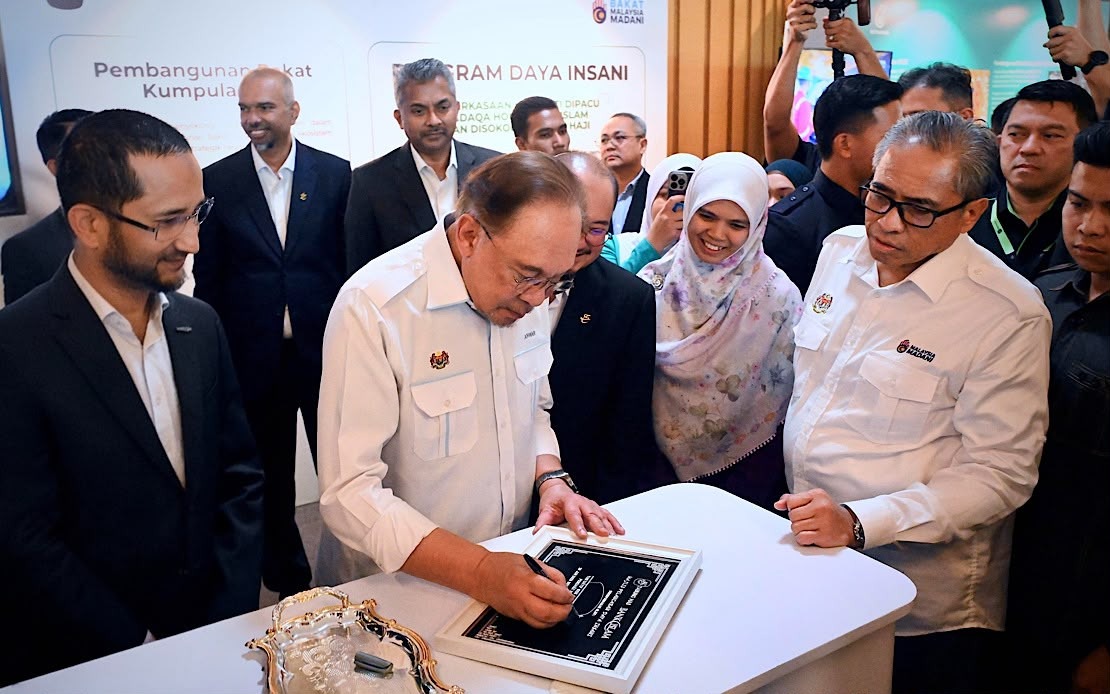
Tabung Haji (TH) and Bank Islam Malaysia Berhad have joined forces to establish the Asnaf Youth Development Programme for Inclusive and Sustainable Empowerment, known as DAYA INSANI, pledging RM1 million in initial funding to uplift disadvantaged young Malaysians. Launched on Monday during Prime Minister Datuk Seri Anwar Ibrahim's MADANI Talent initiative event in Sendayan, Negeri Sembilan, the initiative represents a strategic alliance between Malaysia's premier Islamic finance institutions to address youth unemployment and social mobility challenges among the nation's most vulnerable populations.
The programme represents a tangible commitment from both institutions to operationalise the government's broader talent development agenda whilst aligning with Islamic principles of social responsibility. Rather than merely providing cash assistance, DAYA INSANI adopts a comprehensive model encompassing skills training, industry exposure, and guaranteed employment pathways. This three-pronged approach acknowledges that sustainable economic empowerment requires more than financial transfers; it demands human capital development that enables young people to compete effectively in the modern Malaysian job market.
The expected reach extends to more than 100 asnaf youth and orphans across the initial phase, with explicit provisions for scaling this intervention upward. The partnership mobilises established educational and corporate infrastructure already operational in Malaysia's economic ecosystem, avoiding the inefficiencies of building capacity from scratch. By leveraging existing institutions, the programme can deploy resources rapidly whilst maintaining quality standards across training delivery and job placement outcomes.
Partnership architecture proves central to the scheme's viability. The Kulim Hi-Tech Park Skills Centre will produce technical workers equipped with skills demanded by Malaysia's manufacturing and industrial sectors. Simultaneously, Kolej Universiti Bestari and Kumpulan Medic Iman Sdn Bhd address healthcare gaps through professional nursing diplomas, whilst the Malaysian Professional Accountancy Centre develops certified accounting professionals. This diversified sectoral focus prevents the programme from becoming too narrowly concentrated, instead distributing opportunities across growth industries with documented labour shortages.
Evidential traction already exists. The nursing diploma programme, commenced in 2024, currently enrolls 19 students with one graduate successfully transitioned into employment. At Kulim Hi-Tech Park, 13 participants began technical training in June, with ambitious targets to scale to 100 participants in coming months. These numbers demonstrate that programme infrastructure is operational rather than merely aspirational, addressing a persistent Malaysian challenge: translating policy announcements into measurable implementation.
The financial structure remains deliberately open-ended. Beyond TH's initial RM1 million contribution, the fund actively solicits donations from corporate entities, institutions, and individual philanthropists. This crowdfunding approach recognises that sustainable social impact rarely emerges from single-institution efforts. Malaysian corporations increasingly seek authentic avenues for corporate social responsibility investment; DAYA INSANI provides a structured, transparent mechanism through which private sector resources can flow toward youth empowerment whilst demonstrating measurable outcomes.
Contextually, this initiative addresses persistent Malaysian employment dynamics. Official statistics frequently highlight skills mismatches between labour supply and employer demand, particularly among disadvantaged communities. Asnaf populations, defined as those requiring zakat assistance under Islamic law, disproportionately experience intergenerational poverty and limited educational access. By targeting this demographic explicitly, TH and Bank Islam tackle structural inequality rather than treating symptoms. The emphasis on asnaf youth and orphans additionally acknowledges that childhood disadvantage compounds across the lifespan; early intervention through education and training potentially disrupts poverty transmission across generations.
Tabung Haji Group Managing Director Mustakim Mohamad positioned human capital development as fundamental Islamic investment, framing youth empowerment as essential to long-term ummah prosperity. This rhetoric connects microeconomic individual advancement to macroeconomic national development, suggesting that empowering vulnerable youth constitutes an Islamic obligation coinciding with Malaysia's development objectives. Bank Islam's Chief Executive Officer Raja Datin Paduka Teh Maimunah Raja Abdul Aziz similarly articulated the philosophy underpinning social finance approaches: structured interventions paired with genuine opportunity access enable individuals to realise potential otherwise constrained by circumstantial disadvantage.
For Malaysian policymakers monitoring youth employment trends, DAYA INSANI exemplifies institutional collaboration between Islamic finance sector and broader talent development architecture. Rather than establishing parallel government bureaucracies, the model leverages existing private and quasi-public institutional capacity. This approach potentially offers template value as Malaysia seeks to expand skills training and employment pathways nationwide, particularly given demonstrated capacity constraints within traditional vocational education infrastructure.
The programme's positioning within broader MADANI Talent framework situates it within government's inclusive development narrative. By aligning Islamic institutional initiatives with national talent development strategy, both TH and Bank Islam strengthen legitimacy for Islamic finance participation in economic policy implementation. This positioning may encourage other Islamic financial institutions to develop comparable programmes, multiplying the aggregate impact on disadvantaged youth employment outcomes.
Looking forward, programme sustainability depends fundamentally on employment outcomes. Training programmes generating unemployed graduates merely shuffle disadvantage rather than eliminating it. The emphasis on identified strategic industry partners suggests deliberate job placement commitment rather than speculative skills training. Monitoring actual employment rates, job quality, and income trajectories among programme graduates will prove essential for evaluating genuine social impact versus nominal achievement of participant numbers.
The initiative's Southeast Asian significance extends beyond Malaysia's borders. Other Muslim-majority nations across the region confront similar youth unemployment and skills development challenges. Should DAYA INSANI generate documented positive outcomes, the model's replicability across different national contexts could catalyse regional convergence toward social finance approaches combining Islamic principles with inclusive economic development priorities. For Malaysian readers, this represents not merely a domestic opportunity programme but potentially a regional leadership initiative in blending Islamic finance with contemporary talent development imperatives.

