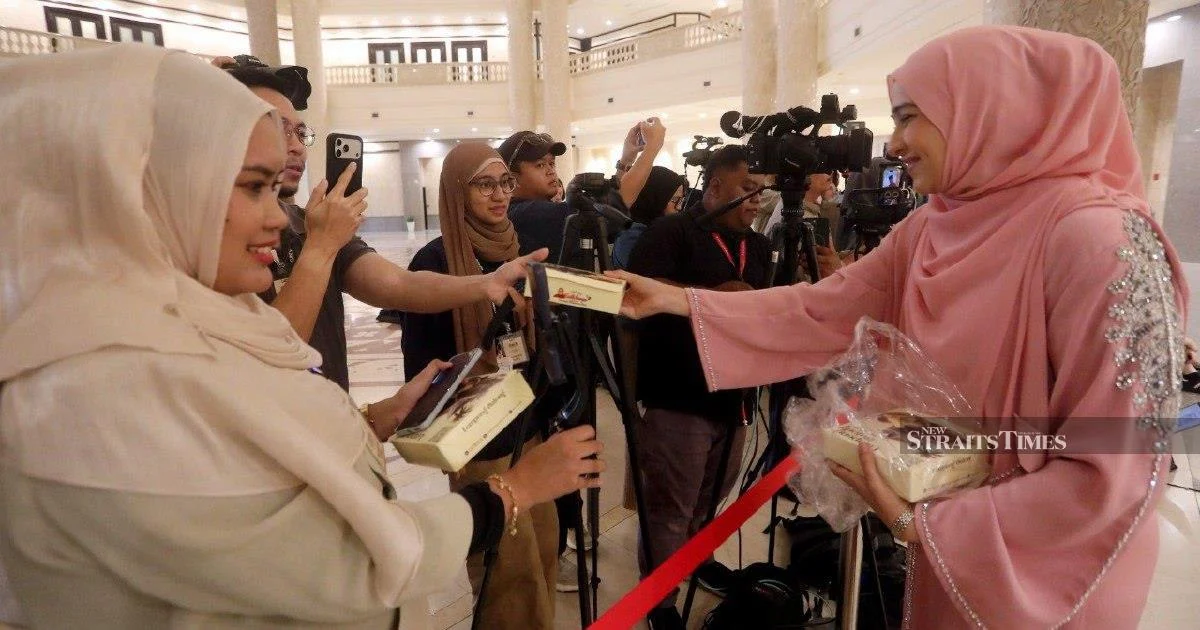
Muar member of parliament Syed Saddiq Syed Abdul Rahman extended hospitality to journalists covering his Federal Court hearing on corruption allegations, offering them a modest breakfast spread of nasi lemak and lempeng at the Palace of Justice in Putrajaya today. The gesture reflected a pattern of engagement with the media throughout the proceedings, as the high-profile case drew significant public interest and scrutiny.
The move underscores how contemporary Malaysian political figures increasingly blend traditional courtroom procedure with informal media relations strategies. By providing refreshments to reporters gathered for the ruling, Syed Saddiq demonstrated awareness of the logistics involved in extended court coverage, a consideration that has become more commonplace as legal proceedings grow longer and more complex. The breakfast items selected—staple Malaysian fare—carried symbolic weight, grounding the political moment in familiar cultural context.
The timing of the gesture, coinciding with the Federal Court's decision on Syed Saddiq's corruption cases, positioned the meal as part of a broader narrative management approach. Rather than isolating himself within formal legal channels, the Muar MP maintained visible connection with his supporters and the fourth estate, suggesting confidence in the day's outcome and intent to shape its public reception through direct personal engagement.
Syed Saddiq's approach contrasts with earlier patterns in Malaysian politics, where high-profile corruption defendants often maintained distance from media gatherings or adopted purely transactional relationships with press coverage. His willingness to provide hospitality suggests a calculated attempt to humanise his public profile during what remains a legally and politically precarious period. The choice of casual venue and modest menu projected accessibility rather than extravagance, a deliberate messaging choice for someone facing serious criminal allegations.
The incident also illuminates changing dynamics within Malaysian political communication, particularly among younger parliamentarians navigating legal challenges. Syed Saddiq, who previously served as youth and sports minister before his detention under the Sosial Media Temporary Measures Act 2012 during the COVID-19 crisis, has demonstrated sophisticated understanding of media dynamics. This breakfast gathering extended that strategy into the courtroom itself, attempting to frame legal proceedings through a lens of political normalcy and public accessibility.
From a broader governance perspective, the scene raises questions about appropriate boundaries between criminal defendants and media coverage of their trials. While providing refreshments remains technically permissible and falls within civil discourse norms, it blurs distinctions between judicial procedure and political messaging. Journalists covering court proceedings occupy a delicate position, balancing professional objectivity with practical realities of reporting. Accepting hospitality from the subject of their coverage introduces subtle dynamics worth examining within Malaysian media ethics frameworks.
The Federal Court's decision on Syed Saddiq's corruption cases carries implications extending beyond individual legal outcome. His prosecution has remained closely watched by civil society observers and political analysts tracking enforcement of laws against elected officials. The cases originated from allegations related to party fund transfers, matters that touch on broader debates regarding political financing transparency and accountability mechanisms within Malaysia's party system.
Putrajaya's Palace of Justice, where today's scene unfolded, sits at the heart of Malaysia's judicial apparatus and symbolises the supremacy of law as constitutional principle. The juxtaposition of formal courtroom authority with informal breakfast politics encapsulates tensions within modern Malaysian democracy. Legal systems require dignity and distance, yet political figures inevitably humanise themselves through personal gestures that invite sympathetic media framing.
The breakfast gathering also reflected Syed Saddiq's sustained political base among supporters who assembled at the Palace of Justice. His retention of constituency support despite legal troubles speaks to complex voter calculations in Malaysian politics, where personal relationships, service delivery, and party affiliation sometimes outweigh corruption allegations in electoral calculations. The media and supporters receiving nasi lemak together reinforced visual messaging of solidarity and normalcy surrounding his legal status.
For regional observers monitoring Malaysia's democratic institutions, today's scene encapsulated contemporary challenges facing court systems across Southeast Asia. As legal proceedings become increasingly intertwined with media narratives and political positioning, courts struggle to maintain procedural integrity while accommodating public interest expectations. The informal hospitality extended by Syed Saddiq reflected pragmatic adaptation to these pressures, even as it complicated the institutional separation between law and politics.
Looking forward, the Federal Court's determination on Syed Saddiq's corruption allegations will likely influence broader conversations regarding political accountability within Malaysia. Whether the ruling culminates in conviction, acquittal, or procedural resolution, the case has already contributed significantly to ongoing discourse around enforcement consistency, judicial independence, and political ethics standards. Today's breakfast moment, seemingly minor in isolation, encapsulated the intersection of legal gravity and political performance that increasingly characterises high-stakes Malaysian court proceedings.

