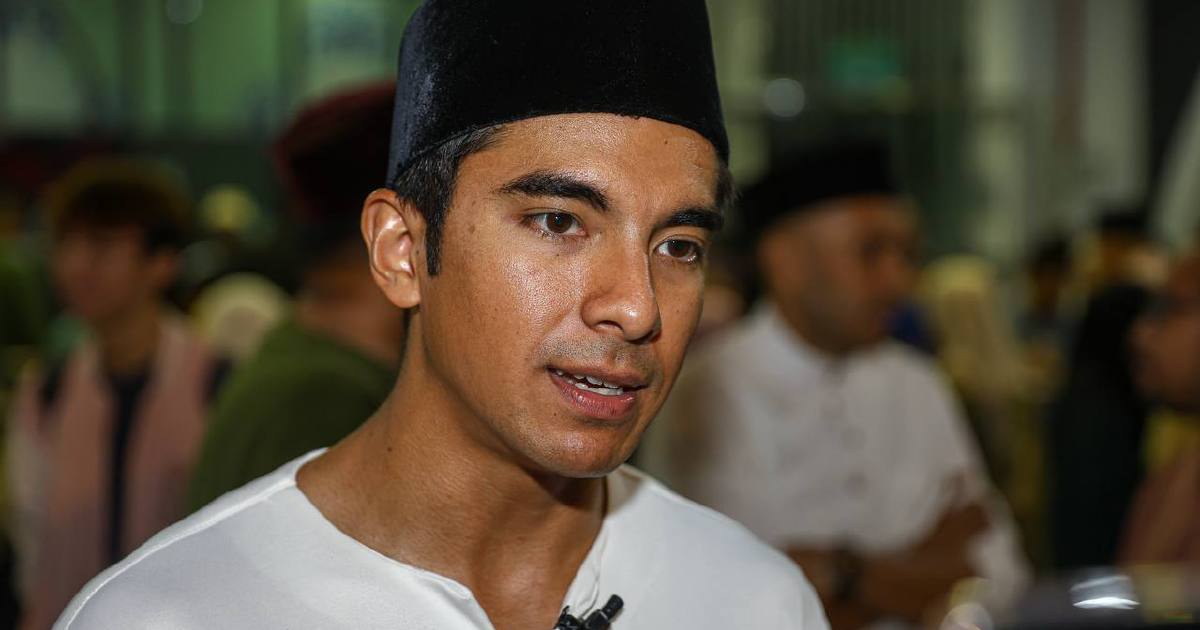
Syed Saddiq Barisan Melaka finds himself at a critical juncture in his political career as Malaysia's highest court prepares to hand down a decision that could fundamentally alter the trajectory of his tenure in elected politics. The former Youth and Sports Minister has adopted a philosophical stance towards the impending Federal Court ruling, expressing faith that the outcome will be determined by forces beyond his control. This posture reflects both the gravity of the moment and the uncertainty that surrounds cases of this magnitude in Malaysia's judiciary.
The disqualification case against Syed Saddiq represents one of the more consequential legal matters affecting Malaysian politics in recent years. At stake is not merely a ministerial position or parliamentary seat, but rather his foundational right to participate in electoral contests and hold public office. The Federal Court's determination will carry implications extending far beyond the individual involved, potentially setting precedent for how similar cases are adjudicated in the future. For a politician still in his early thirties, the ramifications could prove decisive in determining whether his political comeback remains viable or whether he faces a prolonged period of exclusion from formal politics.
The journey that led to this courtroom moment reflects the turbulent nature of Malaysian politics over the past several years. Syed Saddiq, who rose to prominence as a young politician representing a progressive faction within his party, has experienced dramatic shifts in political fortune. His ascent to the ministerial ranks during the Pakatan Harapan administration demonstrated the possibility of generational change in Malaysian governance. However, the subsequent political realignments and legal complications that followed have tested his resilience and political standing.
The grounds for disqualification typically centre on specific statutory violations or breaches of electoral law. In Malaysia's political context, such cases are rarely straightforward matters of simple legal interpretation. Courts must weigh not only the technical elements of alleged infractions but also broader questions about the application of electoral rules and the proportionality of consequences. The Federal Court, as the final arbiter, carries the responsibility of ensuring that its judgment upholds both the letter of the law and principles of natural justice that undergird Malaysia's constitutional framework.
Syed Saddiq's invocation of divine will in facing this uncertainty resonates with a broader cultural and religious perspective prevalent among Malaysian politicians. Rather than expressing confidence in legal arguments or predicting a favourable outcome, his public stance acknowledges the supremacy of forces beyond political calculation or legal strategy. This rhetorical position, whether calculated or genuine, positions him as a figure accepting of consequences whilst maintaining personal dignity throughout the proceedings.
The timing of the Federal Court's ruling holds significance for Malaysian politics more broadly. The decision arrives amid ongoing negotiations over political coalitions and parliamentary alignments that have become characteristic of post-2018 Malaysian governance. Should Syed Saddiq's disqualification be upheld, it removes from active politics a figure who has cultivated a following among younger voters and within reform-minded circles. Conversely, should the court overturn the disqualification, it would validate his arguments and potentially facilitate his return to more prominent political roles.
For observers of Malaysian politics, Syed Saddiq's situation illuminates broader questions about how electoral law is administered and enforced. The difference between substantive justice and procedural regularity often determines outcomes in disqualification cases. Questions about whether alleged violations were intentional, whether procedures were properly followed in investigation and prosecution, and whether the prescribed penalties align with the severity of alleged breaches all factor into judicial reasoning.
The Federal Court's composition and its recent jurisprudence on electoral matters provide limited guidance for predicting the outcome. Malaysian courts have demonstrated varying approaches to cases involving political disqualification, sometimes emphasising strict statutory interpretation and other times considering contextual factors and proportionality. The three-judge panel assigned to hear this matter will bring its own judicial philosophy to bear on arguments presented by both sides.
Beyond the immediate legal question, Syed Saddiq's case reflects broader challenges facing Malaysian politics regarding generational transition and the integration of younger leaders into party hierarchies. His political trajectory—rapid rise, subsequent complications, and now legal jeopardy—mirrors the experiences of other young politicians who have attempted to navigate Malaysia's often unforgiving political terrain. The Federal Court's judgment will thus carry symbolic weight extending beyond the case itself.
Regional observers monitoring Malaysian political developments will closely scrutinise the court's reasoning and conclusion. The decision will signal how Malaysia's judiciary approaches matters at the intersection of electoral law, administrative procedure, and individual rights. For Southeast Asian democracies grappling with similar questions about electoral integrity and the scope of disqualification provisions, the Federal Court's judgment may offer instructive precedent.
As the ruling date approaches, Syed Saddiq's characterisation of his situation as ultimately subject to divine determination represents both a philosophical acceptance of judicial finality and a recognition that political fortunes remain contingent on factors beyond individual control. Whatever the Federal Court decides, the case will remain a significant marker in Malaysian legal and political history, touching upon fundamental questions about how electoral rules are applied and interpreted in the nation's democratic system.

