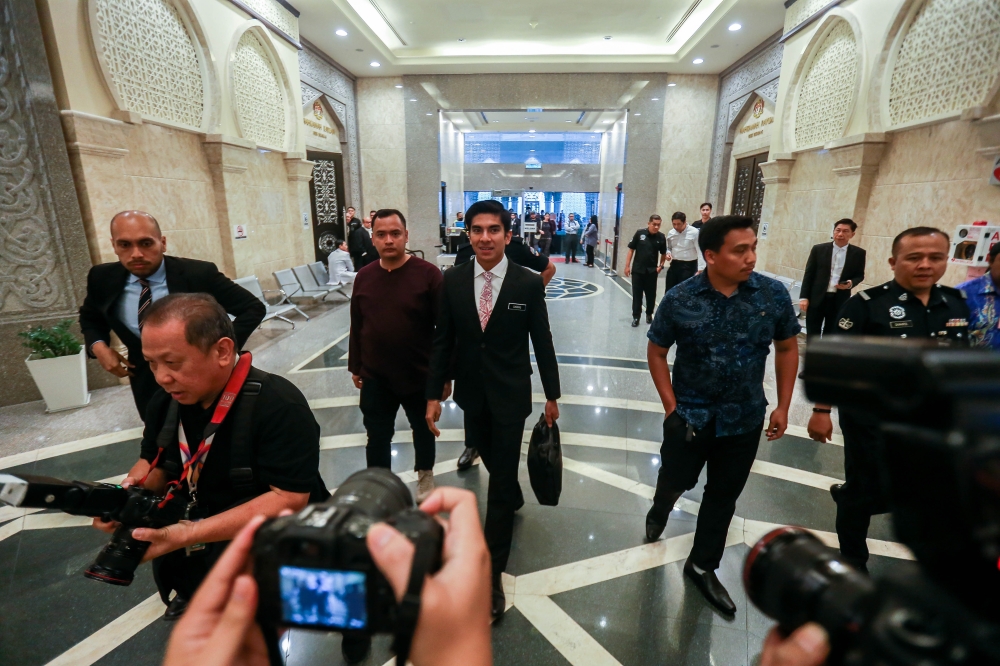
Muar Member of Parliament Syed Saddiq Syed Abdul Rahman appeared at the Palace of Justice in Putrajaya on July 13 to face a landmark Federal Court decision that will significantly shape his political trajectory. The young legislator, accompanied by family members and his fiancée, arrived early to the courthouse as crowds of supporters gathered outside, underlining the intensity of public interest surrounding the case. The hearing represents a critical juncture for the 35-year-old politician, whose legal troubles have cast uncertainty over his role within Malaysia's political landscape and his future involvement in parliamentary affairs.
The charges against Syed Saddiq stem from alleged money-laundering activities, with prosecutors contending that he engaged in unlawful financial transactions. The specific allegations centre on transactions related to party financing, an area that has drawn increasing scrutiny in Malaysian politics following a series of high-profile corruption cases. The Federal Court's decision carries substantial weight, as this is the nation's highest judicial authority, meaning there will be limited avenues for further appeal depending on the outcome. The presence of his immediate family at the courthouse demonstrates the personal stakes involved, extending well beyond his political career into his private life and personal relationships.
Syed Saddiq's position as Muar MP and his involvement in Malaysian politics have been marked by considerable visibility despite his relatively young age. He has served as a Member of Parliament and held various positions within political circles, making him a recognizable figure in domestic political discourse. The timing of this case coincides with broader discussions in Malaysia regarding political accountability and financial transparency, issues that continue to dominate public conversation and shape voter sentiment across the country. His situation has paralleled other high-profile cases involving politicians and their financial dealings, contributing to growing public demands for greater oversight of political funding mechanisms.
The courthouse gathering reflected significant public engagement with the proceedings, suggesting that this case extends beyond legal technicalities to encompass broader questions about political integrity and institutional accountability. Supporters assembled outside the Palace of Justice expressed their concern regarding the outcome, indicating that Syed Saddiq maintains a base of backing despite the serious allegations. This dynamic raises important questions about how Malaysian voters assess political figures facing legal challenges and the extent to which such cases influence public confidence in the political system overall. The early arrival of family members and the presence of his fiancée underscored the human dimension of what is fundamentally a legal proceeding.
For Malaysian politics more broadly, the ruling carries implications that extend beyond one individual's fate. The case will likely influence how other political figures navigate financial accountability questions and may establish precedent regarding how the courts treat allegations of money-laundering within political circles. In Southeast Asia's broader context, Malaysia's handling of corruption and financial crime cases involving politicians receives regional attention, as neighbouring nations contend with similar governance challenges. The Federal Court's decision will contribute to the overall narrative surrounding judicial independence and the rule of law in Malaysian institutions, topics that resonate throughout the region.
The financial dimensions of the allegations warrant particular attention given Malaysia's ongoing efforts to strengthen anti-money-laundering frameworks and international compliance standards. Political party financing represents a persistent challenge in democracies across Southeast Asia, where distinguishing between legitimate party operations and improper financial conduct remains contentious. The specifics of Syed Saddiq's case may illuminate vulnerabilities in current regulatory structures or highlight enforcement gaps that policymakers should address. A conviction would suggest that existing mechanisms detected and successfully prosecuted financial misconduct, whereas an acquittal might prompt questions about whether safeguards are sufficiently robust.
The presence of his fiancée at the proceedings added a personal dimension to what is primarily a legal matter, reminding observers that those facing serious charges navigate profound personal consequences alongside institutional and political ramifications. Families of individuals caught up in high-profile cases often face social and professional repercussions extending beyond the individual defendant, a reality that frequently receives insufficient public acknowledgment. This aspect of legal proceedings in the public sphere deserves consideration alongside discussions of culpability and accountability.
The Federal Court's determination will likely conclude years of legal proceedings and uncertainty, providing definitive resolution to questions that have occupied attention in Malaysian political circles. The decision's timing and nature will influence broader public perception regarding the judiciary's capacity to adjudicate politically sensitive cases fairly and thoroughly. Malaysian observers will scrutinize the judgment for signals regarding institutional competence and impartiality, factors that contribute substantially to public confidence in the legal system. International observers monitoring Malaysia's governance trajectory may also reference this case when assessing the country's commitment to rule-of-law principles and anti-corruption measures.
Regardless of outcome, the case has already left marks on Malaysian politics by demonstrating both the vulnerabilities of the political system and the mechanisms available for addressing those vulnerabilities. It contributes to ongoing national conversations about standards for public officials, financial transparency requirements, and accountability mechanisms. The resolution will provide either reassurance that the system can address wrongdoing effectively or alternatively prompt additional questions about institutional capacity. For Syed Saddiq personally, the Federal Court's judgment represents a defining moment that will determine whether he can continue his parliamentary career or must navigate an alternative path following conviction.

