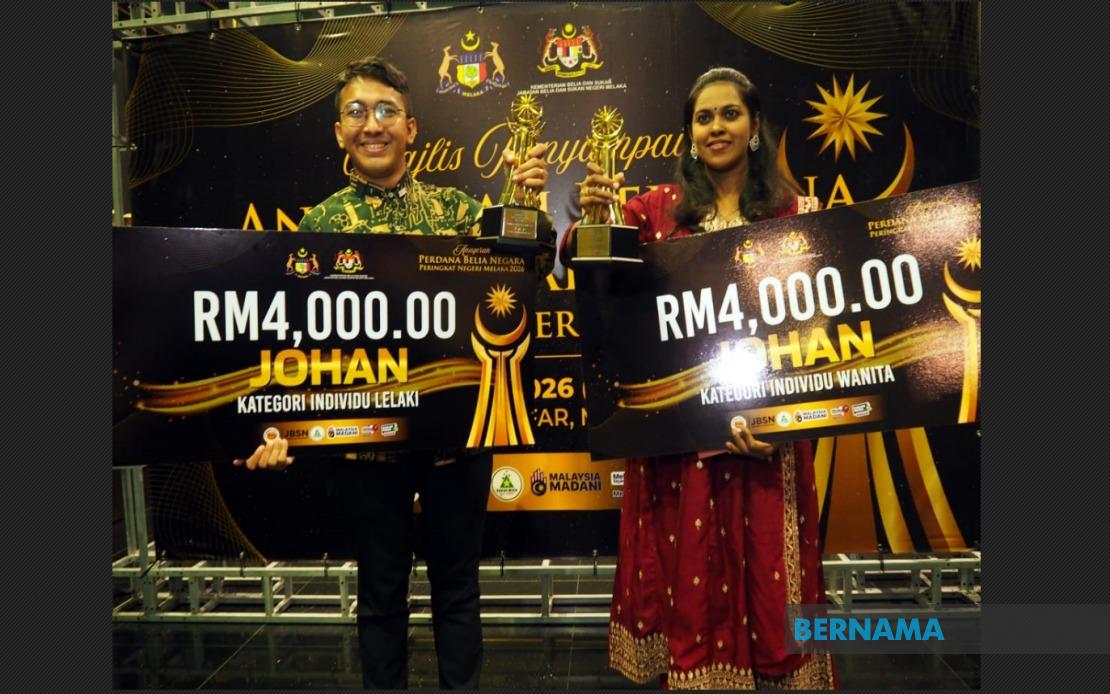
Harris Daniel Hermee, a 28-year-old syariah lawyer, has received the highest recognition in the male individual category at the 2026 Melaka State-level National Youth Awards, cementing his reputation as a driving force in community youth development across the state. The honour was presented at a ceremony in Ayer Keroh, where Melaka Chief Minister Datuk Seri Ab Rauf Yusoh officiated proceedings alongside state Youth, Sports and NGO Committee chairman Datuk VP Shanmugam.
For Hermee, the award represents a significant validation of his commitment to young people since returning to Melaka following his tertiary education at Universiti Sultan Zainal Abidin (UniSZA), where he completed his Islamic studies and law degree. His trajectory through youth leadership illustrates the broader pathway available to young Malaysians willing to invest sustained effort in community engagement. Having finished third in the previous year's competition, Hermee channelled that result into motivation for escalating his involvement, expanding his reach from grassroots initiatives to state, national, and international platforms.
Hermee's entry point into youth activism came through Gerakan Belia 4B Hang Tuah Jaya, where he began organising programmes centred on youth empowerment, sports development, and voluntary service. These initiatives were developed in partnership with government agencies and youth-focused organisations, demonstrating how individual initiative can align with institutional support structures to amplify impact. His approach reflects a growing trend among young Malaysian professionals who combine their primary careers with volunteer leadership roles.
Beyond organisational work, Hermee serves as Youth State Assembly Member for Pengkalan Batu, a position that provides him with formal channels to advocate for youth-centred policies and development initiatives within his constituency. This dual role—operating simultaneously within civil society and formal political structures—positions him to bridge grassroots concerns with policy-making processes, a capacity that Malaysian states increasingly recognise as valuable in addressing youth engagement challenges.
In the female category, 30-year-old SS Mayuri from Alor Gajah claimed the top award, bringing recognition to educators who extend their impact beyond classroom walls. A primary school teacher by profession, Mayuri has leveraged her position to create mentoring and motivational programmes targeting students preparing for the critical Sijil Pelajaran Malaysia (SPM) examination. Her work through the Melaka and Malaysia Tamil Youth Club Council demonstrates how community-based organisations provide crucial infrastructure for youth development activities that might otherwise lack institutional support.
Mayuri's initiatives extend beyond academic preparation to broader community health engagement, with her organising blood donation drives that simultaneously mobilise young people toward civic participation and social responsibility. This integrated approach—combining educational mentoring with community service—reflects an understanding that youth development functions most effectively when multiple dimensions of personal growth and social contribution are addressed concurrently.
The recognition of both award recipients underscores Melaka's commitment to identifying and celebrating young leaders who exemplify sustained commitment to their communities. The awards mechanism itself serves an important function in Malaysian society, creating visibility for youth leadership models that might otherwise operate quietly within local contexts. By elevating these examples, state governments encourage peer recognition and motivate other young professionals to invest in community roles.
For Hermee in particular, the progression from third-place finisher to category winner illustrates how constructive engagement with recognition processes can drive improvement. Rather than viewing previous results as final judgements, he intensified participation in programmes with wider reach, directly addressing areas where his contribution had been assessed. This iterative approach to personal development holds lessons for younger Malaysians navigating early career stages.
The awards also highlight the diverse professional backgrounds from which youth leadership emerges in Malaysia. That both top individual winners—a legal professional and an educator—come from knowledge-intensive fields reflects the importance of professionals using their expertise to serve young people. Legal expertise applied to youth advocacy, educational credentials deployed for peer mentoring: these represent scalable models that other professionals across medicine, engineering, business, and other sectors might emulate.
Melaka's emphasis on recognising youth development work at state level contributes to a national narrative that values civic engagement alongside economic productivity. As Malaysia navigates demographic and economic transitions, the visibility of young professionals choosing to invest time in community leadership offers an encouraging counterweight to narratives of youth disengagement. Both Hermee and Mayuri model pathways where career advancement and community contribution reinforce rather than compete with one another.
The awards structure itself, with distinct male and female categories and recognition at state level before progression to national platforms, creates a tiered pathway that encourages participation from diverse communities. Mayuri's recognition as category winner in particular validates the contributions of educators in youth development roles, a contribution often undervalued in formal recognition systems that may emphasise business or political leadership.
Looking forward, both award recipients now carry enhanced platforms for amplifying their respective initiatives. For Hermee, his legal expertise combined with state assembly membership positions him to advocate for youth-friendly policy frameworks. For Mayuri, recognition of her educational mentoring work may inspire other teachers to formalise and expand similar programmes. Their awards thus function not merely as individual honours but as catalysts for broader institutional engagement with youth development priorities across Melaka.

