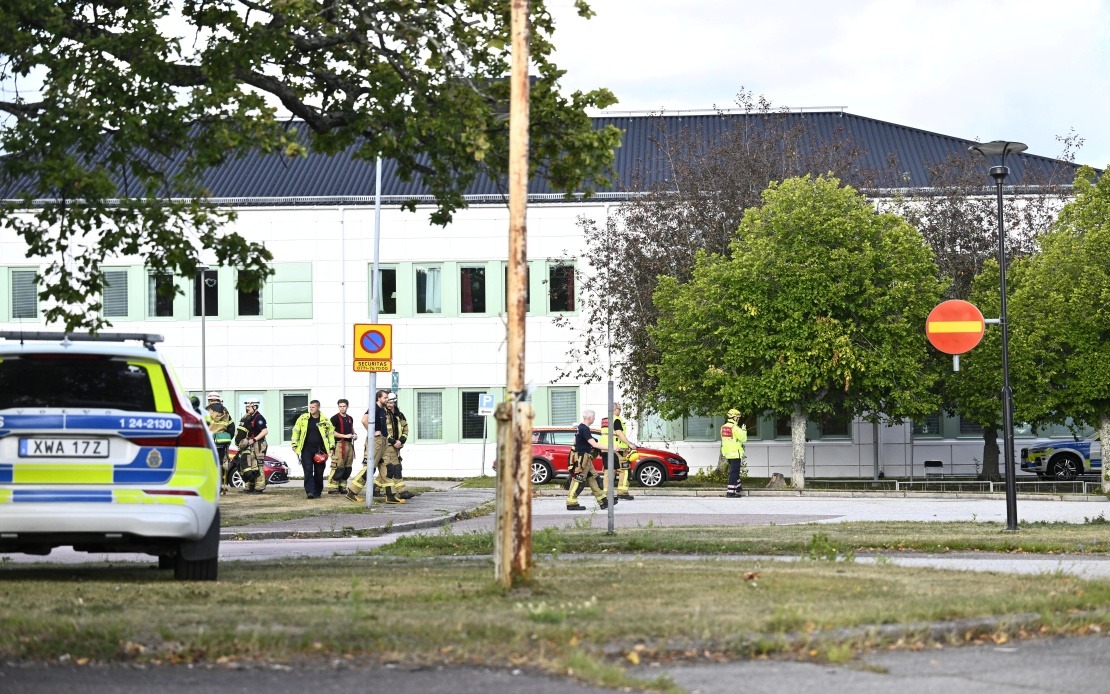
A fatal assault involving a sword at an educational facility in central Sweden has shocked the nation, leaving one person dead and multiple others wounded. The incident unfolded at Brinell School in Fagersta when an armed attacker entered the premises on Wednesday afternoon, prompting an immediate response from local emergency services and police forces who arrived at the scene at 2.06 pm local time.
According to authorities in Fagersta Municipality, two young male victims, both under 18 years old, sustained serious injuries during the attack and were transported to medical facilities where they remain in serious but stable condition. A third person also received treatment for minor injuries sustained during the chaos that followed the initial assault. The nature and extent of the fatality have not been fully disclosed by Swedish authorities, though the severity of the incident has prompted widespread concern across the nation.
Police investigations have led to the arrest of an 18-year-old male suspect who is connected to two residential addresses within Fagersta. Notably, the detained individual attended Brinell School previously, suggesting familiarity with the location and potentially some connection to the student body or institution. This detail raises questions about the motivations behind the attack and whether grievances related to the school setting may have played a role in the violence.
The aftermath of the incident triggered a comprehensive security response throughout the municipality. Seven educational and recreational facilities in Fagersta were placed under lockdown procedures, including Olympen, Fagerstahallen, Risbroskolan, Skogsglantan, Bjorksta, Prastkragen, and Norrbybacken. This precautionary measure aimed to ensure the safety of students and staff across multiple institutions while police conducted their investigation and secured the perimeter around Brinell School.
Sweden's Justice Minister Gunnar Strommer issued a statement confirming that the government was maintaining close coordination with law enforcement agencies regarding developments. Strommer emphasised that police were conducting intensive investigative work at the scene and that officials were monitoring the situation continuously. The ministerial response underscores the gravity with which Swedish authorities treat such incidents and their commitment to transparency during ongoing proceedings.
The attack represents a troubling incident in a nation that has experienced periodic episodes of school-based violence over recent decades. Swedish educational institutions typically maintain robust safety protocols, yet incidents like this demonstrate that no security measure can entirely eliminate the risk of determined individuals carrying out violent acts. The presence of a weapon such as a sword also highlights concerns about access to implements that, while not classified as firearms, can nonetheless inflict serious harm.
For Malaysian observers, this incident serves as a reminder of the universal nature of school safety challenges facing developed democracies. While Sweden maintains one of the world's strongest social safety nets and lowest crime rates, even such well-ordered societies experience unpredictable acts of violence. The incident raises questions about early intervention systems, mental health support for troubled youth, and the efficacy of various prevention strategies that governments employ.
The fact that the suspect was a former student adds another dimension to understanding such incidents. Educational facilities worldwide have grappled with the challenge of identifying and supporting students who may harbour grievances or exhibit warning signs of potential violence. The transition period following a student's departure from school can sometimes be particularly critical, as individuals may experience isolation or resentment that intensifies over time.
As investigations continue, Swedish authorities will likely examine the suspect's background, social connections, and any prior concerning behaviours that may have been documented. Such forensic analysis typically informs discussions about prevention frameworks and whether existing support systems functioned adequately in this case. The findings may influence discussions at both the national and European levels regarding best practices in school safety and youth mental health intervention.
The broader implications for regional school security are noteworthy. While Southeast Asia maintains different social and security contexts compared to Sweden, incidents abroad often prompt domestic policy reviews regarding preparedness and response protocols. Malaysian educational institutions, like their counterparts worldwide, continue evaluating the balance between maintaining welcoming, open learning environments and implementing security measures that protect against potential threats.
The community in Fagersta will now face the difficult process of processing trauma and grief following this tragedy. Support services and counselling resources will become essential for students, teachers, and families affected by the incident. Internationally, the case will likely feature in academic discussions about school violence patterns and prevention methodologies.

