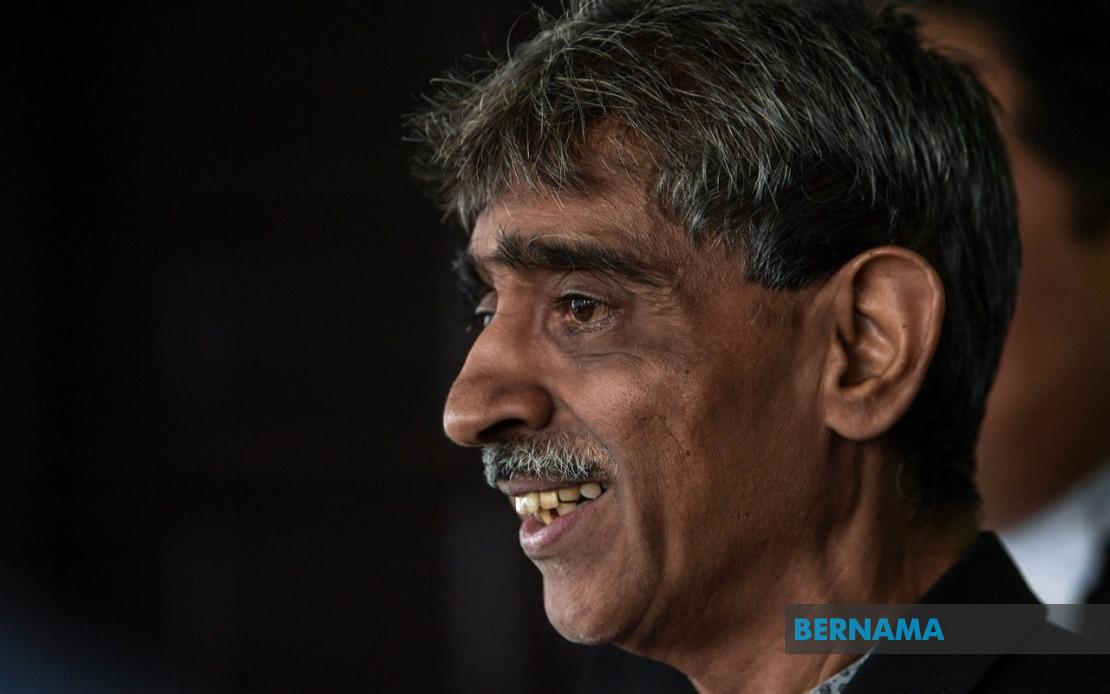
Criminal charges must be filed without delay against anyone implicated in wrongdoing at Tabung Haji once investigations produce credible evidence, according to Mohamed Haniff Khatri Abdulla, a lawyer who participated in the institution's high-profile Royal Commission of Inquiry. He stressed that the speed and decisiveness of prosecution efforts—irrespective of the accused person's rank or influence—will be instrumental in transforming the RCI's findings into concrete legal outcomes and rebuilding confidence among the hajj fund's millions of depositors. This unequivocal stance reflects growing pressure on Malaysia's enforcement and prosecutorial machinery to demonstrate that the thorough examination of Tabung Haji's management has translated into tangible accountability.
Public expectation has reached a critical point following the RCI's completion. Depositors and ordinary Malaysians view swift legal action as the litmus test of whether institutional reform efforts are genuine or merely performative. According to Mohamed Haniff, once investigative bodies conclude their work and prosecutors determine that evidence meets the threshold for criminal proceedings, the authorities must move immediately to court. He emphasized that this approach would serve multiple purposes: it would vindicate the RCI process itself, demonstrate that no individual sits above the law, and most crucially, signal to depositors that their grievances are being taken seriously. The longer the gap between investigation closure and courtroom proceedings, he cautioned, the greater the erosion of public faith in the system's willingness to pursue justice.
However, Mohamed Haniff introduced an important caveat that complicates the narrative of rapid prosecution. He clarified that launching charges against specific individuals does not signify the completion of all investigations stemming from the RCI report. The inquiry into Tabung Haji's affairs is multifaceted, encompassing governance failures, suspect investment decisions, and potential criminal breaches across numerous dimensions. Some aspects may yield prosecutable cases sooner than others, while parallel investigations into different layers of misconduct continue. This staggered timeline, he argued, necessitates careful public communication to prevent misinterpretation or cynicism about the authorities' commitment to the broader investigation.
Managing public perception throughout this protracted process is, in Mohamed Haniff's assessment, as critical as the prosecutions themselves. He warned that absent transparent, stage-by-stage updates from officials, Malaysian citizens could easily conclude within two or three years that any subsequent prosecutions are politically motivated rather than evidence-driven. Such suspicion would undermine the legitimacy of enforcement efforts and potentially delegitimize the RCI's entire enterprise. To counter this risk, he advocated that the government and investigating agencies release carefully calibrated statements explaining why particular cases are advancing to prosecution while other investigations remain active. This approach acknowledges that the inquiry is not a single discrete event but an evolving process with multiple concurrent strands.
The scale of the investigative undertaking reinforces the need for patience alongside accountability. According to information available to Mohamed Haniff, Royal Malaysia Police and the Malaysian Anti-Corruption Commission have summoned approximately 200 individuals to provide statements. Investigating two law enforcement agencies pursuing leads across governance structures, investment portfolios, and potential legal violations cannot operate on an expedited timeline without jeopardizing evidence integrity or prosecutorial strategy. Given these parameters, Mohamed Haniff projected that the investigation will likely extend at least three to six months beyond the point at which initial prosecutions commence. This timeline should ground public expectations and discourage unrealistic demands for overnight resolution of cases involving complex institutional failures.
To enhance investigative efficiency amid this complexity, Mohamed Haniff proposed a structural innovation: the Attorney General's Chambers should establish a specialized unit dedicated exclusively to evaluating investigation papers submitted by PDRM and MACC regarding the Tabung Haji RCI. This unit, he suggested, should comprise three Deputy Public Prosecutors with expertise in both Anti-Corruption Commission cases and conventional criminal law. Such integration would ensure that the prosecutorial review process itself does not become a bottleneck and that investigation papers are assessed through a unified analytical framework rather than fragmented departmental procedures. The proposal reflects a recognition that Malaysia's institutional machinery, while earnest, sometimes lacks the specialized coordination necessary to handle cases of institutional magnitude.
Former Court of Appeal judge Datuk Yaacob Md Sam, drawing from direct experience conducting multiple royal commissions, reinforced a fundamental legal principle that bears emphasizing for the Malaysian public: the RCI report itself cannot serve as evidence in criminal or civil courts. Under the Commissions of Inquiry Act 1950, findings and recommendations from such inquiries are not legally binding and cannot be introduced in prosecution cases. This legal constraint means that even where the RCI has reached clear conclusions about misconduct, enforcement agencies must independently gather admissible evidence capable of withstanding adversarial courtroom scrutiny. The distinction between an inquiry's investigative findings and courtroom evidence is not merely technical—it reflects the constitutional requirement that criminal liability depend upon proof beyond reasonable doubt established through proper evidentiary procedures.
Yaacob's involvement in conducting multiple RCIs, including inquiries into infrastructure failures and institutional governance, provides him with empirical insight into the translation problem. An RCI, by its design, operates within specific terms of reference established by government and produces findings and recommendations intended to prompt corrective action. However, these institutional conclusions do not automatically convert into criminal cases. Enforcement agencies must re-examine the evidence in granular detail, apply rules of evidence, secure testimony from witnesses in forms admissible in court, and construct prosecutorial narratives capable of satisfying judicial standards. This requirement is not bureaucratic obstruction but rather a protection against the misuse of state power and a guarantee of fairness to the accused.
For the institutions investigating Tabung Haji misconduct, this means that PDRM and MACC must treat their investigative mandate as fundamentally independent of the RCI, even though the inquiry's findings provide direction and context. The commissions cannot simply adopt the RCI's conclusions wholesale; they must validate or refine them through their own investigative apparatus. This dual-layer process—first the RCI, then law enforcement investigation—is time-consuming but constitutionally prudent. It ensures that prosecutions rest on solid evidentiary foundations rather than institutional pronouncements, thereby reducing the risk of appeals based on procedural or evidentiary defects.
The Tabung Haji situation arrives at a sensitive juncture in Malaysian institutional life. Public confidence in the pilgrim fund has been severely damaged by revelations of mismanagement and alleged misconduct. Simultaneously, public cynicism about the impartiality and efficiency of Malaysia's prosecutorial system remains substantial. Against this backdrop, the handling of post-RCI prosecutions carries symbolic weight far exceeding the specific cases at issue. The authorities must demonstrate that investigations are thorough and evidence-based, that prosecutions will proceed swiftly once that threshold is met, and that no individual—regardless of status—will escape accountability. Yet they must also acknowledge that quality investigations require time, that legal standards cannot be rushed, and that public communication about ongoing work is essential to sustaining legitimacy.
Mohamed Haniff's and Yaacob's remarks offer practical guidance for achieving this balance. Prosecutions should commence without unnecessary delay once evidence is adequate, but the public should understand that investigation papers on different aspects of the TH situation will mature at different rates. The Attorney General's Chambers' proposed specialized unit could streamline review of investigation papers, reducing procedural delays while maintaining prosecutorial rigor. And government communications should consistently emphasize that the RCI initiated a process rather than concluded one—that enforcement agencies are now undertaking their own independent investigations to translate the inquiry's findings into prosecutable cases. This framing manages expectations while reinforcing the legitimacy of whatever legal actions ultimately follow.
Ultimately, the test of the Tabung Haji RCI will not be the eloquence of its findings or the comprehensiveness of its investigation, but rather whether it produces criminal convictions of individuals who violated the law. That outcome depends on the diligent, evidence-focused work of PDRM, MACC, and prosecutors in the months ahead. Public confidence will grow incrementally as prosecutions commence and proceed through the courts, provided that those cases appear to rest on genuine evidence rather than political calculation. For Malaysia's depositors in Tabung Haji and for the broader public watching institutional accountability mechanisms at work, the period ahead will reveal whether the system can deliver justice matched to the scale of the failure.

