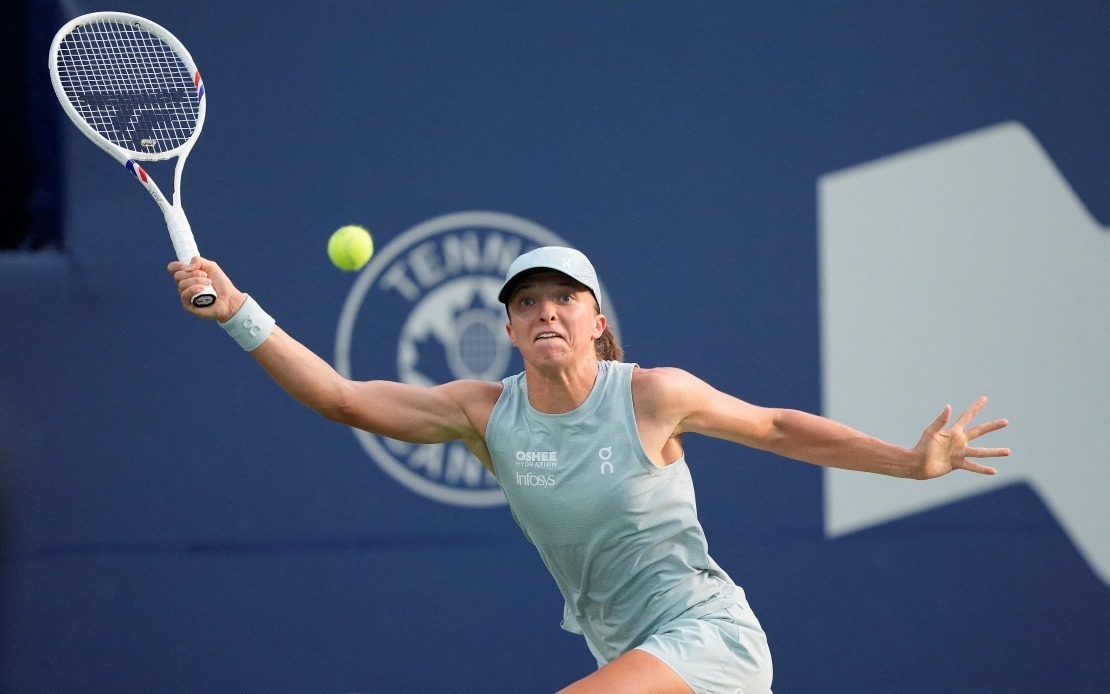
Poland's seventh-seeded Iga Swiatek has ended her title drought by defeating world number two Elena Rybakina with a commanding 6-2, 6-3 victory in the final of the National Bank Open in Toronto. The win marks Swiatek's first title since September of last year, representing a significant breakthrough after months of struggle on the professional circuit.
Swiatek's performance throughout the match reflected the form that has made her one of tennis's most dangerous competitors on hard courts. She established control early when Rybakina surrendered a break point through consecutive double faults, a costly lapse that would set the tone for the encounter. Rather than allowing her opponent any opportunity to recover, Swiatek accelerated through the opening set, converting her early advantage into decisive momentum that saw her claim the first set without significant resistance.
The second set unfolded in similar fashion, with Rybakina's unforced errors continuing to accumulate at a problematic rate. Two critical backhand errors handed Swiatek another break of serve, extending her advantage further and placing the match well within her grasp. The Polish competitor's consistency and precision stood in stark contrast to Rybakina's mounting frustrations, highlighting how margins in professional tennis often come down to minimizing mistakes under pressure.
Rybakina did demonstrate some resilience when she managed to fend off one match point, briefly suggesting a potential shift in momentum. However, Swiatek remained composed and clinical when it mattered most, converting her second championship point to seal victory and mark her return to the winners' circle after an extended absence from title contention. For a player accustomed to holding major trophies, this drought had tested her psychological fortitude and competitive resolve.
The significance of this Toronto triumph extends beyond the immediate ranking points and prize money. After struggling with consistency and confidence during recent months, Swiatek has demonstrated that her fundamental capabilities remain intact and her competitive edge undiminished. This victory should serve as a springboard heading into the remaining tournaments of the season, potentially reigniting a campaign that had threatened to become frustratingly unproductive.
During the awards ceremony, Swiatek offered remarks that transcended typical athletic platitudes. She dedicated her victory to "everyone who is dealing with unfair judgement and hate," a statement that acknowledged broader struggles beyond tennis and suggested the mental challenges she has navigated recently. Her words reflected a maturity and perspective often absent from post-match commentary, particularly given the intense scrutiny female athletes frequently endure.
Swiatek's encouragement to "keep pushing, keep growing, keep focusing on yourself because you know what's best for you" carries particular resonance for Southeast Asian audiences where performance pressure and external expectations often weigh heavily on competitive athletes. Her emphasis on maintaining focus despite external noise resonates across cultures and sporting disciplines, offering a template for resilience that extends beyond professional tennis.
The victory also underscores the highly competitive nature of women's professional tennis, where the margin between success and setback often hinges on mental fortitude as much as technical prowess. Swiatek's ability to reassert herself against Rybakina, the world's second-ranked player, demonstrates that rankings and seeding tell only partial stories. Form, confidence, and momentum frequently determine outcomes in matches between the sport's elite competitors.
For Malaysian tennis enthusiasts and those following the global tennis circuit, Swiatek's resurgence provides an important reminder that professional athletes regularly face periods of doubt and struggle before emerging stronger. Her Toronto triumph, achieved through steady play and capitalizing on opponent mistakes, illustrates the fundamental principles that underpin success at the highest levels of the sport.
Moving forward, this title should provide Swiatek with renewed confidence as she approaches the season's final stretch. The momentum from a dominant performance against a top-ranked opponent often carries substantial psychological weight, potentially affecting her performance in subsequent tournaments. Whether this represents the beginning of another dominant run or simply a necessary reset remains to be seen, but the evidence from Toronto suggests the Polish seventh seed has recovered her competitive sharpness at precisely the right moment in the season.

