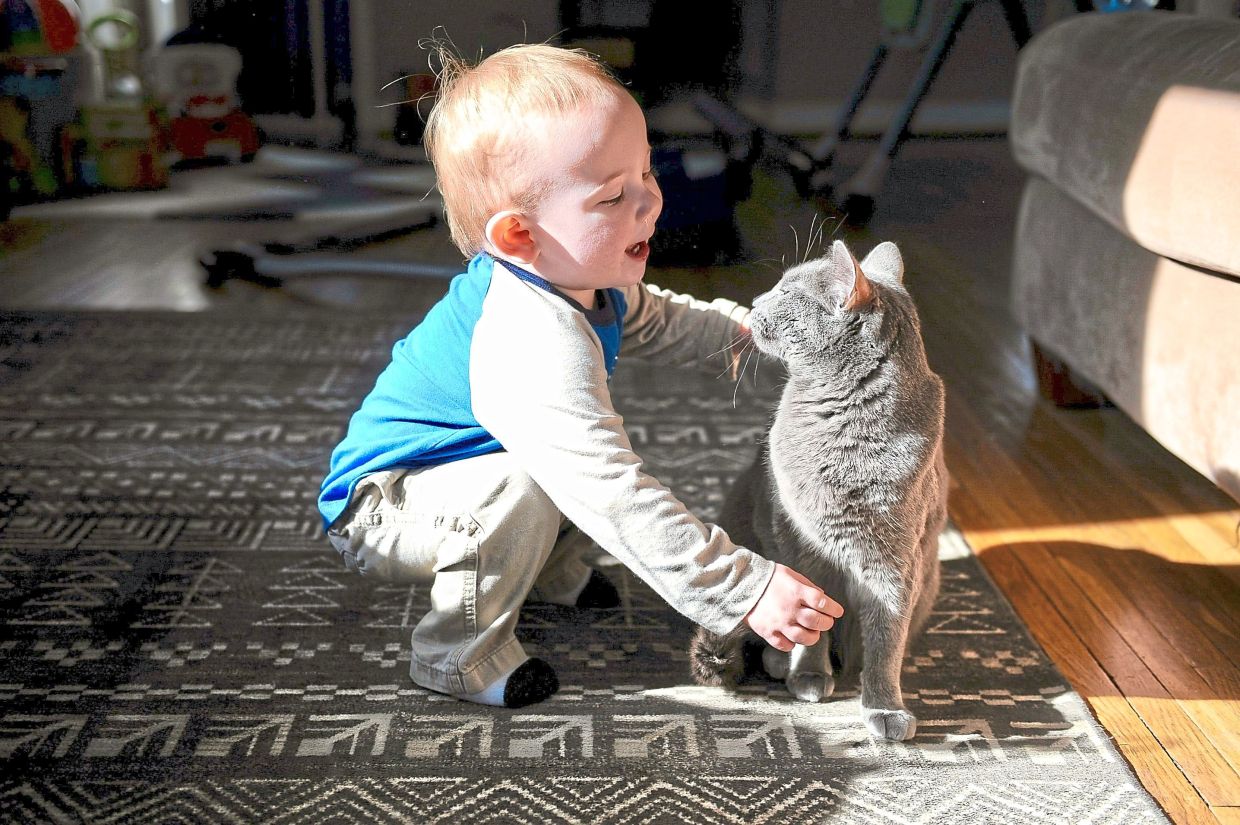
Cats have long carried a troublesome reputation among families managing childhood asthma, frequently fingered as culprits in triggering or exacerbating respiratory symptoms. Yet a major new analysis from Sweden suggests this widespread concern may not be grounded in reality, at least based on measurable clinical outcomes. The research, which followed over 30,000 children with asthma across two years, discovered that youngsters sharing homes with felines experienced no worse asthma severity, fewer attacks, or diminished lung function compared to those without cats—findings that could reassure countless Malaysian families wrestling with both pet ownership and respiratory health concerns.
Asthma remains the most prevalent chronic condition affecting children globally, representing a substantial burden on health systems and family life. The Global Asthma Network estimates that 9.1 percent of children and 11 percent of adolescents worldwide have asthma, though these figures fluctuate considerably depending on geography, socioeconomic factors, and environmental conditions. In Southeast Asia, where rapid urbanization and air quality challenges intersect with rising allergy rates, such prevalence estimates carry particular weight. The disease drives numerous hospitalizations annually and substantially disrupts schooling and developmental outcomes, making the identification of genuine versus perceived triggers critically important for parents making household decisions.
A constellation of established risk factors underpins childhood asthma development. Air pollution exposure and secondhand smoke emerge as particularly potent environmental hazards, while childhood viral infections, childhood obesity, and pre-existing allergic conditions such as eczema or hay fever all elevate vulnerability. Animal allergens have long featured prominently in clinical discussions and patient guidance, with many families voluntarily avoiding pet ownership or surrendering beloved animals based on asthma concerns. Anecdotal reports from patients describing apparent symptom flares following cat contact have reinforced these anxieties, creating a powerful cultural narrative around pet restrictions despite limited robust evidence substantiating the relationship.
The scientific literature examining this connection, however, has remained frustratingly inconsistent. Most previous investigations comprised relatively small studies examining specific population subgroups that may not reflect broader demographic reality, producing contradictory conclusions that left clinicians and families without clear guidance. This evidence gap created a vacuum filled by assumption and caution, leading many physicians to recommend cat avoidance as a precautionary measure. The Swedish research addresses this methodological weakness directly through its unprecedented scale and systematic approach, providing the kind of population-level data that can genuinely shift clinical practice.
Researchers at Karolinska Institutet launched their investigation in 2023, assembling a nationwide cohort of 30,277 children aged four to seventeen who carried diagnoses of either asthma or airway allergies. These children, born between 2006 and 2020, were monitored across a twenty-four-month period extending into 2024. The study's methodological strength lay in its reliance on linked Swedish national registries capturing comprehensive healthcare data including diagnoses, emergency department visits, medication prescriptions, standardized asthma control assessments, and objective lung function measurements through spirometry—eliminating reliance on patient recall or subjective reporting.
Sweden's mandatory National Cat Register, established in 2023 for all cats born after 2008, provided the exposure classification mechanism. Researchers identified which children lived in households with registered cats during 2023, finding that 9.4 percent of the cohort maintained feline companionship. This relatively straightforward binary exposure classification avoided the ambiguity that often complicates allergen research, where exposure assessment typically depends on less reliable questionnaire data. The systematic approach contrasted sharply with earlier investigations employing cruder exposure categorization.
The findings proved remarkably consistent across multiple asthma outcome measures. Moderate-to-severe asthma, defined by prescribed medication patterns, affected 9.6 percent of cat-exposed children versus 10.1 percent of unexposed children—a negligible and statistically insignificant difference. Asthma exacerbations, the acute attacks that prompt emergency visits and school absences, occurred in 3.3 percent of cat-exposed youngsters compared to 3.5 percent without home cat exposure. Among the subset of 1,428 children with available objective lung function data, the 6.8 percent living with cats showed no measurable differences in spirometry-based lung function assessments compared to their cat-free peers.
Dr Resthie R Putri, the postdoctoral researcher corresponding with this investigation, emphasized the consistency of null findings across outcome categories. The absence of associations held regardless of whether households contained one cat or multiple animals, and regardless of the cat's age or biological sex—nuances that earlier anecdotal literature had occasionally highlighted as potentially relevant factors. This thoroughness in examining potential effect modifiers strengthens confidence in the fundamental conclusion that household cat exposure, as measured through objective national registration data, bears no demonstrable relationship to clinically important asthma outcomes in children already diagnosed with the condition.
The researchers propose a plausible explanation for why previous anecdotal reports may have misled clinical thinking. Cat allergen exposure proves remarkably ubiquitous in modern urban and suburban environments, extending far beyond individual households. Schools, public transportation systems, shopping centres, and other shared spaces where cats are kept or their allergens dispersed via clothing and surfaces expose virtually all children regularly. Those without home cats may experience comparable total allergen burden through these secondary pathways, potentially explaining why the researchers detected no outcome differential. In Malaysian contexts, where school environments often house stray cats and urban density concentrates populations, this mechanism becomes especially relevant.
Yet the researchers acknowledge important limitations warranting cautious interpretation. The analysis lacked individual-level data on which specific allergens each child possessed detectable sensitization against—a significant omission because not all asthmatic children respond allergically to cat proteins specifically. The relatively recent establishment of the National Cat Register means some children living with cats may have been inadvertently misclassified as unexposed, potentially biasing results toward the null. These caveats do not invalidate the findings but appropriately contextualize them within the boundaries of what the data demonstrate.
For Malaysian families navigating asthma management, these findings offer meaningful reassurance that household cat ownership need not automatically worsen respiratory outcomes in children already carrying asthma diagnoses. The practical implications extend beyond individual households to inform clinical discussions and public health guidance, particularly as Southeast Asian nations increasingly grapple with rising asthma prevalence amid rapid urbanization and lifestyle changes. Rather than blanket recommendations against pet ownership, clinicians might better invest efforts in addressing more substantially modifiable risk factors including air quality, tobacco smoke exposure, obesity management, and early allergy detection and treatment.
The research ultimately exemplifies how large-scale population studies can overturn long-standing clinical assumptions when those assumptions rest on limited evidence rather than rigorous investigation. While individual children occasionally report symptom associations with specific exposures—a phenomenon worth respecting clinically—population-level evidence demonstrates that such associations do not represent inevitable consequences of household cat ownership. Moving forward, healthcare providers counseling families about pet ownership and asthma management might do well to base recommendations on this robust Nordic evidence rather than perpetuating cautions unsupported by contemporary data.

