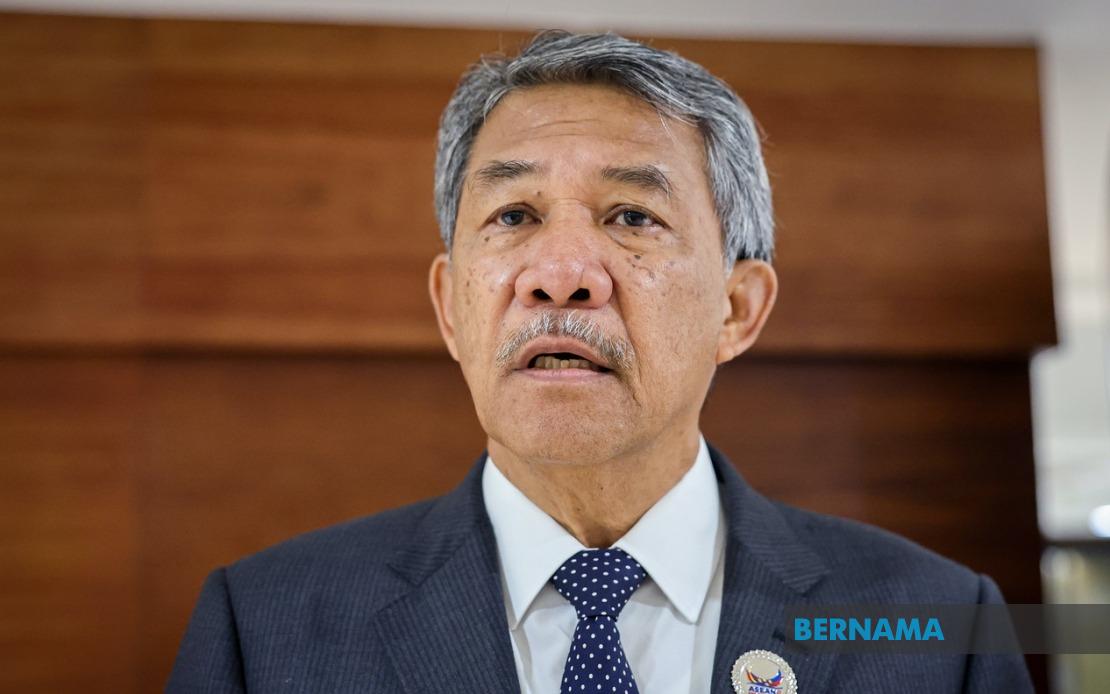
Four European nations—Sweden, Poland, Romania and Lithuania—have secured membership in the Treaty of Amity and Cooperation in Southeast Asia (TAC), underscoring the deepening engagement between ASEAN and major powers beyond Asia's borders. The decision, announced during the 59th ASEAN Foreign Ministers' Meeting in Manila on July 21, represents another milestone in the treaty's evolution as a cornerstone of regional diplomacy. Malaysia's Foreign Minister Datuk Seri Mohamad Hasan confirmed the four countries will formally execute their instruments of accession during a formal ceremony this Friday, coinciding with the TAC's 50th anniversary celebrations.
The acceptance of these European signatories signals ASEAN's strengthened position as a respected arbiter of regional stability and cooperation. By admitting nations geographically distant from Southeast Asia, ASEAN demonstrates the universal appeal of its founding principles—particularly peaceful coexistence, mutual respect, and non-interference in internal affairs. Mohamad remarked that the admission reflects broader international confidence in ASEAN as a stable, rule-based organization committed to regional security, emphasising that numerous countries have expressed desire to align with the bloc's cooperative frameworks.
Established nearly five decades ago in 1976, the TAC has evolved from a regional accord into a globally significant instrument for diplomatic engagement. The treaty was originally designed to codify conduct between ASEAN member states, establishing norms that would govern behaviour and dispute resolution across Southeast Asia. Over time, its scope expanded dramatically to encompass extra-regional powers, creating a structured channel through which countries could demonstrate commitment to ASEAN's vision of a peaceful, economically integrated region.
The treaty now comprises 58 High Contracting Parties as of 2025, reflecting remarkable growth in its membership base. Beyond the eleven ASEAN member states, the signatories now include major powers spanning multiple continents. Australia, China, India, Japan and New Zealand represent Asia-Pacific weight, while the United States anchors Western security interests. Germany and Türkiye expand the European dimension, and the inclusion of Brazil demonstrates ASEAN's reach into Latin America. Even Middle Eastern and North African nations—Saudi Arabia, Iran, Egypt and Morocco—have joined, illustrating the treaty's transcontinental relevance.
The admission of Sweden, Poland, Romania and Lithuania carries particular geopolitical significance given current international tensions. These European nations, three of which are NATO members (Poland, Romania and Lithuania), have historically oriented their foreign policy toward European and transatlantic structures. Their decision to formally accede to the TAC suggests a deliberate strategy to diversify diplomatic partnerships and engage with Asian regional frameworks. For ASEAN, their membership strengthens ties with developed democracies and adds weight to the bloc's advocacy for rules-based international order at a time when geopolitical competition intensifies.
The ASEAN Secretariat is managing a substantial pipeline of additional applications from countries seeking TAC membership, with these pending requests now being processed for submission to member states. This mounting interest suggests that ASEAN's diplomatic brand—anchored in consensus-building, non-coercive engagement and respect for sovereignty—continues to appeal to diverse nations navigating an unpredictable international environment. For regional powers like Malaysia, the expansion of TAC membership reinforces ASEAN's centrality in Asia-Pacific affairs and supports the bloc's strategic autonomy.
The timing of these admissions during the Philippines' ASEAN Chairmanship, which operates under the theme "Navigating Our Future, Together," is symbolically significant. It underscores ASEAN's commitment to inclusive, multilateral approaches to shared challenges—from economic integration to climate change and maritime security. The Philippines has positioned ASEAN as a bridge between divergent interests, and expanding the TAC membership aligns with that vision.
For Malaysia and other Southeast Asian nations, the widening circle of TAC signatories presents both opportunities and considerations. Diplomatically, it enhances ASEAN's leverage in bilateral and multilateral negotiations, as the bloc gains recognition from increasingly diverse international actors. Economically, expanded engagement with European nations through institutionalised frameworks could facilitate deeper trade partnerships and technology cooperation. However, the influx of extra-regional powers into ASEAN-centric mechanisms also requires careful management to ensure the bloc maintains its decision-making autonomy and doesn't become a forum where competing external powers project their rivalries.
The admission also reflects ASEAN's consistent advocacy for dialogue over confrontation, particularly relevant as geopolitical tensions simmer in Europe and beyond. By welcoming nations from contested regions, ASEAN implicitly endorses their commitment to peaceful conduct and regional stability principles. This positioning allows ASEAN to maintain its non-aligned posture while subtly encouraging adherents to ASEAN norms even as they manage their own strategic alignments elsewhere.
Looking ahead, the continued growth of TAC membership suggests the treaty will remain central to ASEAN's diplomatic architecture for decades. As more nations queue to accede, the challenge becomes ensuring that membership remains meaningful—that signatories genuinely embrace the treaty's principles rather than treating it as a ceremonial exercise. For Malaysia, maintaining the integrity of these principles while welcoming new members will require diplomatic finesse and commitment to the consensus-based decision-making that has historically defined ASEAN's success in maintaining unity among diverse member states.

