Financial institutions across Southeast Asia are fundamentally reshaping their business models to capitalise on the region's accelerating shift towards low-carbon investments, with sustainable finance transitioning from niche offering to core banking function. The transition reflects genuine market dynamics rather than mere corporate posturing: consumer appetite for electric vehicles, renewable energy installations and environmentally conscious housing has reached a critical mass, prompting banks to substantially broaden their financing portfolios and investment capabilities to meet this demand.
The electric vehicle market exemplifies this transformation most vividly. Data from the International Energy Agency reveals that Malaysia's EV sales doubled during 2025, whilst Indonesia achieved more than double-digit year-on-year growth, signalling a fundamental shift in Southeast Asian transport preferences away from conventional combustion engines. These figures matter deeply for Malaysian readers because they demonstrate that the region's energy transition is no longer a distant policy objective but an unfolding consumer reality reshaping financial markets in real time.
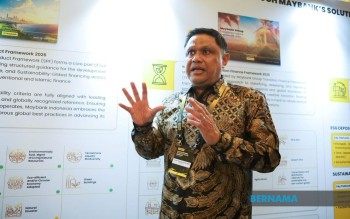
Maybank Group's strategic response underscores the seriousness with which major regional institutions are approaching this opportunity. The bank has pledged to mobilise RM300 billion in sustainable finance across ASEAN during the 2026-2030 period, representing a dramatic scaling up of its environmental finance operations. Speaking at the inaugural Maybank Indonesia Sustainable Finance Forum 2026 in Jakarta, Group Chief Sustainability Officer Datuk Shahril Azuar Jimin indicated that implementation momentum is already exceeding internal expectations, with the programme tracking ahead of schedule less than six months after launch.
Maybank's track record in this space provides instructive context. Between 2021 and 2025, the group mobilised RM176 billion in sustainable finance, more than doubling its original RM80 billion target announced at the outset of that commitment period. This substantial overperformance against targets reveals a critical insight: the constraint on sustainable financing growth has never been supply-side liquidity, contrary to widespread assumptions in earlier years. Rather, the limiting factor was demand and institutional capacity to identify and structure qualifying investments. Shahril articulated this perspective directly, noting that banks across the region harbour no reluctance whatsoever to support sustainability-oriented financing—they actively welcome it as both a commercial opportunity and strategic imperative.
Policy frameworks at the national level are actively enabling this financial sector transformation. Malaysia's Energy Transition and Water Transformation Ministry responded to unexpectedly strong demand by expanding the Net Energy Metering (NEM) Rakyat programme quota by 100 megawatts in May 2025, after existing allocations became fully subscribed. This programme permits residential households to install rooftop solar photovoltaic systems and monetise surplus generation through the grid, directly creating financing opportunities for solar installation providers and equipment financiers. For Malaysian households, this expanded quota represents practical movement towards distributed renewable generation and reduced electricity costs.
The scope of sustainable finance offerings has evolved considerably beyond traditional green infrastructure projects. Maybank's contemporary Sustainable Product Framework encompasses transition finance for carbon-intensive industries undertaking decarbonisation, dedicated EV financing, green residential mortgages, social finance for community benefit projects, and green bond issuance. This architectural diversity acknowledges that the energy transition does not follow a single pathway but rather requires tailored financial instruments reflecting differing business models, borrower profiles, and transition timelines across sectors and geographies.
The human dimensions of this financial transformation deserve particular attention. Banks must fundamentally reconceptualise the relationship manager role from transactional facilitator to sustainability advisor. Rather than simply arranging financing against collateral, relationship managers now shoulder responsibility for educating clients about climate risks, evaluating social impacts of proposed projects, and guiding commercial decisions through sustainability lenses. This represents genuine operational complexity requiring substantial institutional investment in training and certification. Maybank has committed considerable resources to capacity-building programmes ensuring its relationship managers possess both technical sustainability knowledge and communication competencies to explain climate dynamics and project externalities to clients effectively.
Indonesia exemplifies how these sustainable finance mechanisms integrate with everyday consumer needs beyond major infrastructure projects. Maybank Indonesia mobilised approximately Rp17 trillion under its previous 2021-2025 sustainable commitment, with transportation emerging as the strongest segment as EV adoption accelerates. Critically, the bank's portfolio also includes financing for affordable housing and low-cost electric two-wheelers targeting lower-income communities, demonstrating that sustainable finance increasingly serves mass-market consumer segments rather than exclusively wealthy early adopters. This democratisation of green finance extends the energy transition's benefits broadly across social strata.
Beyond traditional financing, banks are expanding their sustainable ecosystem offerings through deposit products and capital markets instruments. Indonesia has become the first Maybank market to launch an environmental, social and governance (ESG) deposit product, with Malaysia anticipated to follow. These products typically offer competitive returns while directing capital towards sustainable enterprises, creating alignment between depositor values and capital allocation. Additionally, Maybank Indonesia is developing green bond initiatives that will enable institutional investors to fund large-scale sustainable projects whilst generating compliant returns, establishing deep sustainable capital markets infrastructure across the region.
For Malaysian and Southeast Asian readers, these developments carry substantial implications. The transformation of mainstream banking towards sustainable finance signals that environmental considerations are hardwiring themselves into fundamental financial decision-making rather than remaining peripheral concerns. As banks compete to mobilise larger sustainable finance volumes, pricing of green products should become increasingly competitive relative to conventional financing, accelerating adoption among price-sensitive consumers and businesses. The expansion of these financing options directly enables Malaysian households and enterprises to pursue energy efficiency, renewable generation, and low-carbon transport at lower effective costs, whilst supporting the region's collective progress towards climate targets that matter for long-term economic resilience and international competitiveness.

