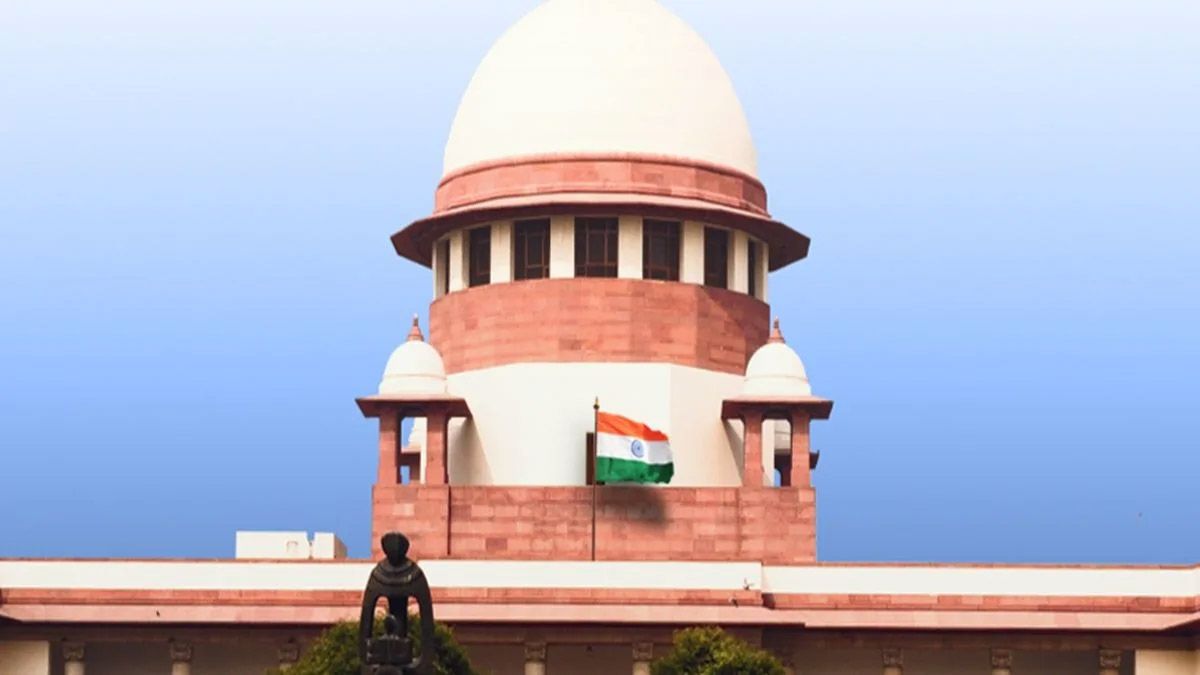
The Supreme Court of India has intervened to halt a sweeping restriction on cattle slaughter that the Madras High Court imposed across Tamil Nadu in May, marking a significant moment in the ongoing tension between animal welfare concerns and religious sentiment in the state. A bench led by Justice Vikram Nath and Justice Sandeep Mehta granted an interim stay of the Madras High Court's May 27 order while hearing the Tamil Nadu government's formal appeal, signalling potential concerns about the scope and reach of the lower court's directive. The court issued notice on the matter and observed that the impugned judgment warranted "correction" before proceeding further, a characterisation that underscores the bench's reservations about how the High Court had framed its ruling.
The central dispute pivots on how far courts should intervene in regulating animal slaughter under existing law. Tamil Nadu's government contended that the Madras High Court had strayed beyond the boundaries of the original petition and the applicable legal framework by imposing what amounts to an absolute prohibition on cow and calf slaughter throughout the state. The government's petition to the Supreme Court emphasised that the High Court's order effectively criminalised slaughter even within authorised facilities, a position that contradicts the regulatory structure established by multiple state and central statutes. This clash between judicial activism and administrative jurisdiction has significant implications for how Indian courts approach public interest litigation, particularly in matters where constitutional values, religious practices, and animal welfare intersect.
The original case that prompted the Madras High Court's intervention stemmed from a petition filed by K Surya Prasanth, General Secretary of the Hindu Makkal Katchi, who alleged that temporary structures had been erected in Coimbatore to facilitate cow slaughter during Bakrid celebrations. The petitioner sought to prevent such slaughter in public spaces and ensure that any animal processing adhered to regulations at designated slaughterhouses. However, the High Court went substantially further, issuing an order that prohibited cow and calf slaughter anywhere in Tamil Nadu on any day, including during religious festivals. The court directed senior government officials, including the Chief Secretary and Additional Director General of Police overseeing law and order, to enforce strict compliance with this blanket prohibition.
Tamil Nadu's government argues that this interpretation misreads both the Constitution and existing legislation. The state cited Article 48 of the Indian Constitution, which encourages—but does not mandate—states to organise agriculture and animal husbandry on modern and scientific lines, including efforts to prohibit cow slaughter. Significantly, the Constitution frames this as a directive principle, not a binding prohibition, leaving policy choices to elected governments rather than courts. The government also pointed to the Tamil Nadu Animal Preservation Act of 1958, which establishes conditions under which cattle slaughter may be permitted rather than imposing an absolute ban. Additionally, the state referenced the central Prevention of Cruelty to Animals Act of 1960, the Prevention of Cruelty to Animals (Slaughter House) Rules of 2001, and updated food safety regulations to argue that the law provides a framework of regulation and oversight, not wholesale prohibition.
The Madras High Court's reasoning drew heavily on a 1976 Government Order that restricted the slaughter of cows and heifers in authorised slaughterhouses across Tamil Nadu. The High Court asserted that this administrative directive possessed the force of law and remained binding on the state. The court also emphasised that animal slaughter could occur only in designated facilities, not in temporary structures or public places—a principle both the government and the original petitioner appeared to support. However, the Supreme Court's intervention suggests that using historical government orders to justify an absolute prohibition, particularly across an entire state without parliamentary amendment, raises constitutional and procedural concerns that warrant reconsideration.
The stakes of this dispute extend beyond Tamil Nadu's borders and touch on broader questions about federalism, judicial overreach, and the balance between protecting sacred animals in Hindu tradition and respecting religious minorities' practices. Tamil Nadu's substantial Muslim minority observes Bakrid as a significant religious occasion, and cow slaughter forms part of those observances for many communities. The complete prohibition effectively renders such religious practices unlawful, raising questions about the proper role of courts in adjudicating matters that elected legislators are better positioned to address through democratic debate and consensus-building. The Supreme Court's stay, therefore, represents not merely a procedural pause but a signal that fundamental principles of judicial restraint and constitutional structure merit careful examination.
With the Supreme Court's interim stay now in effect, the Madras High Court's directions remain suspended pending further hearings. The top court's observation that the judgment required "correction" foreshadows potential reversal or substantial modification, though the Supreme Court has not yet issued a final ruling. This liminal state creates uncertainty for administrators attempting to enforce the prohibition and for religious communities seeking clarity on what practices are permissible. The case will likely set precedent for how Indian courts engage with public interest litigation on culturally and religiously sensitive matters, particularly when lower courts appear to exceed their authority in pursuit of what they view as constitutionally worthy objectives.
For Malaysia and other Southeast Asian democracies with religiously and ethnically diverse populations, the Tamil Nadu case offers instructive lessons about judicial boundaries and the risks of unilateral court action on matters touching religious practice. Courts operate most legitimately when they interpret existing law rather than reshape entire regulatory schemes through expansive readings of petitions. The tension between protecting animals and respecting minority religious rights requires legislative attention and democratic deliberation, not judicial fiat. As India's Supreme Court reconsiders the Madras High Court's order, it will be defining how far judges should venture into territories traditionally occupied by elected governments, administrators, and legislatures—a question with implications far beyond cattle slaughter policies.

