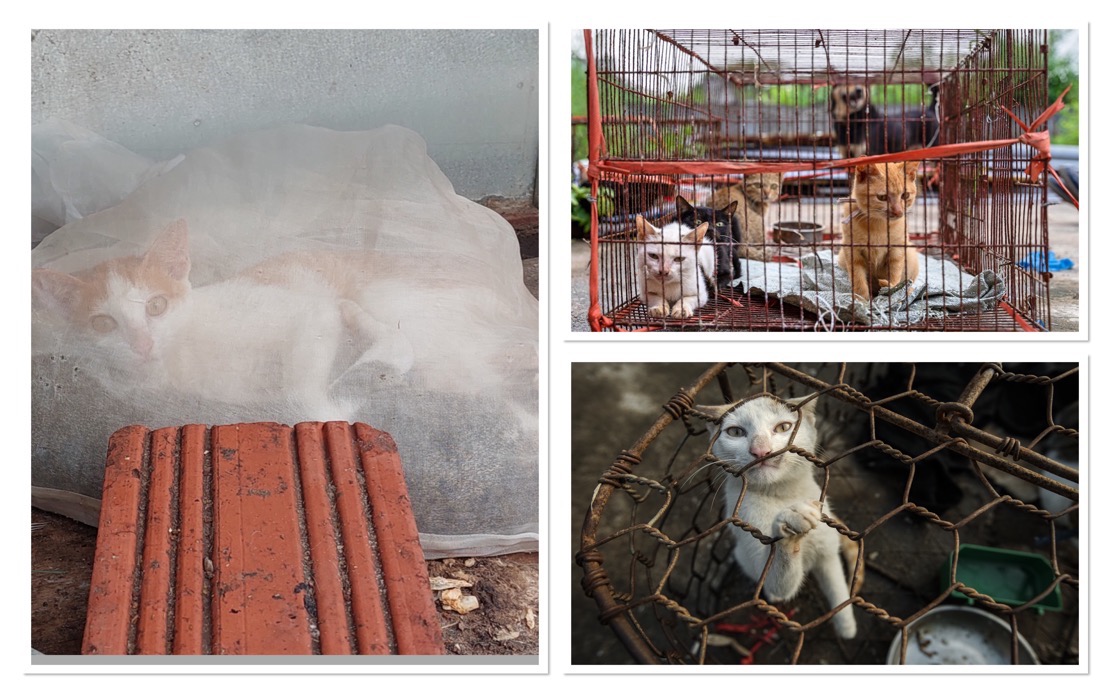
An underground network trafficking cats for slaughter operates with impunity across Indochina, perpetuated by deeply rooted cultural beliefs that associate feline meat with prosperity and health benefits. The scale is staggering: international animal welfare organisation FOUR PAWS estimates that approximately one million cats are killed each year in Vietnam, with additional numbers slaughtered in remote areas of Cambodia and Laos, where demand stems primarily from perceived medicinal value. This trade persists despite decades of awareness campaigns and activism from both regional governments and international organisations, revealing how entrenched superstition remains in parts of Southeast Asia.
Cats stolen from residential homes and streets are systematically trafficked across provincial borders and slaughtered to meet demand rooted in traditional beliefs and cultural practices. Rather than serving as a primary protein source, cat meat consumption is driven by specific cultural and social contexts. In Vietnam, some consumers believe that consuming cat meat during particular phases of the lunar calendar can reverse periods of misfortune or attract good luck. Others attribute health-promoting or therapeutic properties to feline flesh, making it sought after not as food but as a supposed remedy or wellness product.
The illicit nature of the trade became apparent in mid-June when authorities in Ho Chi Minh City dismantled a trafficking network, detaining nine gang members suspected of systematic theft and inter-provincial smuggling operations spanning three years. During the enforcement action, police rescued approximately 500 cats that had been destined for slaughter. This single case illustrates the organised character of the trade, which extends beyond opportunistic poaching to include coordinated criminal networks exploiting animals across state lines.
Jon Rosen Bennett, who directs dog and cat welfare programmes at FOUR PAWS, explained that belief systems rather than nutritional necessity drive consumption patterns. Historically, cat meat in Southeast Asia has been culturally associated with concepts of luck and fortune, though these associations vary by location and community. In Vietnam specifically, the practice remains embedded within traditional worldviews that ascribe supernatural properties to consuming certain animals at auspicious times.
Economic incentives sustain the trade despite limited legal frameworks governing it. FOUR PAWS investigations conducted in 2020 documented that live cats were purchased for approximately US$6 to US$8 per kilogramme, with processed meat commanding between US$10 and US$12 per kilogramme. Black cats commanded premium prices due to their particular association with luck-bringing or medicinal properties within local belief systems. These price differentials create financial motivation for traffickers and sellers, establishing a supply chain driven by profit extraction from superstition-based demand.
Notably, a comprehensive majority of Vietnamese citizens reject participation in and support elimination of the trade. Bennett reported that approximately 90 percent of respondents in surveys said they would endorse a legal ban on dog and cat meat trading. More significantly, over 90 percent of Vietnamese respondents stated that they do not regard the practice as authentically part of Vietnamese cultural heritage. This striking disconnect between public sentiment and ongoing illegal activity underscores how the trade persists despite popular disapproval, sustained by dedicated minority consumers and organised traffickers rather than broad-based cultural endorsement.
The absence of comprehensive national legislation criminalising feline meat production, sale, or consumption facilitates continued trafficking across Vietnam. Unlike some regional jurisdictions that have implemented bans, Vietnam lacks a unified legal prohibition, creating regulatory gaps that traffickers exploit. Bennett noted that despite international pressure and demonstrated public opposition, the legal framework remains insufficiently developed to effectively deter or prosecute participants in the cat meat supply chain.
Beyond animal welfare concerns, the underground cat trade presents documented public health risks to Southeast Asian populations. The clandestine movement of animals across provincial and international borders occurs without veterinary oversight or disease screening protocols. Bennett highlighted that these undocumented animal movements create pathways for transmission of rabies and other zoonotic diseases that can spread from animal populations to human communities. The absence of quarantine procedures or health documentation intensifies the epidemiological threat posed by trafficking networks.
The cat trade represents a subset of a broader pattern of exploitation affecting carnivorous companion animals across the region. Estimates suggest that over 10 million dogs are slaughtered annually for meat consumption throughout Southeast Asia, though like cat meat consumption, the majority of regional populations do not participate in or support dog meat trading. Public sentiment against dog meat consumption continues strengthening across the region, though the issue remains culturally sensitive in certain communities, complicating advocacy efforts and policy responses.
In response to documented trafficking, FOUR PAWS has implemented targeted interventions including public awareness initiatives and reporting mechanisms. In early June, the organisation launched an online platform enabling public reporting of dog and cat trade activities in Cambodia, providing a channel for community members to document illegal trafficking and contribute to enforcement efforts. These mechanisms attempt to harness public opposition to support enforcement capacity in jurisdictions with limited resources dedicated to animal welfare enforcement.
The persistence of the cat meat trade reflects broader challenges confronting animal welfare advocates across Southeast Asia: the disjuncture between demonstrable public opposition and entrenched illegal activity, insufficient legal frameworks, and limited enforcement capacity. For Malaysian readers, the Indochinese trade serves as a cautionary case study regarding how superstition-based practices can sustain exploitative industries despite technological advancement and public modernisation. The issue also demonstrates the necessity of comprehensive legal prohibition coupled with public engagement strategies that respect cultural contexts while building consensus around animal protection standards.

