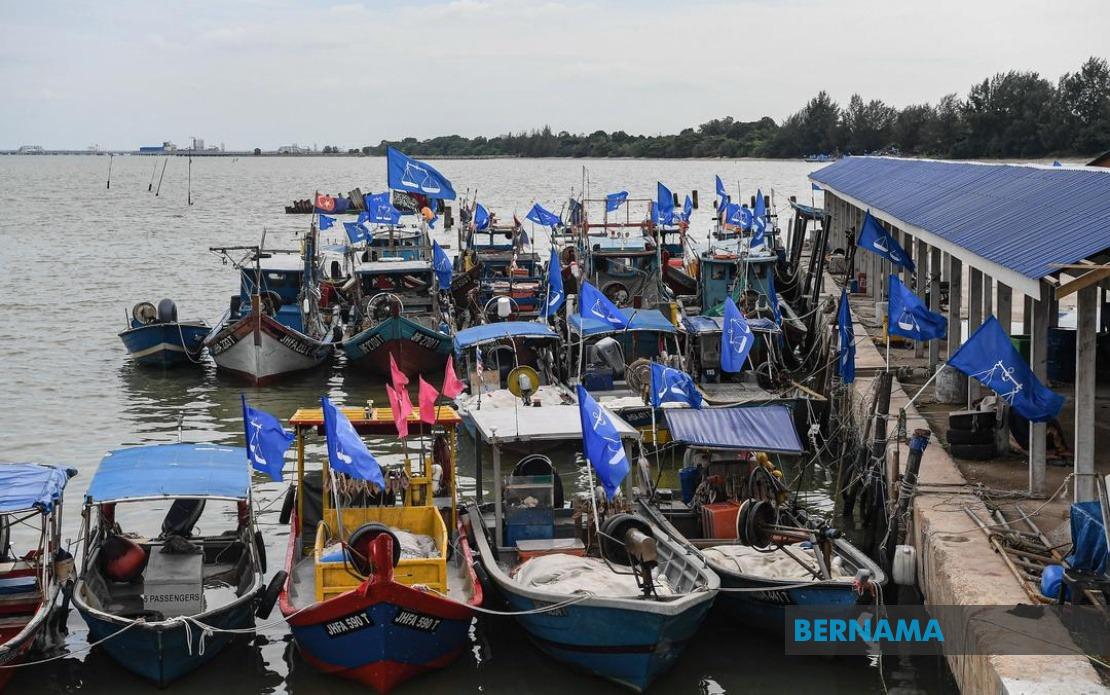
The bustling food court at Sungai Rengit has become a focal point of frustration for a community that has waited nearly a decade for permanent solutions to crumbling facilities and persistent security problems. Located within the Tanjung Surat state constituency in Kota Tinggi, this coastal settlement has emerged as a critical commercial hub serving workers from the nearby Pengerang Integrated Petroleum Complex and local residents. As voters prepare for the July 11 Johor state election, traders and fishermen are voicing urgent demands to whichever candidate secures the seat, signalling that economic concerns and public safety rank high among electorate priorities in this industrial corridor.
The food court's predicament traces back to a development project that forced operators to relocate from their original premises to a temporary site, where they have remained ever since without a firm timeline for permanent relocation. The interim location, despite being intended as a short-term arrangement, has become a semi-permanent fixture mired in inadequate facilities and deteriorating conditions. This prolonged limbo has created mounting tension between traders who invested their capital and effort into establishing customer loyalty at the original spot, and authorities who have failed to resolve the displacement comprehensively. The extended uncertainty has hardened traders' resolve to make this issue a voting consideration.
Beverage seller Lai Swee Hong, who has operated her stall for three decades, articulated the core frustration shared across the trading community. Although local authorities provided an alternative site, she explained that its location presents practical disadvantages including severely restricted parking space and positioning along a one-way road that deters both foot traffic and vehicular access. The original temporary location, despite its shortcomings, had become embedded in customer routines and benefited from superior strategic positioning within the town's commercial landscape. Lai and her peers were initially promised a relocation window of approximately eighteen months, a timeline that has long expired without transparent explanation from relevant authorities regarding delays or revised schedules.
The physical deterioration of makeshift trading infrastructure has accelerated as the temporary arrangement has extended far beyond its designed duration. Stalls constructed from basic materials including canopy roofs and plywood walls now show visible signs of wear and structural compromise. These rudimentary structures offer minimal protection against weather exposure, leaving merchandise and equipment vulnerable to rain damage and intense tropical heat. More alarmingly, the absence of proper doors and security features has transformed the food court into an attractive target for opportunistic theft, creating an environment where criminal activity flourishes with relative impunity.
Food trader Wini Fasiha Zawawi has directly experienced the security crisis that has plagued the site since the previous year. Despite reporting theft incidents to both police and municipal authorities, substantive preventive measures have remained absent despite ongoing police patrols. The psychological toll compounds the material losses, as even relatively modest thefts of kitchen equipment impact already-thin profit margins for small-scale operators. The disparity between reported crime and official response has bred frustration with existing governance structures and elevated expectations that a newly elected assemblyman might prove more responsive to merchant appeals for enhanced security infrastructure including lighting, barriers, or regular surveillance.
Parallel to trading community grievances, Sungai Rengit's fishing population has articulated distinct but equally pressing economic concerns rooted in escalating operational costs at sea. Veteran fisherman Sin Hock Hwee, who has pursued maritime livelihoods since adolescence, emphasized that fuel subsidies represent a lifeline enabling fishing communities to maintain viable incomes despite rising input expenses. The federal fuel subsidy programme has historically buffered fishermen against commodity price volatility and helped preserve this traditional livelihood sector during periods of economic turbulence. Sin expressed hope that incoming political leadership would not only maintain existing subsidy structures but actively enhance them to reflect the genuine cost pressures confronting maritime workers whose profit margins remain consistently vulnerable to external price shocks.
Younger fisherman Hidayat Isa articulated a generational perspective emphasizing infrastructure development and institutional responsiveness to emerging voices within the fishing community. He underscored that jetty facilities require systematic upgrading to modernize landing infrastructure and improve working conditions for the next generation of maritime workers. Hidayat's aspirations extended beyond material improvements to encompass political representation that actively solicits and genuinely incorporates feedback from younger community members who may harbour distinct priorities and innovative perspectives diverging from established stakeholder groups. His proposal that Kampung Sungai Rengit become an official adopted village under incoming political patronage reflected broader hopes that local communities might secure elevated status and corresponding resource allocation within constituency governance frameworks.
The Tanjung Surat state seat has attracted a direct contest between Pakatan Harapan challenger Faizul Abdul Ghani and Aznan Tamin, the incumbent Barisan Nasional representative whose tenure will be evaluated partly on responsiveness to these accumulated grievances. The electoral dynamics have been shaped by grassroots frustration with administrative inertia affecting both commercial and fishing sectors, suggesting that incumbent performance evaluations will significantly influence voting behaviour. Both candidates have inherited expectations that whoever assumes office will prioritize the resolution of infrastructure deficiencies that have degraded community living standards and economic productivity across multiple occupational groups.
The broader Johor state election encompasses 172 candidates competing across 56 constituencies, establishing this July 11 polling day as a pivotal democratic exercise across Malaysia's southernmost peninsula state. Early voting is scheduled for July 7, providing flexibility for voters unable to participate during standard polling hours. The concentration of grievances in constituencies serving industrial complexes and traditional fishing communities suggests that infrastructure and economic livelihood concerns will substantially influence electoral outcomes across multiple seats beyond Tanjung Surat specifically.
For stakeholders in Sungai Rengit, the election represents both opportunity and deadline. Traders and fishermen have articulated their policy priorities through direct testimony to media representatives, effectively creating public accountability mechanisms that will track elected representatives' follow-through on campaign promises. The specificity of their demands—permanent food court facilities with adequate security infrastructure for traders, enhanced and expanded fuel subsidies plus jetty modernization for fishermen—provides measurable benchmarks against which constituencies can evaluate their representatives' effectiveness in the coming term. Whether incoming political leadership proves capable of delivering on these accumulated expectations will fundamentally shape community confidence in democratic accountability processes and influence electoral participation patterns in subsequent state-level contests.

