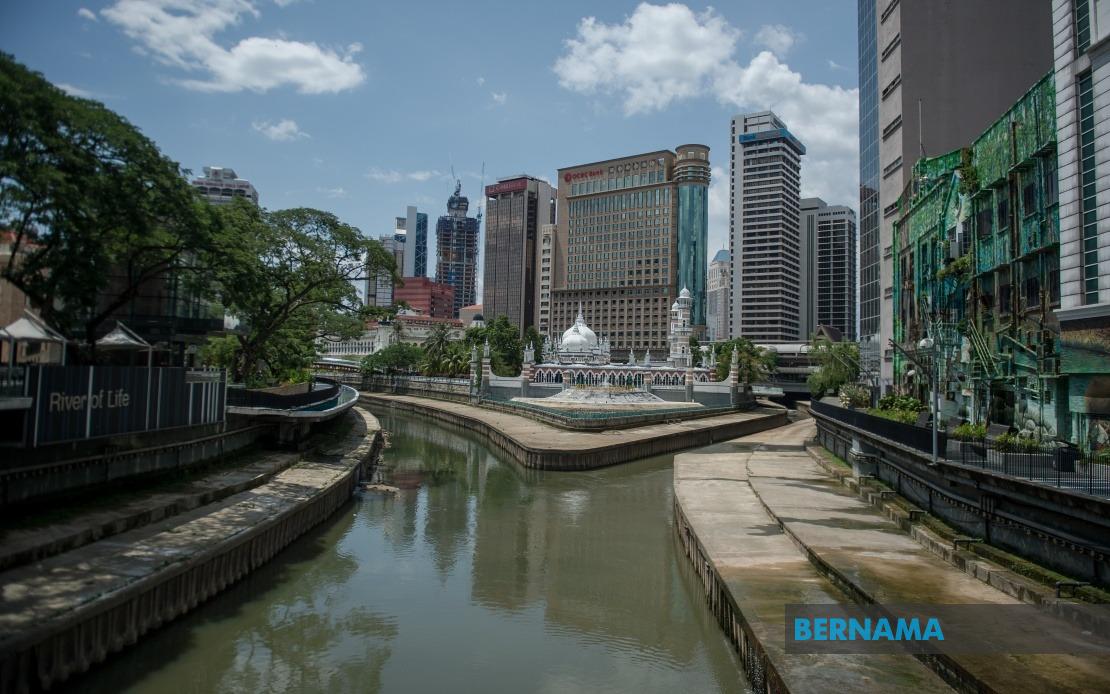
Flood mitigation efforts along Sungai Klang are yielding tangible results, with the critical river's capacity having surged to 22 per cent—a dramatic leap from its previously inadequate level of less than five per cent. The transformation, driven by an ambitious 56-kilometre river engineering programme, is fundamentally reshaping Selangor's vulnerability to inundation, particularly in densely populated districts where overflow events have historically caused severe disruption and economic loss.
Landasan Lumayan Sdn Bhd (LLSB), the entity overseeing the initiative, has made substantial headway, with the overall undertaking now 68 per cent complete. Managing director Syaiful Azmen Nordin underscored the project's significance during a media briefing at the Sultan Salahuddin Abdul Aziz Shah (SSAAS) Building in Shah Alam, revealing that targeted interventions in vulnerable neighbourhoods—notably Taman Sri Muda—have markedly diminished the prospect of catastrophic water breaches. Since the initiative commenced in 2017, contractors have extracted roughly 1.2 million cubic metres of accumulated sediment, material that had progressively constrained the river's natural flow capacity and raised water levels during monsoonal downpours.
The distinction between structural and drainage-related flooding becomes crucial when evaluating Selangor's flood vulnerability. Syaiful Azmen clarified that recent inundation events affecting the state did not stem from Sungai Klang itself overflowing but rather from inadequate stormwater and internal drainage systems failing to manage localised precipitation. This nuance is essential for policymakers and residents alike: expanding river capacity addresses only one component of the flood equation. Complementary investments in secondary drainage networks remain indispensable, particularly in low-lying residential zones where localised ponding—independent of main river conditions—poses recurring hazards.
The environmental gains accompanying the hydraulic improvements are equally noteworthy. A continuous river-cleaning campaign operating since 2017 has retrieved more than 98,000 tonnes of refuse, costing RM19.6 million but fundamentally altering the waterway's character. Annual waste accumulation has tumbled from 16,000 tonnes to between 5,000 and 6,000 tonnes, whilst water quality classifications have ascended from the degraded Class 5 standard to healthier Class 3 and Class 4 ratings. These enhancements carry implications extending beyond flood prevention: improved water quality supports aquatic ecosystems, diminishes treatment costs for downstream users, and enhances the river's recreational and aesthetic value for communities adjacent to it.
Public awareness programmes have clearly contributed to this waste reduction trajectory. When citizens grasp the connection between accumulated litter and diminished river capacity, behaviour shifts occur. Bagging and disposing of rubbish responsibly becomes viewed not merely as civic obligation but as direct flood defence participation. This democratisation of flood resilience—enlisting residents as stakeholders rather than passive recipients—represents a strategic shift in Malaysia's approach to water security and environmental stewardship.
The timeline for completion of the primary dredging works stretches to the end of 2025, allowing time for the meticulous final phases of channel widening and bank reinforcement. Meanwhile, a complementary section extending from Shah Alam to Mid Valley will proceed under Federal Government administration, ensuring continuity along the entire critical corridor. By completion, the projected water-carrying capacity is targeted to reach 40 per cent—double the current 22 per cent—a benchmark that positions Sungai Klang amongst Southeast Asia's more resilient metropolitan waterways.
For Malaysian policymakers contemplating similar initiatives elsewhere, the Sungai Klang experience offers instructive lessons. Multi-year commitment, adequate funding, regular maintenance and community engagement collectively drive success. The investment required—approaching RM20 million for cleaning alone—reflects the true cost of neglect and remediation. Had preventative maintenance and waste management been prioritised decades earlier, the current expenditure might have been substantially lower. This economic reality underscores why neighbouring countries and domestic authorities must strengthen their upstream flood prevention strategies rather than perpetually confronting emergency responses.
The ramifications for Selangor's commercial and residential sectors are profound. Businesses can now operate with greater confidence regarding disruption from Sungai Klang overflow. Property insurers may adjust premiums downward in affected areas, making housing more affordable. Supply chains dependent on road networks flanking the river become more reliable. Yet complacency remains dangerous: climate change is intensifying rainfall patterns across the region, meaning that 40 per cent capacity may eventually prove insufficient during extreme weather events projected to intensify this century.
Landasan Lumayan Sdn Bhd's work also exemplifies how specialised agencies can execute complex infrastructure projects when provided adequate autonomy and resources. The measurable progress—a quantifiable increase in capacity, verifiable tons of extracted sediment, documented improvements in water quality—stands as a model for transparency in Malaysian development initiatives. Citizens can point to concrete metrics rather than abstract promises.
As the project moves toward its final phases, sustained vigilance remains essential. The stretch from Shah Alam to Mid Valley, under Federal stewardship, must maintain equivalent standards of execution. Inter-agency coordination between LLSB and Federal authorities will prove vital in ensuring seamless flood defence across the entire metropolitan region. Moreover, regular maintenance of cleaned sections is crucial; complacency could allow sediment re-accumulation and litter reaccumulation within years.
The Sungai Klang transformation demonstrates that even severely degraded riverine systems can be rehabilitated through determined intervention. For Malaysia and the broader Southeast Asian region, where rapid urbanisation has strained water management infrastructure, this success story provides both inspiration and practical validation that engineering resilience into rivers is achievable—provided societies commit to long-term investment, maintain political will across electoral cycles, and engage communities as active participants rather than passive observers in their own flood defence.

