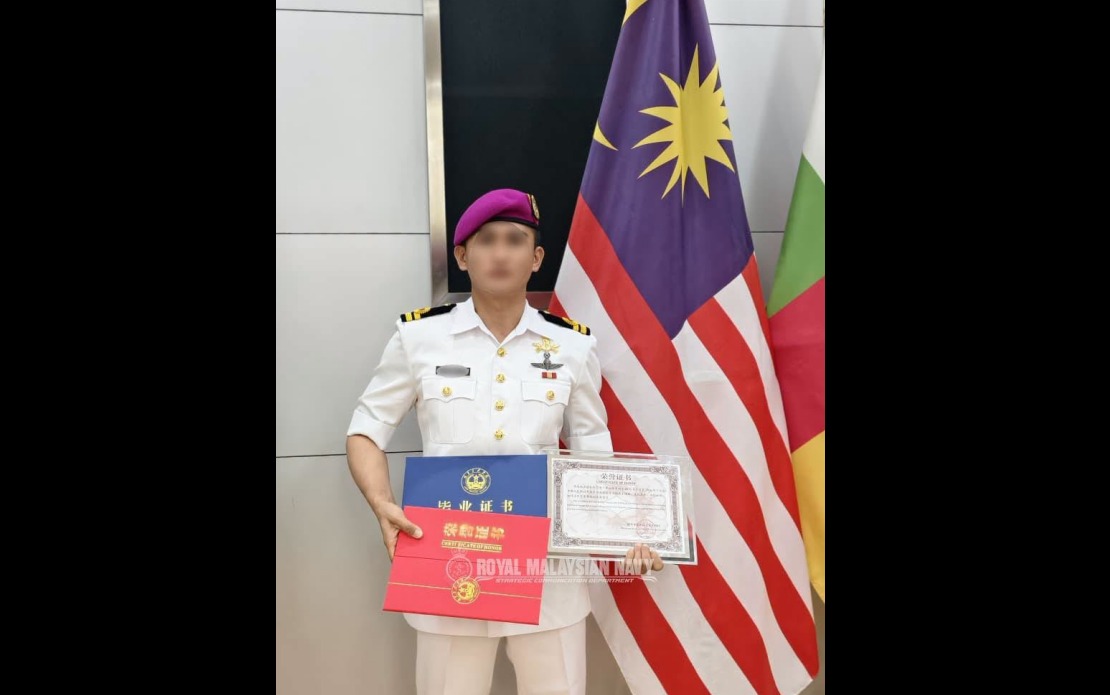
Sultan Sharafuddin Idris Shah, Sultan of Selangor and Captain-in-Chief of the Royal Malaysian Navy, has extended his congratulations to a member of the navy's elite PASKAL unit for attaining top honours in an intensive sniper training programme conducted by China's People's Liberation Army. The officer's accomplishment at the PLA Infantry Academy's Shijiazhuang Campus in Hebei Province represents a significant milestone for Malaysia's special operations capabilities and underscores the nation's commitment to maintaining world-class military standards through international partnerships.
The four-month training course, which ran from March 1 through July 31, placed the Malaysian serviceman first among a cohort of 131 participants representing more than two dozen countries. This competitive international environment amplified the significance of his achievement, as candidates from multiple military traditions and training systems competed under unified assessment criteria established by the Chinese defence institution. The officer's victory in such a demanding setting demonstrates both individual excellence and reflects positively on the calibre of personnel selected for PASKAL, the Royal Malaysian Navy's premier special forces unit.
Beyond the primary award for overall academic excellence, the officer secured two additional credentials recognising his exceptional performance throughout the programme. The Certificate of Honors—Excellent Cadre acknowledged his exemplary conduct and professionalism within the institutional framework, while the Silver Badge Medal reflected his superior technical competency in sniper operations and field application. These multiple accolades represent a comprehensive validation of his capabilities across theoretical knowledge, practical execution, and professional standards.
The Sultan's formal acknowledgment of this achievement carries significance beyond ceremonial protocol. As the constitutionally designated Captain-in-Chief of the Royal Malaysian Navy, his endorsement serves to reinforce the importance Malaysia attaches to military excellence and continuous professional development among its armed personnel. The public commendation also signals the nation's strategic interest in deepening military training collaborations with China, a pattern that has expanded considerably in recent years as regional powers strengthen defence partnerships across the Asia-Pacific.
PASKAL, officially designated as the Special Naval Forces, represents the apex of Malaysia's maritime special operations capacity. Selection to the unit demands exceptional physical endurance, tactical acumen, and psychological resilience, making successful completion of advanced international training courses a valued pathway for career progression within the command. The Shijiazhuang course, specialising in sniper operations, addresses a critical capability requirement for modern military forces engaged in precision targeting and counterterrorism operations.
The Sultan's statement extends recognition beyond the individual officer to encompass the broader institutional structures supporting Malaysian military excellence. Admiral Tan Sri Dr Zulhelmy Ithnain, who serves as Commander of the Royal Malaysian Navy, receives commendation for fostering the professional environment and strategic vision enabling such achievements. This institutional acknowledgment reflects how elite military accomplishments depend upon comprehensive support systems encompassing training infrastructure, personnel selection mechanisms, and organisational culture prioritising continuous improvement.
The participation of Malaysian military personnel in foreign training institutions has become increasingly central to national defence strategy. Access to advanced facilities and instruction methodologies available at premier military academies worldwide—whether in China, Western countries, or regional partners—provides Malaysian forces exposure to diverse tactical approaches and technological applications. This cross-pollination of military knowledge enhances overall readiness while building professional networks that strengthen regional security cooperation.
The officer's performance in China's military educational system also carries implications for Malaysia's technological and tactical alignment within the regional security architecture. Chinese military institutions incorporate the latest operational doctrine and equipment technologies into their curriculum, ensuring that participants return home with current understanding of advancing military practices. For a nation increasingly invested in modernising its defence capabilities, such exposure provides valuable intelligence regarding contemporary military trends and performance benchmarks.
The achievement gains additional resonance given ongoing discussions within Malaysia regarding military readiness and force modernisation. Consistent demonstration of Malaysian personnel succeeding in internationally competitive military training environments provides empirical evidence of the armed forces' professionalism and dedication. Such accomplishments strengthen public confidence in the military while providing recruitment and retention messaging that resonates with potential servicemembers seeking careers in prestigious, well-regarded institutions.
Looking forward, this commendation highlights the continued value Malaysia derives from defence partnerships that transcend traditional geopolitical alignments. While Malaysia maintains security relationships with numerous countries including the United States, Australia, and European nations, engagement with Chinese military institutions reflects pragmatic recognition of Beijing's regional influence and advanced military capabilities. The balanced approach to defence partnerships enables Malaysia to access diverse training methodologies and technologies while avoiding overreliance on any single strategic partner.
The Sultan's acknowledgment also carries symbolic importance for defence morale and institutional pride. Public recognition of individual and unit achievements strengthens esprit de corps throughout the military structure, incentivising personnel to pursue excellence and continuously upgrade their professional standards. In an era of increasing operational complexity and heightened regional security challenges, maintaining high motivation and professional commitment among elite units like PASKAL directly translates to enhanced national security capabilities.
Final recognition should be extended to the 130 other international participants who competed alongside the Malaysian officer. Their involvement demonstrates the inclusive nature of modern military education and the universal professional standards governing elite training programmes. This international cohort reflects the broader trend toward globalised military professionalism, where shared commitment to operational excellence transcends national boundaries and creates lasting networks among military professionals across participating nations.

