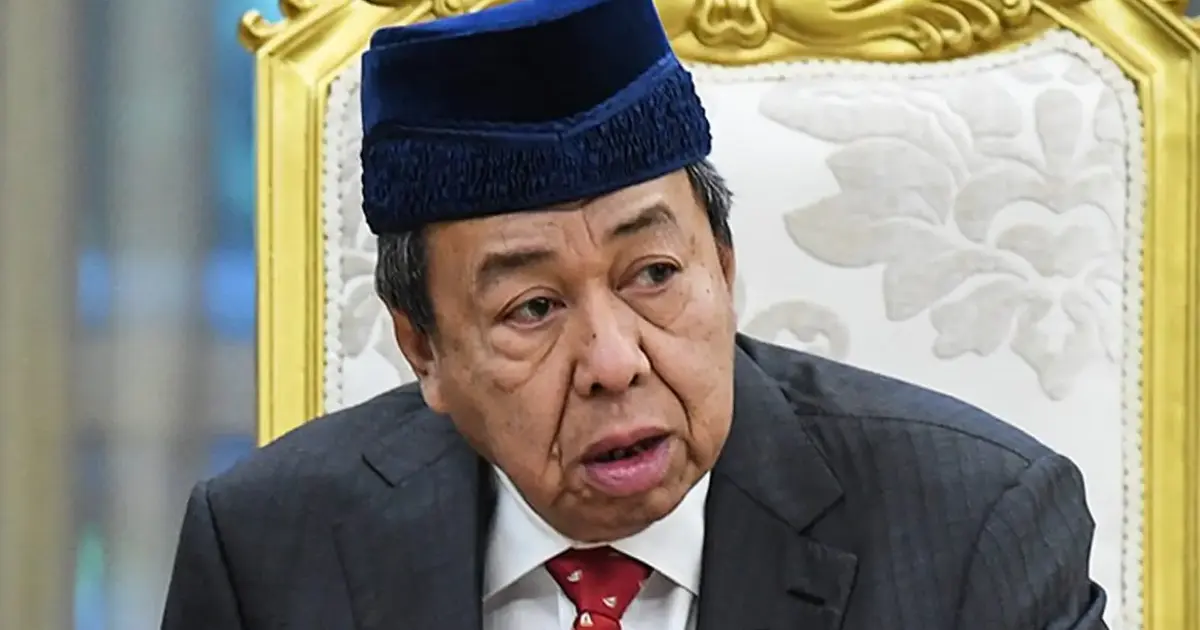
Sultan Sharafuddin Idris Shah, the reigning monarch of Selangor, has apportioned credit for the troubled Light Rail Transit Line 3 (LRT3) project to two prime ministers spanning different political eras, whilst directing particular censure towards figures from the Democratic Action Party for their handling of the infrastructure initiative.
The Selangor ruler's measured assessment of the LRT3 project represents a significant intervention by Malaysia's highest state official into a matter that has long vexed commuters, taxpayers, and policymakers across the Klang Valley. His willingness to acknowledge contributions from both Najib Razak, who served as Prime Minister from 2009 to 2018, and Anwar Ibrahim, who assumed office in 2022, suggests a pragmatic recognition that large-scale infrastructure initiatives typically span multiple administrations and require continuity of vision regardless of political affiliation. This stance carries particular weight given Sultan Sharafuddin's constitutional role as the ultimate arbiter of state affairs and his historical influence on governance matters affecting Selangor's 6.5 million residents.
The LRT3 project has become emblematic of Malaysia's broader infrastructure challenges, encompassing budgetary overruns, construction delays, and evolving technical specifications that have repeatedly pushed its completion timeline further into the future. What began as an anticipated addition to Selangor's public transport network has instead accumulated significant public frustration, with many commuters questioning the project's original conception, financing mechanisms, and actual necessity. The Selangor ruler's intervention thus reflects not merely a matter of historical record-keeping but genuine concern about how such megaprojects are executed and who bears responsibility when outcomes disappoint public expectations.
By specifically naming Lim Guan Eng and Tony Pua, both senior figures within the Democratic Action Party, Sultan Sharafuddin has highlighted the role of state and federal politicians from the coalition that governed Selangor and Malaysia between 2018 and 2022. Lim Guan Eng, former Finance Minister, and Tony Pua, former deputy minister, were instrumental figures during the Pakatan Harapan administration, which initially promised to audit and reassess numerous mega-projects it deemed wasteful or unnecessarily expensive. The royal critique suggests that despite such undertakings, the LRT3 project remained subject to management problems or decisions that the Selangor ruler views as culpable.
The symbolic importance of Sultan Sharafuddin's statement extends beyond mere project management into questions of political accountability and the trajectory of infrastructure development in Malaysia. By distributing credit to leaders from both the Barisan Nasional era and the subsequent reform period, the Selangor ruler implicitly conveys that neither political coalition holds monopoly on either competence or blame. This approach demonstrates sophisticated political messaging, acknowledging that infrastructure governance transcends partisan divides whilst simultaneously establishing that individual politicians within those administrations bear distinct responsibility for specific outcomes.
For Malaysian readers and policymakers, the Sultan's comments carry particular relevance given Selangor's status as the nation's economic heartland and the LRT3 project's intended role in connecting peripheral communities to central business districts. The state's population density, rapid urbanization, and reliance on private transportation have created sustained demand for efficient mass transit alternatives. Any infrastructure project promising to address these challenges therefore carries disproportionate weight in shaping public perception of government capability and the political reliability of elected representatives.
The timing of the Selangor ruler's intervention warrants consideration, occurring within a political environment where questions about project delivery, fiscal responsibility, and administrative competence remain contentious across different stakeholder groups. As Malaysia navigates economic constraints and competes regionally for investment, infrastructure execution becomes increasingly critical to national competitiveness. Singapore's efficient mass transit network and Thailand's expanding rail projects serve as regional benchmarks against which Malaysian initiatives are inevitably measured, making the perception of competent project management a matter of genuine strategic importance.
The public nature of Sultan Sharafuddin's remarks represents an unusual willingness by a constitutional monarch to intervene directly in infrastructure governance matters, suggesting genuine concern about outcomes that extend beyond normal bureaucratic channels. In Malaysia's constitutional framework, sultans traditionally exercise influence through formal and informal mechanisms, with explicit public statements typically reserved for matters of exceptional significance. The decision to publicly credit and criticise named individuals across different administrations indicates that the Selangor ruler views LRT3 not merely as a technical problem but as a governance challenge requiring high-level attention.
For the Democratic Action Party specifically, the royal criticism carries potentially significant implications for its standing in Selangor, where the party contests elections as part of the Pakatan Harapan coalition. Public criticism from the Selangor Sultan, whose symbolic stature and constitutional authority command respect across ethnic and political lines, may resonate differently than partisan political attacks. The DAP's performance in infrastructure delivery thus becomes subject to scrutiny from quarters that command broader public legitimacy than conventional political opponents.
Looking ahead, Sultan Sharafuddin's intervention may influence how stakeholders approach future megaproject deliberations, including governance structures, accountability mechanisms, and the distribution of responsibility across administrations. The implicit message that both past and present governments share accountability creates pressure for cross-party consensus on infrastructure matters, potentially encouraging more collaborative approaches that transcend electoral cycles. For ordinary Malaysians frustrated by project delays and cost overruns, the Sultan's willingness to publicly assign responsibility offers both validation of their concerns and a reminder that governance quality ultimately determines whether ambitious infrastructure plans translate into tangible public benefit.

