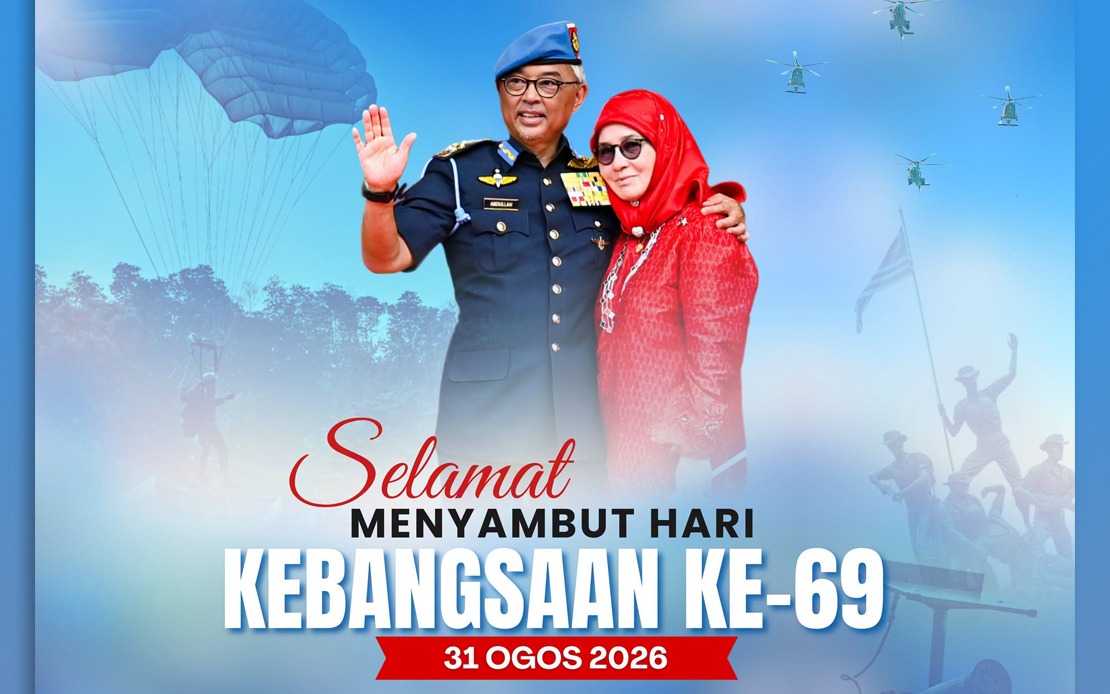
Malaysia's 69th National Day celebrations saw Pahang's reigning monarchs, Sultan Al-Sultan Abdullah Ri'ayatuddin Al-Mustafa Billah Shah and Tengku Ampuan Tunku Azizah Aminah Maimunah Iskandariah, extend their customary greetings to the state's residents, using the occasion to underscore the importance of national unity and civic responsibility across the federation.
In their message released through the Pahang Sultanate's official channels, the royal couple expressed gratitude for nearly seven decades of independence, acknowledging the peace, economic development, and social cohesion that citizens have experienced since 1957. This sentiment reflects the traditional royal perspective on Merdeka as a foundational moment for continued national building rather than merely a historical milestone to be commemorated annually.
The Sultan and Tengku Ampuan's statement emphasised that Malaysia's independence and sovereignty represent a profound collective responsibility requiring active preservation by current and future generations. This framing is particularly significant in contemporary Malaysian discourse, where questions of national identity and constitutional safeguards remain subjects of ongoing public debate, especially as the nation navigates demographic changes and evolving social expectations.
Central to their message was an appeal to all Pahang residents to reinvigorate their commitment to the five principles of Rukun Negara—belief in God, the monarchy, the constitution, the law, and good behaviour. By invoking this social contract framework, the royal couple positioned National Day not as a nostalgic exercise but as an annual reaffirmation of shared values meant to anchor society amid complexity and potential division. The emphasis on the Rukun Negara carries particular weight given ongoing discussions about integration and pluralism in Malaysian society.
The royals specifically highlighted unity, mutual respect, and tolerance as the fundamental pillars underpinning long-term national harmony and institutional stability. Their choice to foreground these principles suggests awareness that contemporary Malaysia faces challenges to social cohesion and that intentional cultivation of these values remains necessary rather than assumed. For a state like Pahang with its own diverse demographics, this message carries local resonance alongside national significance.
A notable dimension of the statement was its explicit appeal to younger generations. The Sultan and Tengku Ampuan urged Malaysia's youth to actively engage with the nation's historical narrative, understanding the struggles that preceded independence and the efforts required to build the modern state. This intergenerational call reflects broader concerns across Southeast Asia about whether postcolonial histories remain meaningfully transmitted to populations born well after independence, and whether younger citizens maintain connection to founding narratives that shape national identity.
The couple also stressed the preservation of Malaysia's heritage and cultural traditions as integral to sustaining social harmony. This emphasis suggests recognition that rapid modernisation, urbanisation, and technological change may attenuate traditional practices and communal bonds, and that deliberate stewardship is required to maintain these elements. For a state like Pahang with significant indigenous communities and rich cultural traditions, this point extends beyond ceremonial rhetoric.
Their final invocation called for divine blessings upon Pahang specifically, praying for the state to remain under God's protection and to enjoy enduring peace, prosperity, and welfare. This concluding appeal, combining theological language with pragmatic wishes for economic well-being and stability, represents the traditional mode by which Malaysian royalty connects spiritual and temporal dimensions of national life. It also reflects the constitutional role of sultans as custodians of Islam within their respective states.
The timing and content of the message align with established patterns of royal communication in Malaysia around National Day, yet they carry particular weight given contemporary uncertainties surrounding political stability, economic performance, and social cohesion across the federation. Pahang, as one of Malaysia's larger and more economically significant states, functions as a barometer for broader national trends, making statements from its leadership consequential for regional observers.
For Malaysian readers, especially those in Pahang, the message reinforces that National Day functions simultaneously as historical commemoration, civic renewal, and spiritual affirmation. The emphasis on active participation in preserving national values and heritage, rather than passive celebration, suggests a vision of citizenship grounded in responsibility and engagement. This framing may resonate particularly with citizens concerned about the sustainability of Malaysia's multicultural model and the maintenance of constitutional protections.
The invocation of Rukun Negara and the call for intergenerational transmission of historical consciousness reflect ongoing tensions in Malaysian public discourse about how to balance tradition and modernity, unity and diversity, state direction and individual liberty. By positioning these elements not as abstract principles but as requirements for tangible social benefits—peace, prosperity, harmony—the royals frame civic participation as rational self-interest rather than mere obligation, potentially broadening appeal across Malaysia's demographically diverse population.

