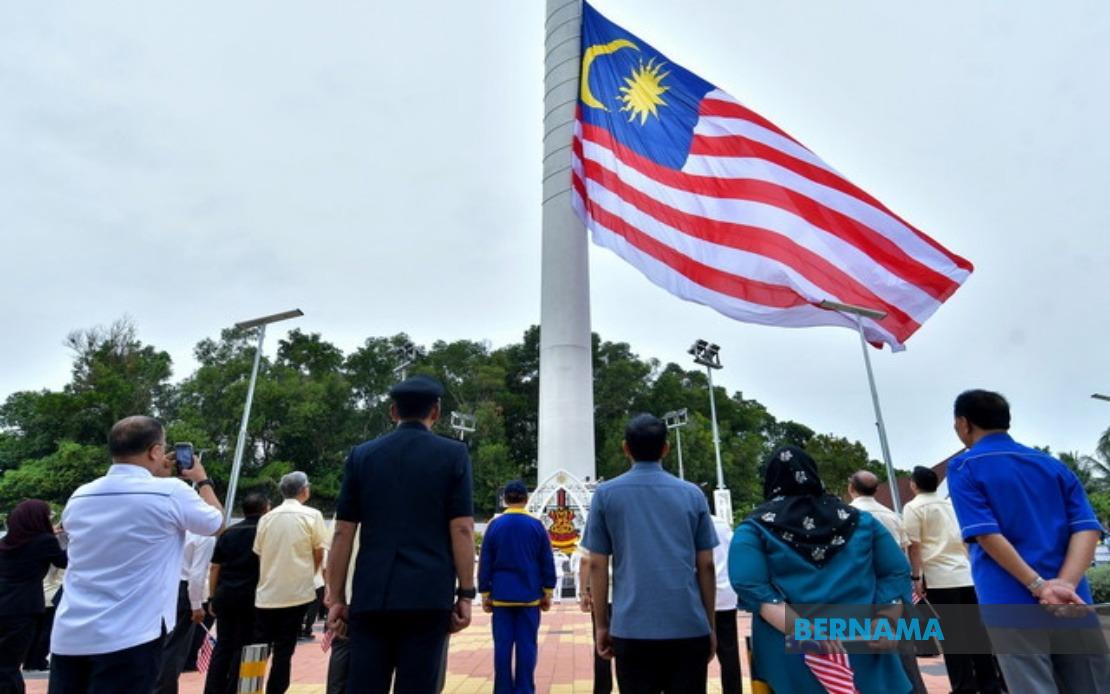
The Sultan of Selangor, Sultan Sharafuddin Idris Shah, has delivered a pointed message during National Day commemorations, asserting that the Jalur Gemilang holds meaning far deeper than its annual display during August and September festivities. Speaking at a flag-hoisting ceremony held at Dataran Selangor on August 26, the Ruler emphasised that Malaysia's national flag functions as a unifying emblem belonging equally to all citizens, regardless of their ethnic, religious or political affiliations. His intervention comes as the nation prepares to mark both National Day on August 31 and Malaysia Day on September 16, periods when patriotic symbolism reaches its annual peak across the country.
The Ruler's statement carries particular significance given Malaysia's ongoing navigational challenges around communal identity and belonging. In a nation where citizens identify across multiple ethnic, religious and linguistic lines—including Malays, Chinese, Indians, Kadazan-Dusuns, Ibans and numerous other communities—the concept of a shared national symbol transcending these categories remains perpetually contested. Sultan Sharafuddin's intervention suggests concern that annual flag-flying ceremonies risk becoming hollow rituals divorced from substantive commitment to pluralism. His message cuts against tendencies where political actors occasionally invoke communal identities to mobilise electoral support, a pattern observers have noted across Southeast Asian democracies struggling with similar tensions.
Central to the Ruler's argument is a distinction between performative patriotism and authentic nation-building. He acknowledged that displaying thousands of Jalur Gemilang throughout the National Month presents no technical difficulty; the infrastructure and logistics of such campaigns have become standardised. Yet he pivoted sharply to identify the considerably more demanding challenge: constructing a Malaysian society where citizens from all backgrounds genuinely experience acceptance, respect and pride in their national belonging. This formulation reframes patriotism away from symbolic gestures toward substantive social outcomes, demanding that Malaysians interrogate whether existing structures and practices actually deliver the inclusion that the flag theoretically represents.
The Ruler directed particular attention toward younger Malaysians, calling for educational and social approaches that inculcate respect for religious, racial and cultural diversity. This emphasis reflects demographic and social concerns about generational attitudes; as Malaysia's population increasingly turns over, questions persist about whether youth possess comparable commitments to interfaith and interethnic harmony as older cohorts shaped by post-independence nation-building narratives. Sultan Sharafuddin's intervention suggests that formal education alone may prove insufficient without deliberate cultivation of attitudes and values supporting pluralistic coexistence. The Selangor administration, under royal patronage, may now face expectations to translate such rhetoric into educational and social programming.
EquallyPointedly, Sultan Sharafuddin issued a challenge directed at political and administrative leadership. He urged office-holders and elected representatives to model moderation, tolerance and compassion through their conduct and rhetoric. This represents tacit criticism of political actors who exploit communal, religious or ideological differences to advance narrow factional interests, a practice the Ruler implied undermines national cohesion. The statement implicitly suggests that leadership failure—where politicians deliberately inflame divisions for electoral advantage—constitutes a primary obstacle to realising the unity the Jalur Gemilang symbolises. Such warnings from constitutional monarchs carry weight in Malaysia's Westminster-influenced system, where royal institutions maintain substantial moral and ceremonial authority even absent formal legislative power.
The Ruler's framework deliberately eschews religious or ethnic hierarchies in conceptualising Malaysian identity. He explicitly noted that the flag distinguishes among neither Malays, Chinese, Indians nor other ethnic groups, nor among Muslims, Buddhists, Christians, Hindus or adherents of other faiths. This formulation directly contests historical narratives—present across Malaysia's political discourse—that position particular communities as more authentically Malaysian or bearers of special constitutional status. By insisting on the flag's indifference to such categorisations, Sultan Sharafuddin advances an inclusive nationalism potentially at odds with constitutional provisions privileging certain groups, though he does not explicitly engage with such constitutional complexities.
The backdrop for these remarks involves Selangor's particular role within Malaysian federalism. As the wealthiest and most economically dynamic state, and home to the federal capital's metropolitan hinterland, Selangor's governance sets patterns observed across the country. The state has in recent years experienced competitive electoral politics involving multiple political coalitions, prompting questions about whether such competition produces governance focused on shared prosperity or descends into communal mobilisation. By framing national symbols through a lens of shared citizenship rather than factional possession, Sultan Sharafuddin may be signalling concern about Selangor-specific political trends whilst articulating principles applicable nationally.
The timing of this intervention, occurring midway through the national festive season extending from August 31 through September 16, allows the message to circulate during periods when public attention concentrates on national identity questions. Media coverage of royal statements in Malaysia receives substantial dissemination, ensuring that the Ruler's framing reaches audiences across demographic and geographic categories. Government institutions, political parties and civil society organisations increasingly reference such royal pronouncements when justifying policy positions, effectively elevating the Ruler's suggested framework into authoritative guidance on national values. Whether such guidance translates into modified political behaviour remains uncertain, though the explicit nature of criticism directed at politicians suggests the Ruler views such warnings as necessary correctives to recent developments.
Contextualising Sultan Sharafuddin's remarks within regional dynamics reveals relevance extending beyond Selangor or Malaysia specifically. Across Southeast Asia, constitutional monarchies and ceremonial heads of state have increasingly engaged with questions of national identity and social cohesion as political polarisation intensifies. Thailand, Cambodia and other regional polities have seen senior institutional figures attempt to reinforce inclusive nationalism against centrifugal communal or ideological forces. That Malaysian royal leadership articulates comparable messages suggests recognition that symbolic authority, though constitutionally constrained, offers one available mechanism for asserting values that electoral politics may otherwise neglect or undermine.
The substantive challenge posed by the Ruler's statement involves translating symbolic consensus around flags and patriotic feeling into institutional and policy changes supporting actual coexistence. Malaysian societies demonstrably contain citizens holding diverse views about optimal communal arrangements, constitutional design and leadership legitimacy—disagreements that patriotic symbolism cannot dissolve. The Ruler's framework suggests that acknowledging shared flag and shared citizenship need not require agreement on contested questions regarding special rights, religious establishment or communal representation. Yet whether political actors can resist exploiting such tensions for advantage remains doubtful absent institutional incentives rewarding cooperative rather than competitive nation-building approaches. The statement thus functions simultaneously as affirmation of pluralistic principles and implicit critique of political failure to consistently embody such principles through conduct and policy.
Moving forward, the Ruler's intervention likely influences expectations around National Day and Malaysia Day commemorations across government, political parties and civil society. Ceremonial events, political speeches and media coverage will navigate terrain marked by the royal statement, with actors potentially invoking or resisting its framings. Whether this produces substantive shifts in political behaviour, educational curricula or policy design depends on whether other institutional actors—elected officials, administrators, educators and community leaders—actively advance the inclusive nationalism the Ruler has articulated. The coming weeks will indicate whether royal intervention generates momentum toward such changes or remains inspirational aspiration confronting entrenched political interests structured around communal mobilisation.

